

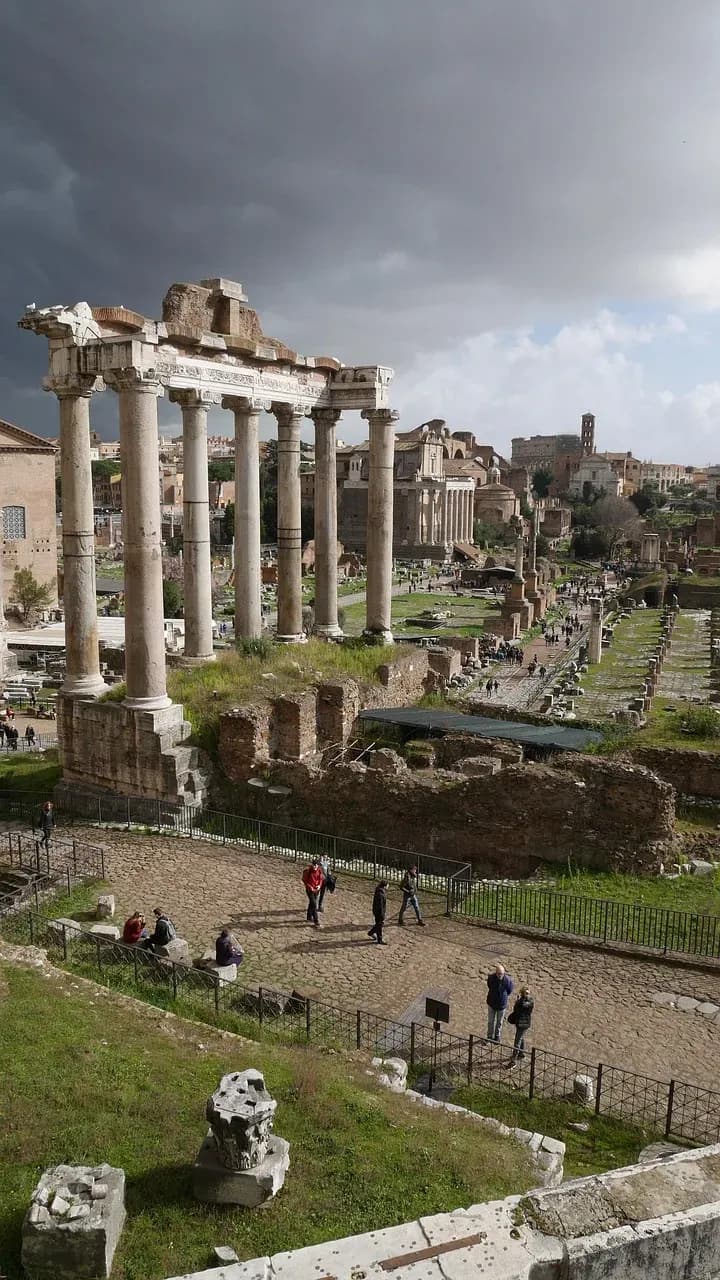
Exploring Roma on foot requires planning and comfortable shoes. The historic centre and the archaeological areas are vast and very busy, which is why the ideal months to visit are spring, between April and May, or autumn up to early November. It is best to avoid July and August, when temperatures among the ruins frequently exceed 35 degrees and the muggy heat makes every walk exhausting.
Most of the neighbouring rioni can be explored on foot by grouping destinations by proximity. When distances stretch out, such as journeys from Stazione Termini to the archaeological area or the Vaticano, the quickest option remains the metro, lines A and B, which takes five to ten minutes per trip. On surface transport and the metro, you simply use payment cards linked to the tap&go contactless system, with no need to print paper tickets. Driving your own car is strongly discouraged: the historic centre is protected by ZTL access gates and parking is rarely found. If you arrive by car, you should leave it at peripheral park-and-ride facilities such as Laurentina, Anagnina, or Tiburtina.
Choosing the right accommodation helps you make the most of your days. Places like Hotel Anfiteatro Flavio or Condominio Monti are set close to the main transport links and allow you to reach the forums with a short walk.
The day-by-day plan
Day 1 — From the Empire to Esquilino
Morning
The first morning is dedicated to ancient imperial Roma. The Colosseo takes roughly an hour or two: early morning is the least crowded time, but booking weeks in advance is mandatory. The same ticket grants entry to the Foro Romano e Colle Palatino, the political, religious, and archaeological heart of the Urbe. Here the route takes about two to three hours.
Afternoon
After a break, head towards Rione San Saba. The Terme di Caracalla are among the largest and best-preserved ancient bath complexes; estimated visiting time inside is around an hour and a half, and the middle of the day is a good time to go. Later, heading towards Rione Esquilino, you reach the Basilica Papale di Santa Maria Maggiore. It is one of the four papal basilicas and is renowned for its early Christian mosaics and coffered ceiling. A visit takes about 45 minutes.
Evening
For dinner, head south to the Testaccio area, on Via Mastro Giorgio. At Felice a Testaccio they serve classic tonnarelli cacio e pepe, mixed table-side. Here too, booking a few days in advance is advisable to secure a table at this historic trattoria.
Day 2 — The Vaticano and the river
Morning
Day two centres around Città del Vaticano. Entry to the Basilica di San Pietro is free, but it pays to arrive early to avoid getting stuck in long security queues; inside you will find the dome and Michelangelo's Pietà. A short walk away are the Musei Vaticani e Cappella Sistina: the density of Renaissance works requires at least three to four hours, and online booking must be made well ahead to skip hours of queuing on the street.
Afternoon
Carry on towards Trastevere, climbing up to the Terrazza del Gianicolo. This viewpoint lets you take in the city from above and is where the traditional cannon shot is fired at midday. In the late afternoon, head down towards Rione Borgo to visit Castel Sant'Angelo, Hadrian's former mausoleum turned papal fortress. Sunset is the ideal time for views over the rooftops and the Tevere; allow an hour and a half here.
Evening
Staying close to the river, but heading back south, you can dine along Lungotevere Testaccio. Lo Scopettaro has been running for eighty years, serving genuine dishes and traditional recipes.
Day 3 — Masterpieces of the centre
Morning
The day begins in Rione Pigna in front of the Pantheon. Entry requires a paid ticket, which must be booked online at weekends, to admire the great open oculus dome; the visit takes 30 to 45 minutes. A few metres away, in Rione Sant'Eustachio, stands the Chiesa di San Luigi dei Francesi: entry is free, and in about half an hour you can admire the St Matthew cycle painted by Caravaggio in the Cappella Contarelli. The morning wraps up in Piazza Navona, built over the remains of the Stadio di Domiziano and graced by Bernini's Fontana dei Quattro Fiumi.
Afternoon
In Rione Regola, visit Palazzo Spada. Beyond the painting gallery, the palace houses the trompe-l'œil perspective gallery designed by Francesco Borromini. A visit here takes around an hour.
Evening
To stay around Campo de' Fiori, Ristorante La Carbonara overlooks the square directly. Backed by a century of history, it prepares classic pasta courses and traditional dishes such as minestra di broccoli e arzilla (skate and broccoli soup).
Day 4 — Sculptures and dramatic fountains
Morning
The morning's destination is the Galleria Borghese, set in Pinciano. Here, sculptures by Bernini and Canova are on display alongside canvases by Caravaggio. Access is organised into strict, timed two-hour slots; advance booking is strictly mandatory, without which you will not be admitted to the museum.
Afternoon
The afternoon is spent in Campo Marzio. Late afternoon is the ideal time to be at Piazza di Spagna e Scalinata di Trinità dei Monti, pausing beside the Fontana della Barcaccia. Right after, walk to Rione Trevi to take in the Fontana di Trevi.
Evening
To avoid the worst of the crowds in front of the monumental fountain, wait until late in the evening. For dinner, head back to the foot of Monte dei Cocci in Testaccio to Flavio al Veloavevodetto. The restaurant features large windows looking out onto ancient Roman amphorae and is celebrated for its carbonara and quinto quarto offal dishes. Alternatively, opposite the former slaughterhouse is Checchino dal 1887, widely regarded as the benchmark for coda alla vaccinara (oxtail stew).
Logistical notes and passes
- If you plan to visit at least two major state or municipal sites, such as the archaeological complex, and expect to make heavy use of the metro and buses (at least three rides a day), you should consider buying the 72-hour Roma Pass, which includes unlimited ATAC transport.
- Major museums cannot be left to chance: galleries with restricted capacity require mandatory reservations even if you hold a pass or qualify for free entry. The same lead times, up to three or four weeks, must be factored in for the main archaeological areas and the Vaticano sites.
- To enjoy proper Roman food without disappointment, bypass central spots displaying multilingual photo menus and employing staff out front to usher in passers-by. Instead, head to quieter rioni or directly to the working-class neighbourhood of Testaccio.
Where to base yourself for the night
Hotel set right in the heart of Monti, allowing you to reach the Fori Imperiali on foot in no time.
View on Booking →Boutique hotel handy for anyone arriving by train at Termini, with the metro station just a short walk away.
View on Booking →Convenient base for heading out into the evening nightlife and starting walking routes along the Tevere.
View on Booking →