

The best time for a weekend a Palermo is spring, from April to June, or autumn throughout September and October. The temperatures are ideal for walking between sights without the oppressive summer heat and peak beach crowds.
You do not need to hire a car to explore the historic centre; in fact, it will only get in the way. The historic mandamenti form a dense pedestrianised ZTL (limited traffic zone), parking is scarce, and local traffic slows everything down. The easiest approach is to get around on foot, basing yourself centrally at the B&B HOTEL Palermo Quattro Canti or the nearby Boutique B&B Vintage, both very convenient for reaching the main highlights on foot.
From Aeroporto Falcone e Borsellino, the fastest connection to the centre is the Prestia e Comandé shuttle bus, or alternatively the Trinacria Express train. The bus takes 35 to 50 minutes, depending on rush-hour traffic, with departures every half hour. It is best to buy your ticket before boarding to avoid paying the on-board surcharge.
3-day Palermo itinerary
Day 1 — The historic centre: squares and theatres
Morning
Start your walk at Quattro Canti (Piazza Vigliena), the octagonal square at the junction of Corso Vittorio Emanuele and Via Maqueda that links the four historic mandamenti. It is a quick stop before heading into the adjacent Kalsa to see Piazza Pretoria e Fontana Pretoria, known locally as the Fontana della Vergogna: a grand Tuscan Renaissance fountain ringed with allegorical statues and pagan deities. Just a few metres away, Piazza Bellini brings together three strikingly diverse styles of architecture. Chiesa di Santa Maria dell'Ammiraglio (La Martorana) is recognisable by its golden cupola and Byzantine mosaics, right next to Chiesa di San Cataldo with its signature three red Arab-Norman domes. To wrap up the morning on the square, Monastero e Terrazza di Santa Caterina d'Alessandria features majestic Baroque interiors, panoramic rooftop terraces overlooking the historic centre, and an old convent bakery for a sweet break.
Afternoon
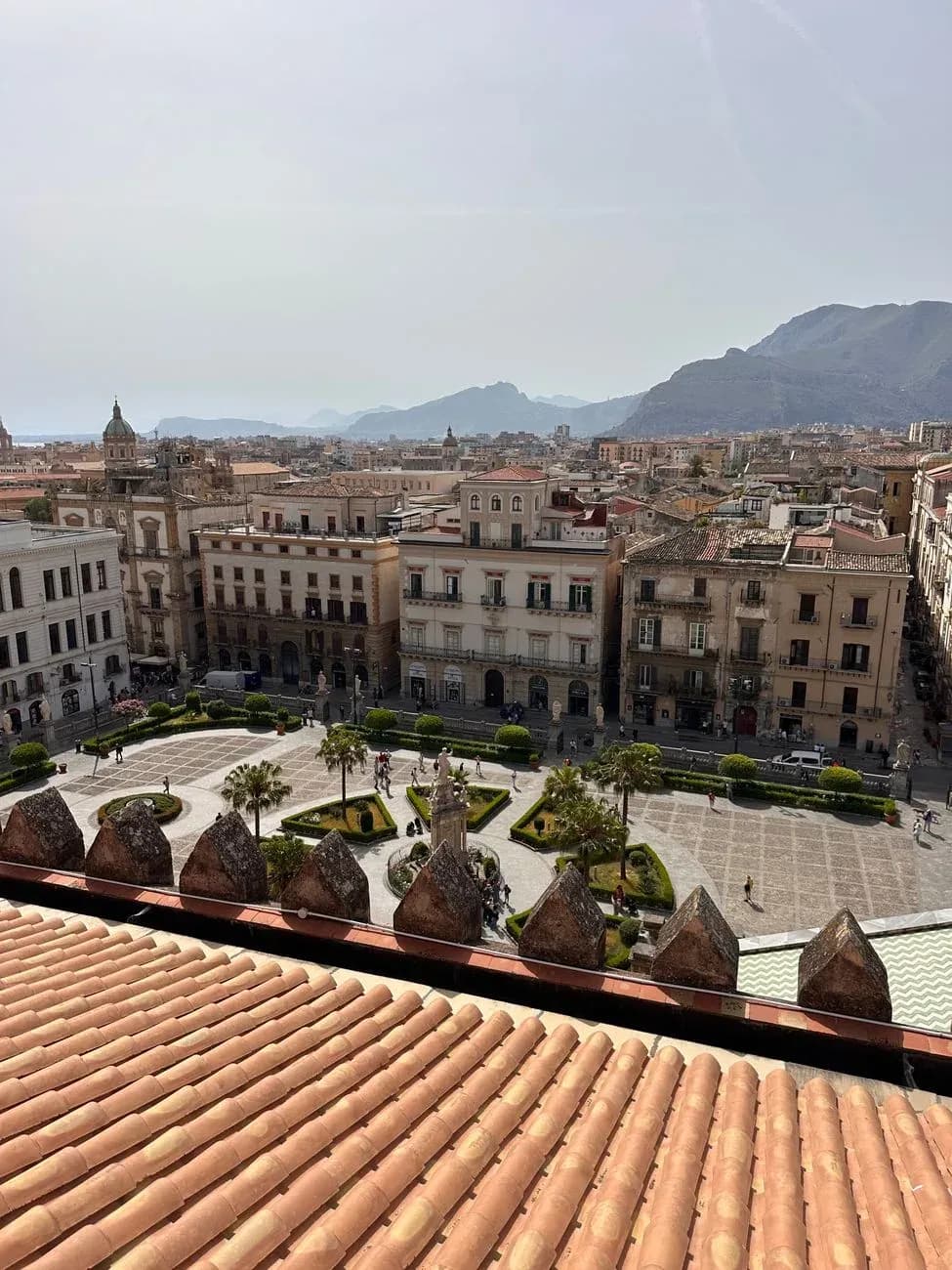
In the afternoon, continue along Corso Vittorio Emanuele towards the Cattedrale di Palermo. This UNESCO-listed landmark displays layers of styles ranging from Arab-Norman to Gothic and Neoclassical. Heading up to the roof gives you sweeping views over the city. From there, make your way towards Piazza Verdi in the Ruggiero Settimo neighbourhood to reach Teatro Massimo, Italy's largest opera house and an icon of Neoclassical architecture. Guided tours run during the day and take between 30 and 45 minutes.
Evening
Head into the Castellammare district for dinner. Trattoria Ferro di Cavallo on Via Venezia serves affordable traditional dishes, including pasta c'anciova (pasta with anchovies), caponata, and swordfish rolls. After dinner, the neighbourhood picks up the pace: Mercato della Vucciria, a historic daytime market, turns into a lively open-air hub for street food and nightlife, especially around Piazza Caracciolo.
Day 2 — Norman mosaics and local markets
Morning
Begin the day in Piazza del Parlamento at the former royal residence of Palazzo dei Normanni e Cappella Palatina. Allow about an hour and a half to take in the gold-ground Byzantine mosaics. As it is very popular, you must book your ticket in advance. Leaving the palace, head into the Albergheria neighbourhood to explore Mercato Storico di Ballarò, the city's oldest street market. The best time to catch it in full swing is between 8:30 and 12:30, when vendors call out their wares with traditional abbanniate and stalls serve local street food. For a mid-morning treat or post-lunch dessert, stop by Pasticceria Cappello on Via Colonna Rotta, run by master pastry chef Salvatore Cappello and renowned for its freshly filled cannoli and torta Setteveli.
Afternoon
Spend the afternoon in Kalsa. Here you will find Chiesa di Santa Maria dello Spasimo, a roofless 16th-century church now used as an open-air cultural venue. Walking on towards the sea brings you to Foro Italico, a tree-lined lawn with a broad promenade looking out over the Golfo di Palermo, perfect for unwinding in the late afternoon by the water.
Evening
For dinner, choose a neighbourhood institution: Antica Focacceria San Francesco on Via Alessandro Paternostro, open since 1834. This is the place to try pane ca' meusa (spleen sandwich), served either maritato (with cheese) or schietto (plain), alongside classic fried panelle. As an alternative, head back towards Via Calascibetta to Osteria Ballarò, set inside the former stables of Palazzo Cattolica, serving contemporary takes on Sicilian classics.
Day 3 — Panoramic hiking and home-style cooking
Morning
Your final morning takes you out of the centre towards Monte Pellegrino. The Scala Vecchia trail, known locally as L'Acchianata, leads up to the Santuario di Santa Rosalia, a 17th-century sanctuary built directly into the rock at an altitude of 429 metres. This is a proper hike: expect an elevation gain of around 400–500 metres and between 3 and 4 hours of total walking time.
Afternoon
After the hike, you will have earned a hearty meal. In the streets off Via d'Ossuna lies Trattoria ai Cascinari, an authentic spot well off the standard tourist trail. Standout dishes include the Palermitan fritto misto and spaghetti al nero di seppia (squid ink spaghetti), all cooked to homestyle recipes.
Evening
Spend your final evening taking an easy stroll along Via Maqueda or heading back towards the Teatro Massimo area, where opera performances offer a grand way to round off the weekend inside the magnificent Neoclassical auditorium.
Practical planning tips
- Book your ticket for Palazzo dei Normanni e Cappella Palatina online several days ahead. On weekend mornings, the queue at the on-site ticket desk often exceeds an hour.
- The walk up Monte Pellegrino via the Scala Vecchia is a proper outdoor trail. Wear hiking shoes with good grip, carry at least one litre of water per person, and wear sun cream.
- Time your visit to Mercato Storico di Ballarò carefully: the stalls are at their liveliest between 8:30 and 12:30. In the evening the market changes completely, turning into a casual spot for drinks.
Where to stay in the historic centre
A modern three-star hotel with a rooftop terrace overlooking Corso Vittorio Emanuele, moments from Piazza Quattro Canti.
View on Booking →Bright rooms just a few minutes' walk from the main theatres of the Ruggero Settimo neighbourhood.
View on Booking →Centrally located design suites, very handy for reaching Piazza Ruggero Settimo quickly on foot.
View on Booking →