

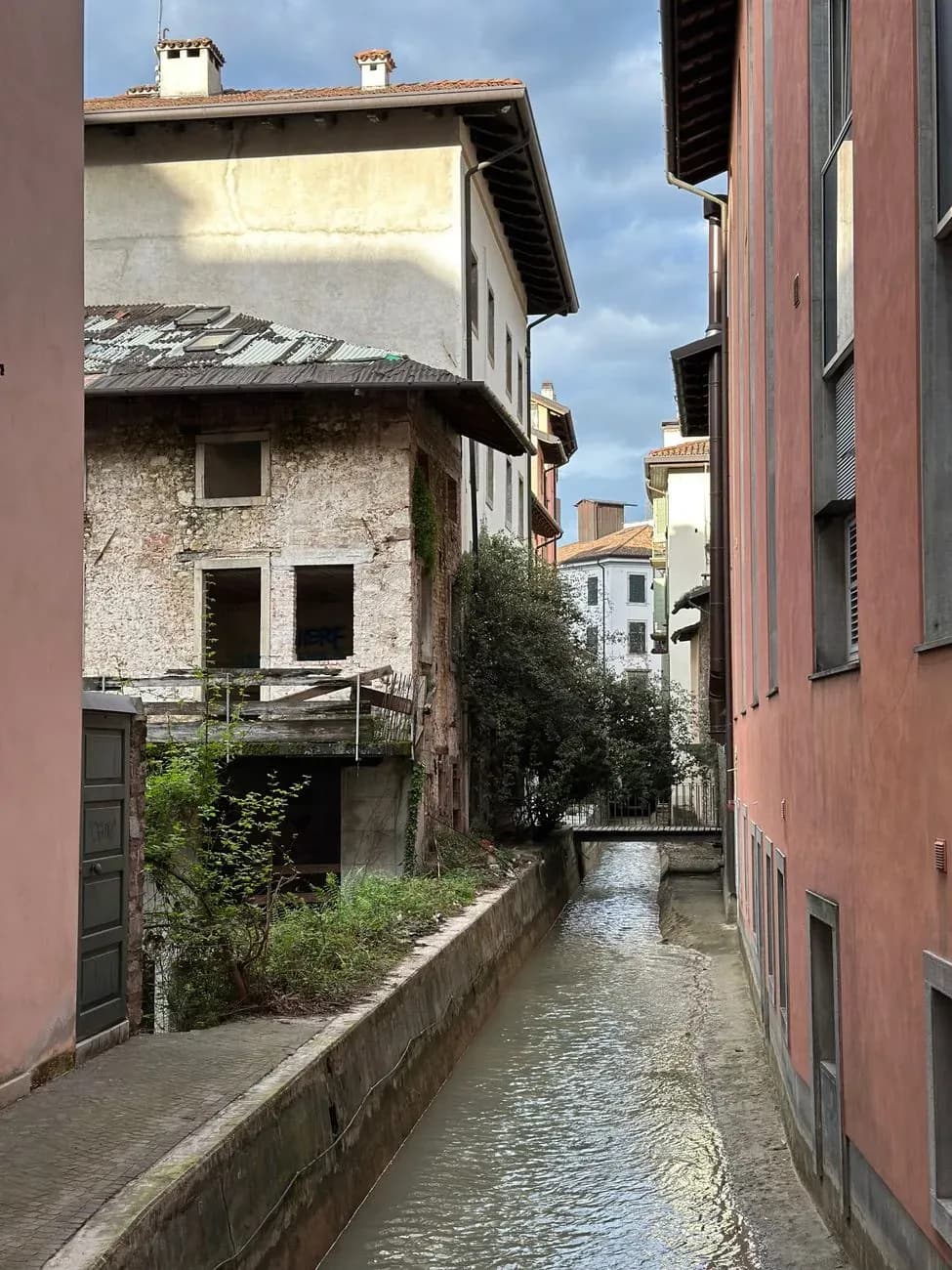
Udine is easy to explore entirely on foot, with most sights clustered within a 1.5 to 2 km radius. Planning a weekend in Udine means wandering beneath ancient porticoes, discovering historic mill streams, and embracing the local ritual of a glass of wine. The best times to visit are late spring and autumn. In particular, September is when the city hosts the Friuli DOC food and wine festival. Travelling in these shoulder months avoids the midsummer heat and brings ideal weather for being outdoors.
The city bears the lasting imprint of Giambattista Tiepolo and a distinct Venetian architectural character. The unhurried pace lets you soak up the local atmosphere without rushing from one sight to the next, balancing museum visits with leisurely stops in historic osterie — perhaps using a central base such as Hotel Suite Inn or Albergo al Vecchio Tram. The only notable climb in the entire urban route is the hill leading up to the castle, which you can easily tackle on foot or by lift.
A 2-day Udine itinerary
Day 1 — From the historic centre to the Castle hill
Morning
Start your day in Piazza della Libertà e Loggia del Lionello, often considered the finest Venetian-style square on the Italian mainland. The Loggia del Lionello, built in white and pink marble, and the Torre dell'Orologio frame the square. Allow about 45 minutes to explore at your own pace, taking advantage of the morning light to admire the architectural details. Just steps away stands the Castello di Udine e Musei Civici. Perched on the city's hill, it commands broad views over the rooftops to the Julian Alps. You can walk up or take the handy lift from Vicolo Sottomonte. The complex houses the Galleria d'Arte Antica, featuring works by Tiepolo, and the Museo Archeologico. Budget around two hours to tour the indoor collections and stroll the grounds.
Afternoon
Before continuing, stop at Osteria Pieri Mortadele in Via Bartolini for lunch at a genuine local institution. At the large bar counter, huge wheels of mortadella are sliced to order and served alongside mixed sharing platters and regional wines by the glass. In the early afternoon, head to the Museo Diocesano e Gallerie del Tiepolo (Palazzo Patriarcale). The palace preserves several frescoed masterpieces by Giambattista Tiepolo, most notably in the Galleria degli Ospiti and the Scalone d'Onore; allow around an hour and a half for the visit. Stepping outside, you will find yourself on Via Mercatovecchio. This is the city's historic thoroughfare, lined with porticoed palazzi, noble residences, and traditional artisan workshops, ideal for an unhurried wander.
Evening
Between 18:30 and 19:30, it is time for a tajut, the traditional glass of Friulian wine. The perfect spot to join in is Piazza Giacomo Matteotti (Piazza San Giacomo), ringed with open-air cafes and porticoes, which acts as the city's communal living room. For dinner, head to Via Viola to take a table at Osteria Al Vecchio Stallo. This rustic tavern is housed in an old horse staging post. The menu focuses on hearty Friulian classics such as frico con polenta, cjalsons, and spezzatino. As it is very popular, book a few days ahead to secure a table.
Day 2 — Twentieth-century art and historic waterways
Morning
Day two begins at the Cattedrale di Santa Maria Annunziata (Duomo di Udine), the city's main church. Its Gothic facade contrasts with the Baroque interior, which contains further altarpieces and frescoes by Tiepolo. A visit takes about 45 minutes and entry is free, though remember it is only permitted outside service times. A short walk brings you to Casa Cavazzini - Museo di Arte Moderna e Contemporanea. This elegant, restored 16th-century palazzo houses 20th-century collections, including works by Carrà, de Chirico, and Basaldella, alongside 14th-century frescoes uncovered during restoration. Exploring the galleries takes about an hour and a half. Afterwards, head to Largo Ospedale Vecchio to see the Chiesa di San Francesco, a deconsecrated Romanesque-Gothic church that now serves as a quiet venue for temporary exhibitions and cultural events.
Afternoon
Come lunchtime, Osteria Alla Ghiacciaia on Via Antonio Zanon offers a unique setting: the tavern was once an icehouse and looks right out over the roggia canal. The menu features soft frico, herb-filled cjarsons, and gnocchi with goulash. In the afternoon, walk to Piazzale XXVI Luglio to visit the Tempio Ossario dei Caduti d'Italia. This imposing Neoclassical monument, inaugurated in the 1930s, holds the remains of over 25,000 soldiers who fell in the First World War, recalling the city's key role as the wartime rear-guard capital. Heading back towards the centre, skirt along the Giardino del Torso e Rogge di Udine. The rogge are ancient water channels that weave through the urban fabric. Walking alongside them reveals small stone bridges and quiet, tucked-away corners of the city.
Evening
For your final dinner of the weekend, venture just outside the pedestrianised historic core to Piazzale Gio Batta Cella, home to Trattoria Da Pozzo. The atmosphere is welcoming and unpretentious, with a menu rooted in seasonal, home-style Friulian cooking. Expect grilled meats and regional cured cuts, rounding off your two days with hearty dishes and generous portions.
Essential planning tips
- If you are arriving by car, the multi-storey car park in Piazza Primo Maggio (Parking Park Primo Maggio) is a convenient and affordable option right at the foot of the castle hill.
- If you plan to visit the Castello, Casa Cavazzini, and the Museo Diocesano, consider buying the 48-hour regional FVGcard (around €30), which covers entry to the main museums and includes transport discounts.
- To fall in with the local rhythm, try the tajut ritual before lunch or in the early evening (18:30–19:30) in the alleys around Piazza San Giacomo and Via Mercatovecchio, ordering a glass alongside some frico or polpette.
Where to stay in the city
Set in a historic 15th-century building, just a short walk from both the historic centre and the railway station.
View on Booking →A three-star hotel close to the centre, offering FVGcard discounts and dedicated services for cyclists.
View on Booking →A three-star hotel near the rogge canals and the Tempio Ossario, handy for exploring the central streets on foot.
View on Booking →