

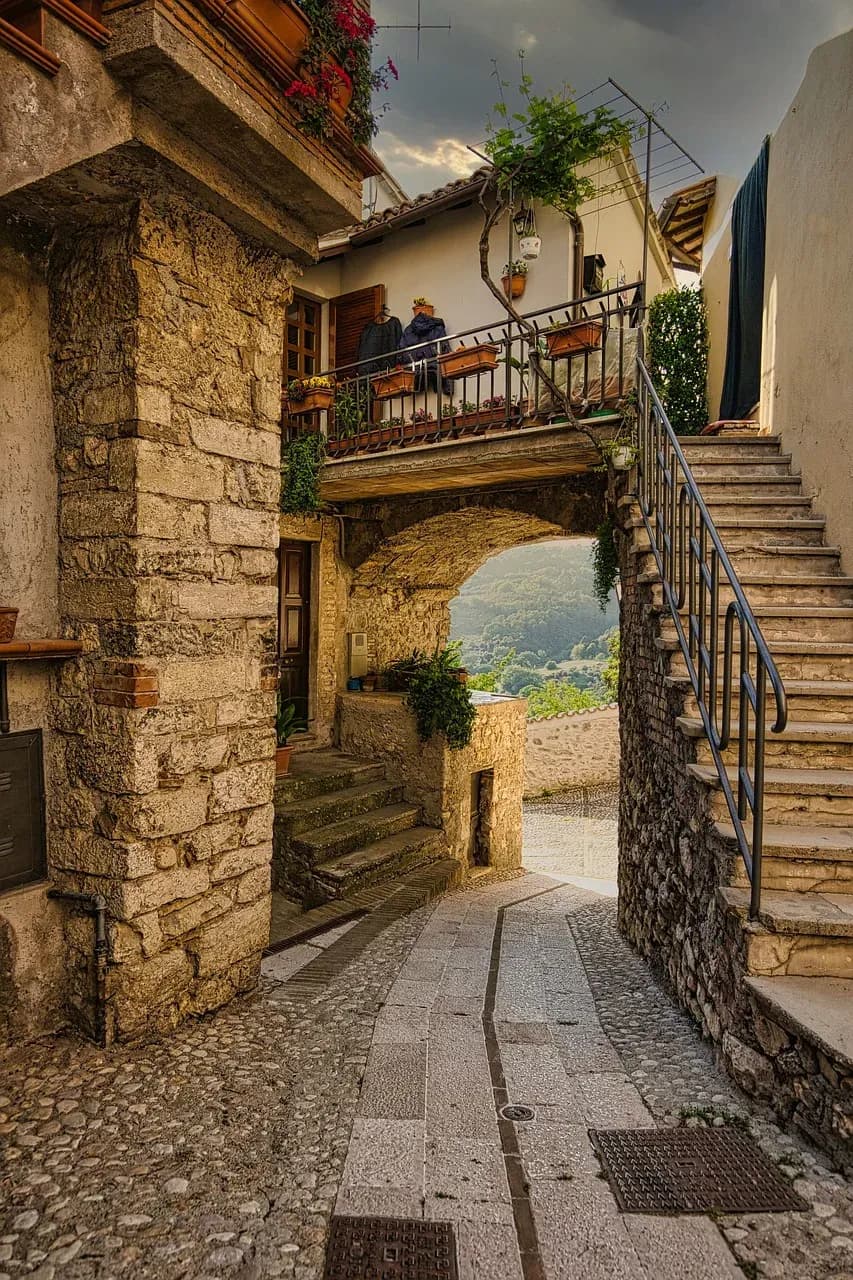
Organising a weekend in Bevagna requires a bit of strategic planning for a practical reason: you can easily explore the historic centre entirely on foot in half a day, but you'll definitely need a car for the stops outside town. Built on the flat, unlike many other Umbrian villages, the medieval core packs artisan workshops, historic theatres, and Roman ruins into a very compact perimeter. Spring and early autumn offer the ideal climate, with the added bonus of the grape harvest in the Sagrantino territories.
If you're looking for total historical immersion, late June hosts the Mercato delle Gaite. The town fills up during those days, so you should book tables and accommodation well in advance. Outside the festival dates, sleeping in the historic centre, for example in properties like B&B Casa Anna or Le Gatte Rosa B&B, means zero travel time internally and allows you to get around exclusively on foot between stops until evening.
The town circuit has strict rules on times and access. Many monumental sites can be visited quite quickly, from twenty to forty-five minutes, but they need to line up with the scheduled opening hours. Having your own car is essential as soon as you step outside the town walls, given the lack of frequent public transport links to reach the wineries or neighbouring villages.
How to organise your weekend stops
Day 1 — Town walls, Roman ruins and theatres
Morning
Your day begins along the perimeter of the village. The Cinta Muraria e Porte Medievali (Porta Cannara e Porta Foligno) features an almost intact layout, punctuated by towers and old access gates. A scenic walk takes about forty minutes and helps you grasp the urban layout. You then move towards Corso Matteotti to enter the Museo Civico di Palazzo Lepri. Housed in an eighteenth-century aristocratic building, it brings together archaeological finds from ancient Mevania and the civic art gallery, taking roughly forty-five minutes to visit. Not far away, between Via delle Terme Romane and Via Guelfa, you'll find the Terme Romane e Mosaico degli Animali Marini. This space, corresponding to the 2nd-century AD frigidarium, preserves a black and white mosaic; the visit, included in the Bevagna Cultura guided circuit, lasts about half an hour. For lunch, stop at the Osteria L'Angoletto di Porta Guelfa, located in Via Raggiolo, which has outdoor tables and serves traditional dishes or seafood options.
Afternoon
After lunch, the route leads back towards the inner alleys. The Circuito Culturale dei Mestieri Medievali (Cartiera e Cereria) takes a good hour of educational visiting inside ancient historic workshops. Since they are managed by the Ente Gaite, they mostly operate on a booking-only basis for groups, or have special weekend openings, so you need to check access in advance. Continue outdoors along Via del Teatro Romano to see the Teatro Romano di Mevania e Casa Medievale: a twenty-minute pedestrian path lets you see how the medieval houses rest directly on the remains of the cavea's ambulatories. In the late afternoon, it's worth moving to Piazza Silvestri e Chiese di San Michele e San Silvestro. This asymmetrically shaped space hosts two facing Romanesque churches and looks its best in the twilight (allow about three-quarters of an hour for a stop). The thirteenth-century Palazzo dei Consoli overlooks the same square, and nestled inside it is the small Teatro Francesco Torti e Palazzo dei Consoli, a nineteenth-century structure with a limited capacity of between 140 and 250 seats.
Evening
For dinner, the area around Via del Teatro Romano is home to the Ristorante Redibis. The venue is set inside ancient Roman tunnels and serves signature cuisine that incorporates local produce in a very unique underground setting.
Day 2 — Sagrantino and the neighbouring villages
Morning
The second day requires the use of a car. About a ten-minute drive from Bevagna is the Borgo di Montefalco e Complesso Museale di San Francesco. The visit easily takes up the whole half-day: the village offers sweeping views over the Umbrian valleys, and the church-museum preserves a cycle of Renaissance frescoes by the painter Benozzo Gozzoli. Heading back down to the valley for your midday break, on Corso Giacomo Matteotti you'll find the Ristorante Al Monastero, an elegant spot specialising in Umbrian dishes and homemade fresh pasta, serving as a convenient base before setting off again.
Afternoon
In the early afternoon, head, again by car, towards Vocabolo Castelbuono, home to the Tenuta Castelbuono - Il Carapace di Arnaldo Pomodoro. The estate is a large turtle-shaped winery-sculpture surrounded by rows of Sagrantino vines. The guided tour with tasting lasts about an hour and a half, and booking in advance is absolutely necessary to guarantee access. From there, a further five minutes on the road brings you to Frazione Capro to wrap up with a nature stop at the Lago dell'Aiso. This is a small, circular body of water, actually a thirteen-metre-deep artesian spring. Recognised as a Natura 2000 site and tied to old local folk legends, you can visit it with a peaceful thirty or forty-five minute walk.
Evening
Once back in town, you can have dinner in Piazza Filippo Silvestri at the TIP - Trattoria in Piazza. Known for its local cured meats and truffle strangozzi, it has the advantage of offering outdoor tables positioned directly in front of the historic centre's main monuments.
Tips for organising times and tickets
- To access the historic monuments without hoarding separate tickets, it's best to rely on the single pass from the Bevagna Cultura circuit. It includes entry to the Museo Civico di Palazzo Lepri, the Terme Romane, the Teatro Francesco Torti, and the San Domenico cloister, also covering the guided tour.
- If you're arriving by car or campervan, the most practical solution is in Piazzale dell'Accoglienza, in Via Ponte delle Tavole. The paid Area di Sosta Comunale is just a hundred metres from the centre and offers parking spaces, electrical hook-ups and waste disposal at a rate of €3 an hour or roughly €10-11.50 for twenty-four hours.
- From a spending perspective, prices are lower than in the larger Umbrian towns. A full meal with local wines like Sagrantino comes to around €40-55 per head. For the sightseeing part, between city museum tickets and winery experiences, you should budget about €10-15 per day in fixed costs.
- The viewing order for the old Cartiera e Cereria workshops needs to be calculated based on the calendar: they don't have set weekly hours but largely operate on a booking basis or during special weekend openings.
Recommended B&Bs and hotels for the weekend
A highly central property, useful if you want to get around on foot between the village's medieval squares and restaurants.
View on Booking →Located along Corso Amendola, it offers apartment options and B&B rooms right in the core of the town.
View on Booking →A bed and breakfast housed in a period building, situated right by the town's old access walls.
View on Booking →