
If you're wondering what to see in Guardialfiera, the easy answer is the lake. Yet swimming is forbidden there, and the best of the weekend lies in the village overlooking the water, in Piedicastello: an 11th-century church with walls covered in bas-reliefs and, beneath the nave, a crypt brought to light only in 1975.
We are in Molise, in the Valle del Biferno. Lago di Guardialfiera is an artificial reservoir created by damming the Liscione, and along its shores people stroll and fish. The village worth getting to know, however, is the ancient one: a medieval core that grew around the ruins of the castle, with stone alleys and flights of steps, where the writer Francesco Jovine was born.
The plan for this weekend in Molise is simple: on the first day you stay up high, among churches and stone alleys; on the second you head down towards the water and climb back up into the woods above the village. The mornings are long and do the heavy lifting; the afternoons are short: a leisurely lunch and a brief stop. There are only a few sights, almost all in the same area, Piedicastello; the only one requiring substantial time is the walk along the lake, around two hours.
Two days in Guardialfiera, from the village to the lake
Day 1 — Piedicastello, between stone and the crypt
Morning
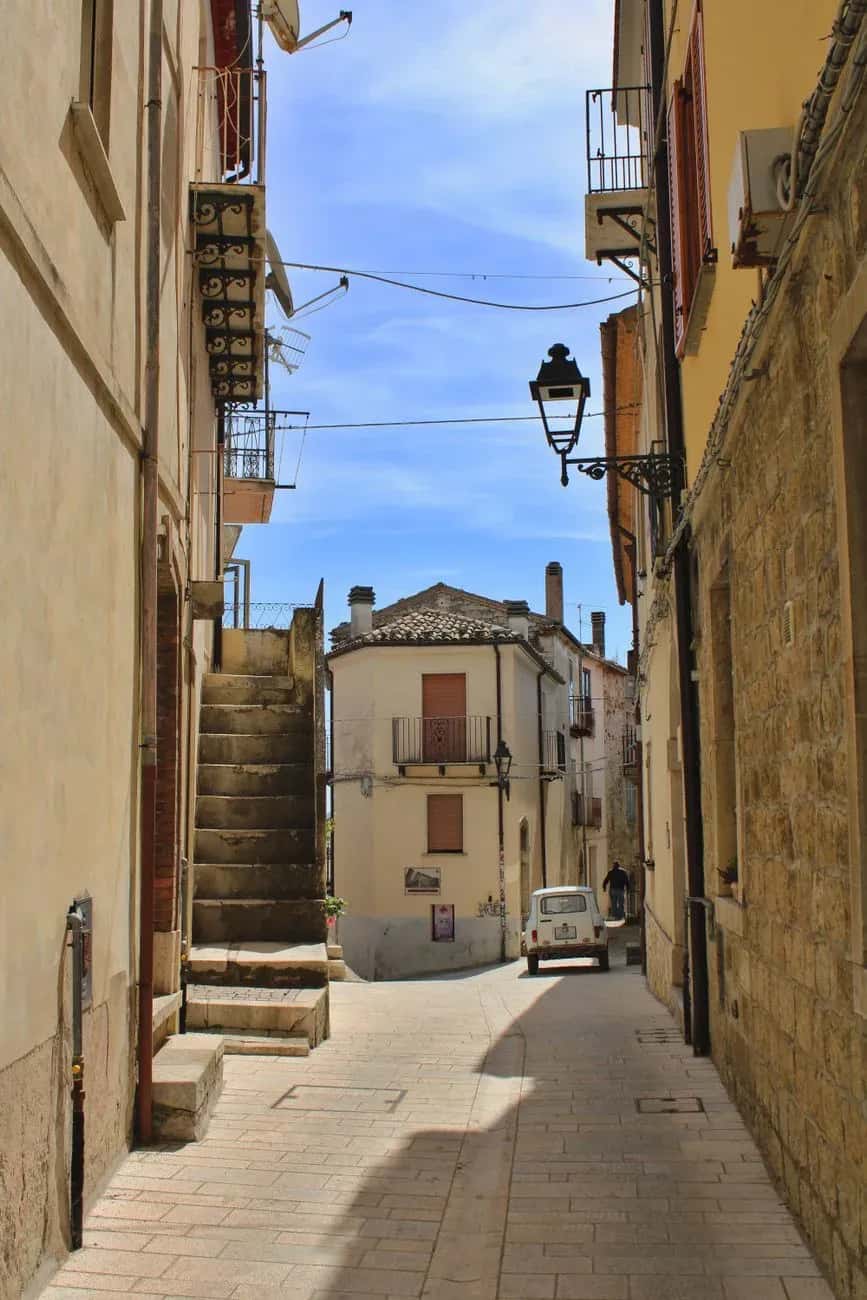
Leave the car behind and start at the Borgo Antico di Piedicastello, the village's original medieval core, built around the ruins of the ancient castle. Begin here because everything else in Guardialfiera grew later. There is no single monument to tick off: it is a web of stone alleys and steps that occasionally open onto panoramic viewpoints, and it pays to wander aimlessly for half an hour before looking for anything specific.
Among the alleys you will find the Casa Natale di Francesco Jovine, the historic house where the author of 'Signora Ava'—one of the quintessential novels of rural Molise—was born. If Jovine interests you, the Parco Letterario Francesco Jovine is an open-air trail touching the spots in Guardialfiera described in his works: your walk through the village becomes an on-site literary tour.
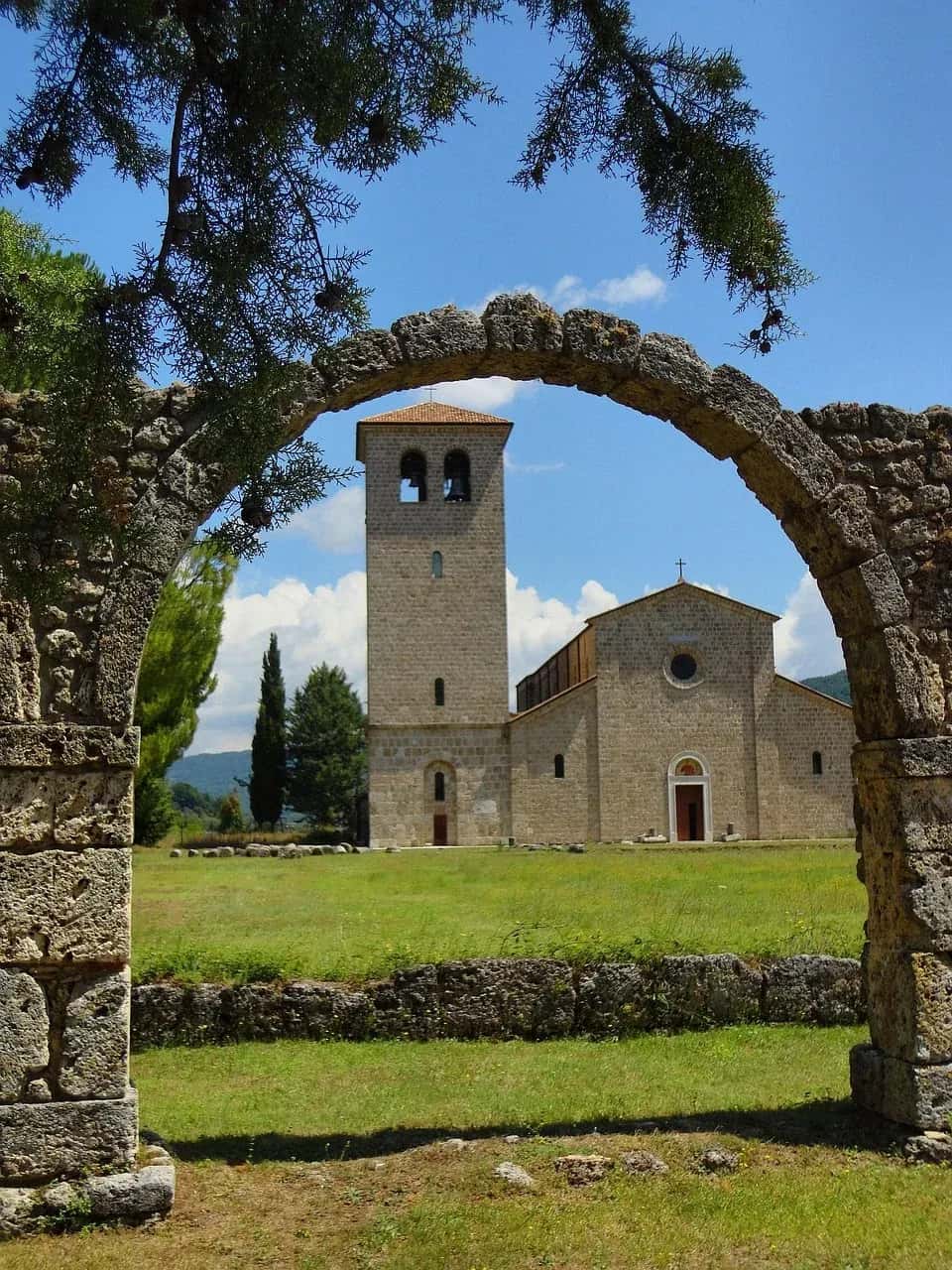
The anchor of the morning is the Chiesa di Santa Maria Assunta, an ancient 11th-century cathedral. Look at it from the outside first: symbolic bas-reliefs, combining pagan and Christian imagery, are embedded in the walls, and this is the detail to spot before you step inside. If time is short, this is the one feature you shouldn't skip. Allow around 45 minutes for both inside and out, and don't rush: it's the reason the village is worth an entire morning.
Then head down into the Cripta di Santa Maria Assunta, a 10th- to 12th-century hypogeum with groin vaults resting on stone columns. Remarkably, it was only uncovered in 1975 beneath the central nave: from above you would never guess it is there, which is precisely what makes it such a great surprise.
Finally, there is the Porta Santa, a rare Gothic Holy Door established, according to tradition, in 1053 by Pope Leone IX. It opens with a plenary indulgence just two days a year, so on any other day you will see it closed, but it makes for a brief stop. If you only have one morning, stick to the church, crypt, and portal and leave the rest: they are all in Piedicastello, and you can visit them back-to-back without travelling anywhere.
Afternoon
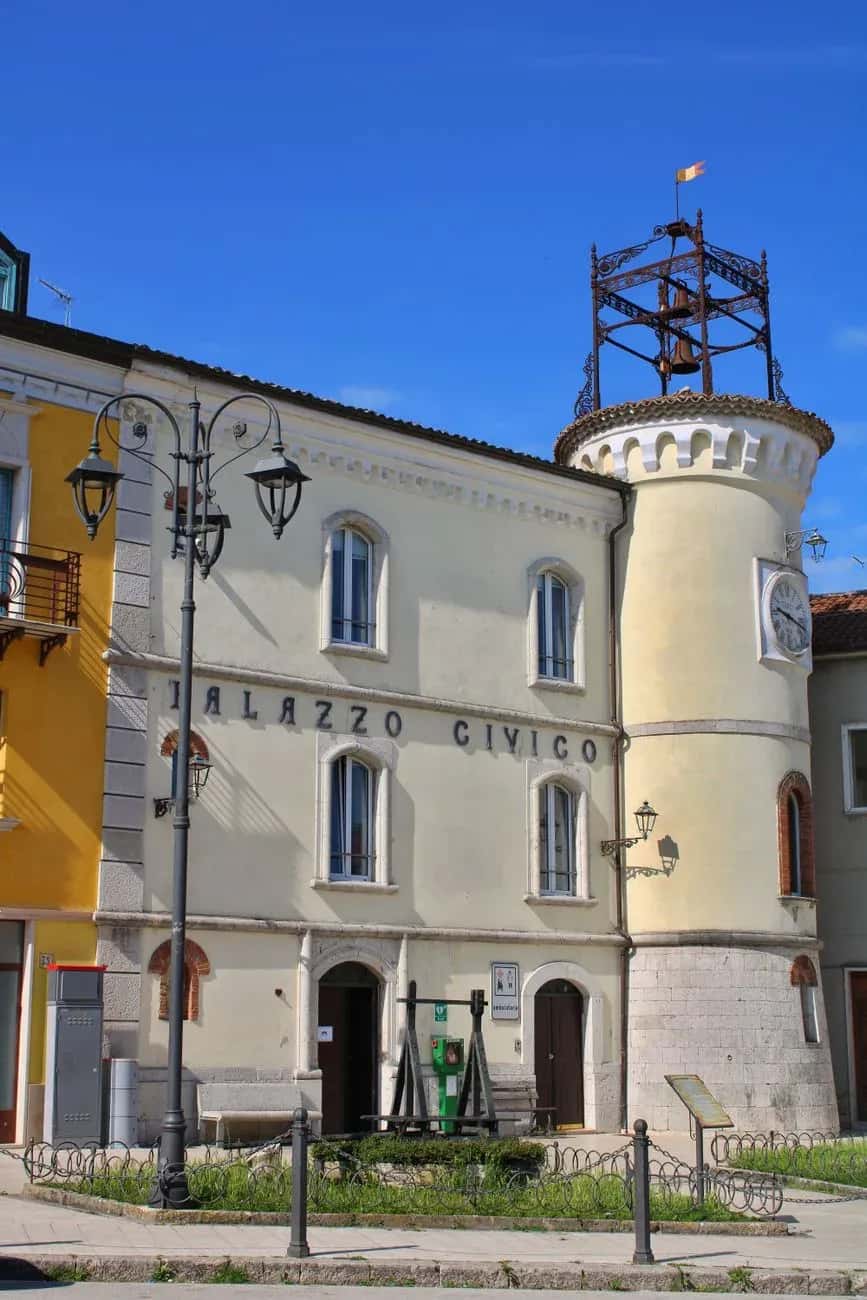
For lunch, head to Casale di Clesilde in Contrada Cerreto: traditional Molise cuisine, featuring grilled meats and classic pasta dishes. In the afternoon, only one stop remains: the Chiesa di San Giuseppe in the historic centre, from where the religious procession departs for the annual opening of the Porta Santa. After the morning, the doorway gets its full context. One stop is plenty; leave the rest of the afternoon to enjoy the village.
Evening
Dinner and overnight stay at Hotel Ristorante Solelago, in Contrada Difesa dei Bovi: regional cuisine and pizzeria, with views over the lake right nearby. After a morning of alleys and stone steps, it is the best part of the day.
Day 2 — The lake and the woods
Morning
The second day belongs to the water, and it's best to start early: the walk along the shores of Lago di Guardialfiera takes around 2 hours and is the longest activity of the weekend, so it's ideal before lunch. If you stayed at a hotel just a short walk from the lake, you can set off right from your doorstep. After the narrow alleys of Piedicastello, the scale shifts: here, the landscape is that of a vast, open reservoir occupying the bottom of the Valle del Biferno, making for a scenic and relaxing stroll. You walk along the reservoir and take it in: swimming is not permitted, so leave your swimwear in the suitcase.
Along the shores, look out for the Ponte di Annibale. Despite its name, the bridge is of Roman and Angevin origin, and today lies beneath the water. It can only be seen—on foot or from the viaduct—during summer or severe dry spells. If you visit at any other time, be prepared not to see it: it is the most evocative stop on paper, but also the least guaranteed, and the lake remains a rewarding walk regardless.
From the lake, head back up towards the Bosco di San Nazzario, the wooded hillside area overlooking the village. Here you'll find leafy walks and cool breaks in nature: after the stone of Piedicastello and the open banks of the reservoir, the woods bring a welcome change of pace to the weekend. Situated high above the village, they bring the trip full circle: you started among the village's stones, and you finish among the trees towering above it.
Afternoon
For lunch, stop at Cascina Sul Lago, along the lake road: an informal, agriturismo-style dining spot set in the countryside, serving dishes made with local ingredients. After lunch, you can set off for home at your own pace, with the lake and the woods already behind you.
Good to know before you go
- Guardialfiera is about 35 km from Campobasso and 33 km from the Adriatic coast at Termoli, easily reached via the SS 647 Fondo Valle del Biferno. A car is essential locally: public transport primarily serves the valley floor and does not reach the natural areas around the reservoir.
- Lake depth: under normal conditions the average is 2-3 metres, reaching depths of over 20 metres near the dam.
- Bring comfortable shoes. In Piedicastello, the alleys climb uphill, the steps are steep, and the surfaces are entirely stone, so you will want to take your time.
- The ideal period is from spring to early autumn: in late spring the hills are lush and green, while in the height of summer the water level drops, making the submerged bridge much more likely to surface.
- For a themed weekend, aim for 1 and 2 June, the Festa di San Gaudenzio and the only time each year that the Porta Santa opens, or the Christmas period, when a live nativity scene is staged through the alleys.
Where to stay
Family-run hotel with a swimming pool and panoramic views, just steps from the lake.
View on Booking →Bed and breakfast nestled in peaceful hills, in the municipality of Guardialfiera.
View on Booking →Holiday accommodation for a peaceful stay, in the municipality of Guardialfiera.
View on Booking →