

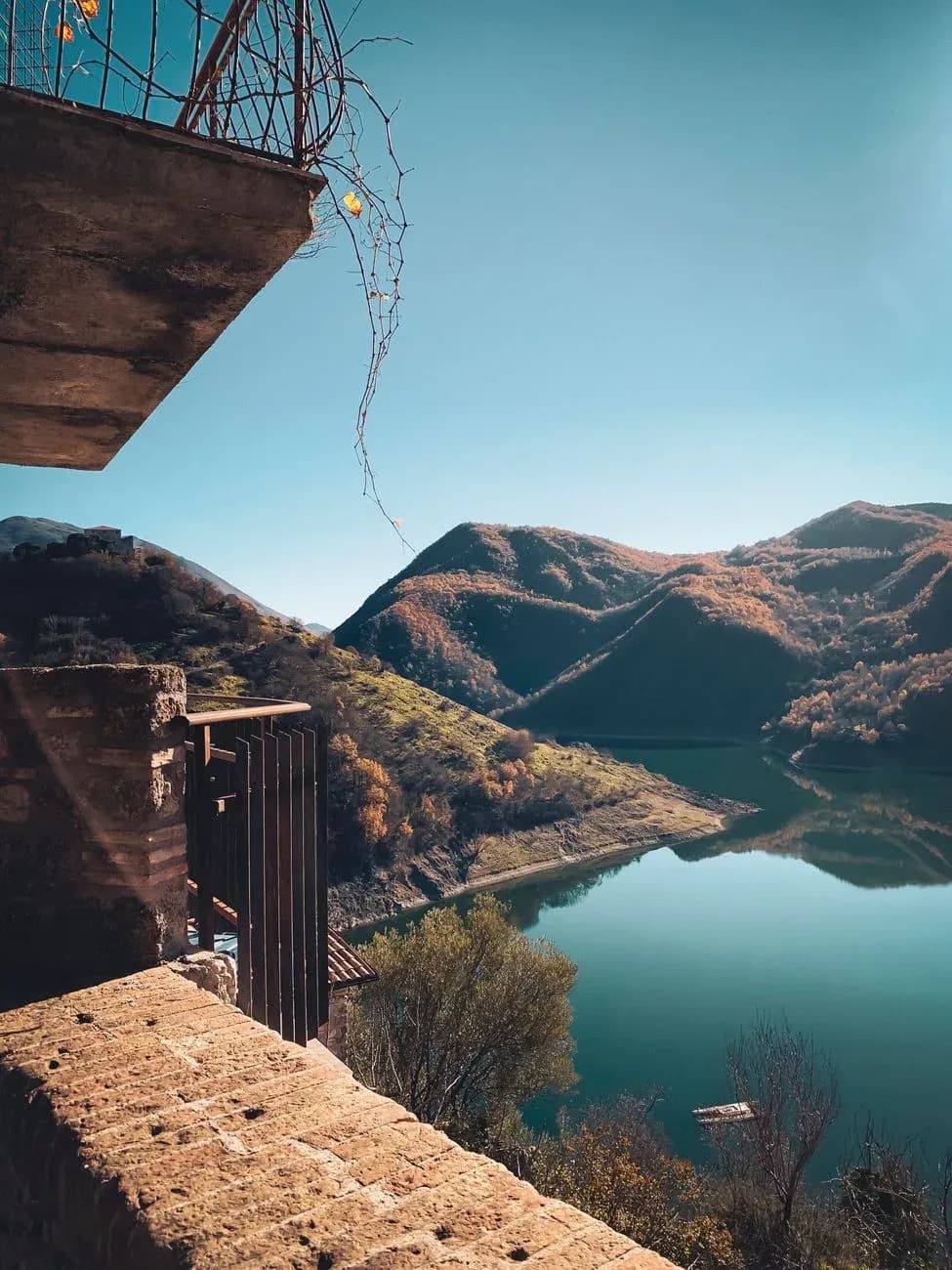
Northern Lazio revolves around fresh water and volcanic rock. This corner of the region is tailored for driving: the main railway stations end at Orvieto or Viterbo, and public buses run sparsely on public holidays. Behind the wheel, however, journeys between the main villages almost always take fifteen to twenty-five minutes, making it easy to hop from one lake to the next.
The best time to explore the Tuscia viterbese is from April to June or between September and October. In spring and early autumn, temperatures are ideal for walking without the stifling summer heat, and you avoid the heavy holiday traffic typical of July and August.
Timing requires a little planning. At weekends, tables at waterfront restaurants fill up very quickly. It pays to book your meal stops well in advance, especially around Lago di Bolsena, so you aren't left settling for inconvenient alternatives.
How to plan your weekend
Day 1 — From Bagnoregio to Bolsena
Morning
Your morning begins in the Valle dei Calanchi. To visit Civita di Bagnoregio ahead of the crowds, it is best to arrive as early as possible. Perched on a tufa crag, this village can only be reached on foot across a long footbridge. Allow two to three hours for the full visit. Once you have finished your walk, drive towards Montefiascone to visit the Rocca dei Papi e Belvedere. Sitting at the crater's highest point, this ancient papal fortress offers sweeping 360-degree views across the entire lake basin for a rewarding hour.
Afternoon
After lunch, head down into the medieval historic centre of Bolsena. Its landmark is the Rocca Monaldeschi della Cervara e Museo Territoriale, a panoramic fortress housing an aquarium and Etruscan-Roman archaeological collections; the visit takes about an hour and a half. Just nearby, still within the historic centre, stands the Basilica di Santa Cristina. This sacred complex is renowned for housing the relics of the 1264 Eucharistic Miracle and its early Christian catacombs. You will need under an hour, around forty-five to sixty minutes, to explore the naves and the underground route.
Evening
Late afternoon takes the itinerary to the southern shore, in the municipality of Marta. The Lungolago e Borgo Pescatori di Marta is a lakeside hamlet looking towards Isola Martana; the evening light accompanies a scenic stroll along the shore. Staying in Marta, on Via Guglielmo Marconi you will find Locanda Amalasunta, serving dishes based on whitefish and perch. Alternatively, on Via Giuseppe Garibaldi, Ristorante Griglieria Sant'Egidio serves grilled meats and homemade fresh pasta.
Day 2 — Bracciano and volcanic nature
Morning
On day two, head south towards Lago di Bracciano. Your first stop is the Castello Orsini-Odescalchi, an imposing and remarkably preserved Renaissance residence overlooking the water; allow between an hour and a half and two hours for the courtyards and staterooms. Leaving the castle, continue to Anguillara Sabazia Centro Storico. The village tumbles down a promontory, with a tangle of medieval alleys leading right down to the water's edge. Spend roughly two hours wandering its stone steps and quiet piazzas.
Afternoon
On the northern shore of the Bracciano basin, the Borgo antico di Trevignano Romano rounds off your visit to the area with a pristine pedestrian lakeside promenade and the ruins of the Rocca Orsini. From here, drive north to the Riserva Naturale Lago di Vico, in the municipality of Caprarola. The Sentiero Le Pantanacce e Pozzo del Diavolo offers an entirely flat nature trail. It takes just thirty to forty-five minutes to walk through the woods of the Monti Cimini and enjoy birdwatching over the volcanic lake. The final stop before dinner is the Promontorio e Rocca Farnese di Capodimonte, a medieval village on a volcanic peninsula jutting into Lago di Bolsena, where you can spend an hour or two exploring the narrow streets and small beach.
Evening
For dinner, head back to Marta to sample its traditional lakeside dining. On Via della Spiaggia, Ristorante Il Pirata sits right on the water, serving pike, sand smelts and fried European perch. If you are after something even more deeply rooted in local history, Ristorante Da Otello on Via Laertina has been welcoming guests since 1958: the ideal spot to order eel or try sbroscia, the traditional local lake-fish soup.
Practical tips for your trip
- At Civita di Bagnoregio, buy your €5 entry ticket online in advance to cut down on queuing time at the entrance over the weekend.
- The main car park for Civita is Piazzale Battaglini in Bagnoregio, which costs around €2 per hour. From there, you can take the public shuttle bus to the viewpoint or walk for about twenty minutes.
- A car is essential to link the fortresses and lakes of northern Lazio: trains only call at Viterbo or Orvieto, and local buses run very limited Sunday services.
- At weekends and during the warmer months, lakeside restaurants in Marta and Capodimonte fill up from the morning onwards: book well ahead to secure a table.
Where to stay by the lake
Located just steps from the shores of Lago di Bolsena, convenient for heading out on foot.
View on Booking →Set directly on the town's lakeside promenade, offering panoramic views over the water.
View on Booking →A secluded retreat surrounded by greenery, situated a short distance from the lake's shores.
View on Booking →