

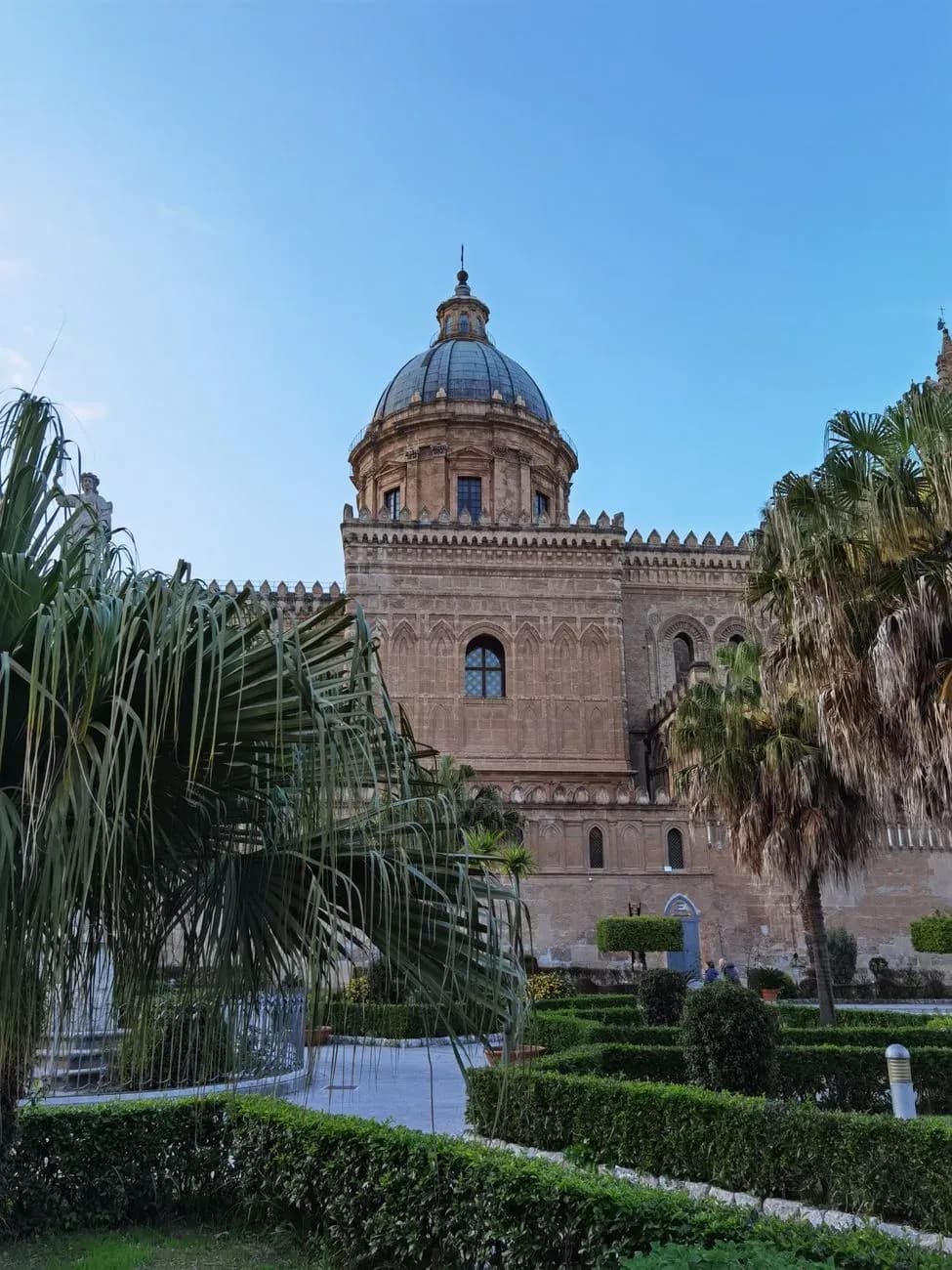
Planning a weekend in Palermo takes a bit of strategy, especially if you want to avoid spending the best hours of the day stuck in traffic. Luckily, the historic centre is compact and largely pedestrianised, particularly along Via Maqueda and Corso Vittorio Emanuele. This makes it easy to get around on foot, saving longer journeys only for the outer sights.
The best times to visit are spring, from April to June, or the autumn months of September and October. At these times of year, temperatures remain mild, allowing you to explore the city without the summer crowds or the intense heat typical of midsummer.
For accommodation, staying somewhere central like the Eurostars Centrale Palace or Palazzo Balsamo Boutique Hotel makes getting around far easier. Alternatively, Bastione Spasimo Boutique Hotel offers a convenient base in the Kalsa district. Whichever base you choose, the secret to making the itinerary work is grouping sights by neighbouring areas, dedicating each half-day to a specific quarter.
How to plan your itinerary day by day
Day 1 — From the historic market to royal architecture
Morning
The day begins in the Albergheria district. It's best to arrive at the Mercato di Ballarò early in the morning, between 8:30 and 13:00, when the stalls are at their liveliest and you can hear the vendors' famous "abbanniate" street cries. From here, head towards Piazza del Parlamento to visit the Palazzo dei Normanni e Cappella Palatina, the oldest royal residence in Europe, famous for its Byzantine golden mosaics. Booking your ticket in advance is strongly recommended, and the full tour takes around an hour and a half to two hours.
Afternoon
Continue along Corso Vittorio Emanuele to reach the Cattedrale di Palermo, an imposing monument blending Gothic, Neoclassical, and Arab-Norman styles, designated a UNESCO World Heritage site. Climbing up to the roof is very popular, and it's best planned for late afternoon for the light and views over the city. A few steps further, at the intersection with Via Maqueda, you'll reach Quattro Canti (Piazza Vigliena). This octagonal square is framed by Baroque facades that are illuminated by direct sunlight in turn as the hours pass.
Evening
To round off the first day, the streets of the centre offer several quick dining options. Heading down towards Piazza Marina, just off Corso Vittorio Emanuele, you can stop at 'Nni Franco U' Vastiddaru. This informal, budget-friendly spot serves classic hot local street food, especially traditional rolls with panelle (chickpea fritters), cazzilli (potato croquettes), and spleen.
Day 2 — Piazza Bellini, the Kalsa, and the seafront
Morning
Your second day focuses on Piazza Bellini, an area packing several historic landmarks into just a few metres. The first stop is the Chiesa di Santa Maria dell'Ammiraglio (La Martorana), a medieval church renowned for its Byzantine golden mosaics and for celebrating the Italo-Albanian Byzantine rite. Right next door stands the 12th-century Chiesa di San Cataldo, instantly recognisable by the three hemispherical red domes on its roof. Completing the square's trio is the Monastero e Chiesa di Santa Caterina d'Alessandria, with its Baroque mixed-marble interior and rooftop terraces. Before leaving the area, call in at I Segreti del Chiostro, an artisan pastry shop set right inside the monastery, to sample fresh cannoli, almond pastries, and cassate made to historic convent recipes.
Afternoon
Moving into the neighbouring Kalsa quarter, you'll come to Piazza Pretoria e Fontana Pretoria, the grand Renaissance fountain adorned with nude statues and mythological figures, locally dubbed the "Fountain of Shame". From here, walk to Palazzo Butera, a vast noble residence overlooking the sea, now restored as an exhibition space and contemporary art gallery. When it's time for a bite to eat, head towards the adjacent Basilica di San Francesco d'Assisi. This is home to Antica Focacceria San Francesco, a 19th-century institution serving pani câ mèusa and panelle.
Evening
For the evening, head towards the sea. The Foro Italico offers a long pedestrian promenade and a broad lawn, making it a great spot for a stroll looking out over the Golfo di Palermo as the sun goes down. Staying around the harbour at the Cala, the place for a quick bite is Pani Ca' Meusa Porta Carbone, a historic stall where you can order your spleen sandwich "schietta" (plain with lemon) or "maritata" (topped with caciocavallo cheese).
Day 3 — Theatres, the Capo, and day trips out
Morning
Start your morning wandering the streets of Monte di Pietà with a stroll through the Mercato del Capo. More compact than Ballarò, it's packed with stalls selling citrus fruits, fresh fish, spices, and street food. To grab a quick bite right among the stalls, stop at the historic fried-food counter Dainotti's da Arianna, famous for freshly cooked stigghiole, sfincione, and arancine. From the market, head to Piazza Verdi to visit the Teatro Massimo, Europe's third-largest opera house. The best way to see the interior is on a daytime guided tour, which takes around 40 minutes and includes access to the auditorium and historic halls. Nearby in the Politeama district, you'll also find the Teatro Politeama Garibaldi, a Neoclassical circular building crowned by a bronze chariot driven by Apollo.
Afternoon
The final stretch of the trip takes you slightly outside the city centre. In the Cuba quarter, the Catacombe dei Cappuccini takes about 45 minutes to visit. This subterranean cemetery houses mummies and embalmed bodies, including the famous body of little Rosalia Lombardo. Alternatively, if you prefer the outdoors, the Riserva Naturale Monte Pellegrino offers walking trails through the shade of trees and Mediterranean scrub. The paths climb up to the Santuario di Santa Rosalia and offer sweeping viewpoints over Addaura and the gulf of Mondello.
Evening
Spend your final evening around Via Ruggiero Settimo and the Politeama district, which becomes one of the city's liveliest hubs at night.
Practical tips for a smoother trip
- From Falcone-Borsellino airport, take the Prestia e Comandè shuttle bus, which runs every half hour and takes 35 minutes to reach the Stazione Centrale or Piazza Politeama. For the return journey, always allow an extra half hour if travelling during peak hours due to heavy traffic.
- Hiring a car if you only plan to stay and travel around the centre is rarely a good idea. The limited traffic zones (ZTL) are strictly enforced, streets are narrow, and traffic is often chaotic. A car is only worthwhile if you're planning trips into the wider province or to nature reserves.
- Visiting hours for the historic markets vary by area. Il Capo and Ballarò must strictly be visited in the morning (between 8:30 and 13:00) when they are in full swing, whereas the Vucciria has now become primarily an evening and nightlife destination.
Central hotels and accommodation
A hotel set inside a restored historic palazzo along Corso Vittorio Emanuele.
View on Booking →A four-star hotel located within easy walking distance of the cathedral and Piazza Pretoria.
View on Booking →A boutique stay with a terrace and garden, set close to the church of Santa Maria dello Spasimo.
View on Booking →