

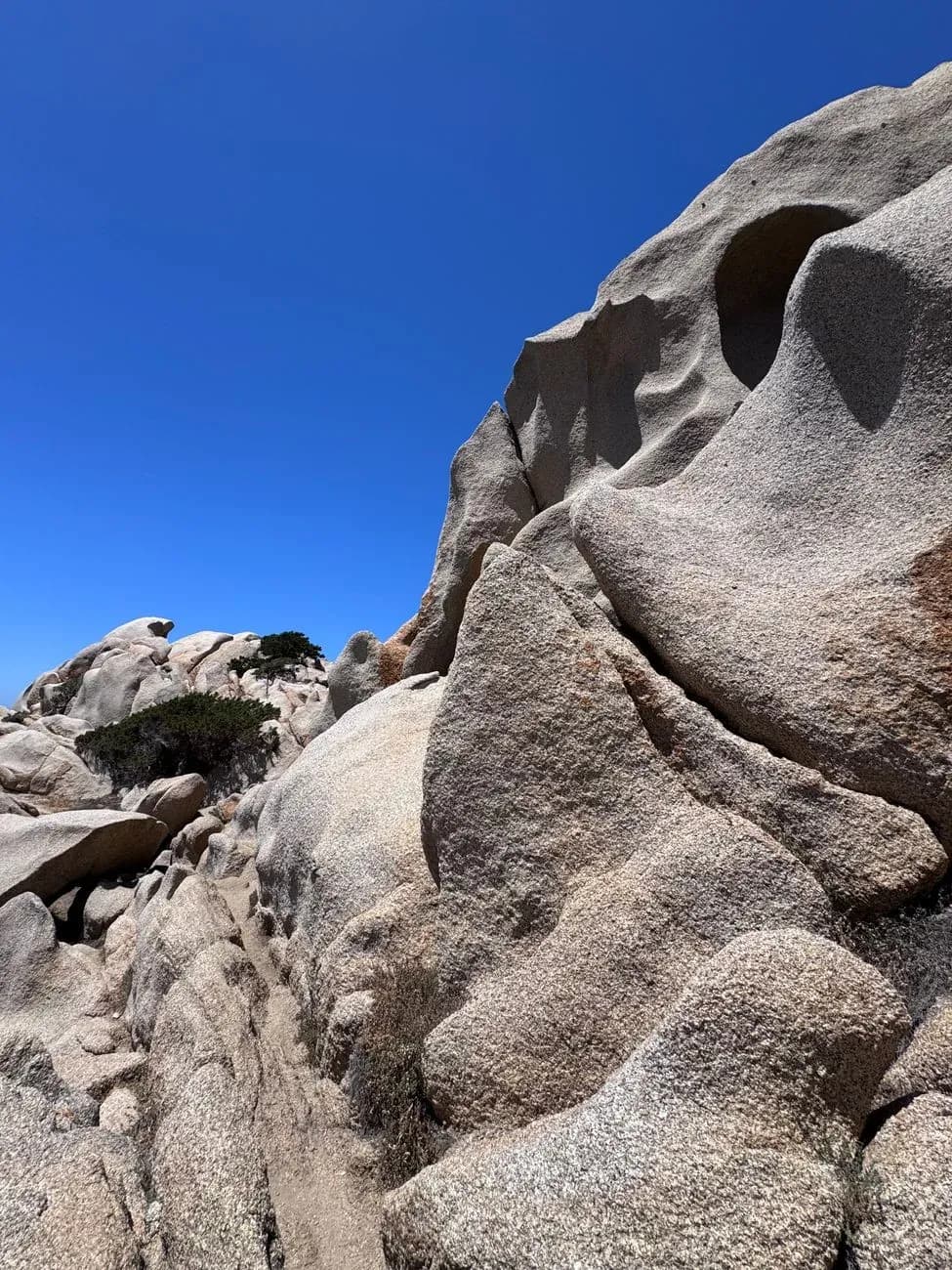
A trip into inland Sardegna reveals an island of dense woodlands, lakes, and sheer rock faces, far removed from the usual coastal paths. Barbagia and Tacchi d'Ogliastra frame a striking landscape, where granite historic centres alternate with deep canyons and grand mountain caverns. The best months to explore this region run from April to June, when spring rainfall keeps the waterfalls flowing generously and nature is at its lushest, or between September and late October, perfect for walking on crisp days free from the summer heat.
Getting around takes careful planning, starting with a hire car to tackle the distances between valleys. Inland roads follow national and provincial routes that offer sweeping vistas, though they are constantly marked by bends and hairpins. It pays to calculate travel times based on lower average speeds, without rushing your daily legs. Sardegna interna calls for a measured pace, balancing physically demanding hikes with unhurried visits to the small museums scattered across the historic villages.
How to plan your 4-day route
Day 1 — Karst springs and lake kayaking
Morning
Your first day begins around Oliena, spending a couple of hours at the Sorgenti di Su Gologone. This karst spring sits inside a nature park at the foot of the Supramonte massif. Access to the grounds requires a €2 entrance ticket. The shaded woodland is ideal for a relaxing morning walking along marked paths. Chilly water wells up straight from the limestone rock into a deep pool, offering a striking first taste of the rugged local geology.
Afternoon
Drive a few kilometres further to the Dorgali area to explore Lago del Cedrino. Framed by dark basalt cliffs, this reservoir is best enjoyed from the water. The main activity is a roughly 3-hour kayak trip, paddling towards quiet, untamed inlets. Mooring in one of these small coves, step ashore and walk 5 to 10 minutes inland to reach the Chiesa Campestre di San Pantaleo. Dating back to 1668, this country church looks straight out over the lake, making for a scenic stop before you paddle back.
Evening
Head back towards Oliena for dinner. Ristorante Su Gologone is renowned for classic dishes of Barbagia cuisine, specialising in maccherones de busa and traditional porceddu roasted over an open wood-fired hearth. Given its popularity, book your table well ahead. If you want to stay nearby for the night, consider Su Gologone Experience Hotel, located just a short distance from the springs.
Day 2 — Descending into the Supramonte canyon
Morning
The entire morning is dedicated to descending towards the Gola di Gorropu, set on the boundary between the municipalities of Urzulei and Orgosolo. It is a monumental canyon featuring limestone cliffs that soar over 400 metres high. You reach it on foot from Passo Genna Silana, a hike best started early in the morning. Once at the bottom, entry to the canyon costs €6, payable only in cash. The visit inside usually takes between 90 minutes and 2 hours, scrambling over large white boulders from 10:00 to 16:30. For the journey back up to the main road, you might consider booking a 4x4 shuttle service.
Afternoon
Trekking back up the canyon trail requires stamina and takes up much of the early afternoon. Following that strenuous effort, use the second half of the day to recharge while driving along scenic provincial roads. Constant hairpins demand careful driving, keeping your speed around 45–50 km/h. The drive back towards Oliena becomes an experience in itself, allowing you to watch the mountain scenery shift in colour as the sun dips lower.
Evening
Dinner is booked at Ristorante Enis Monte Maccione, a mountain venue nestled in an ancient holm oak forest. Located in Località Monte Maccione on the lower slopes of Monte Corrasi in Oliena, its panoramic terraces overlook the valley while you savour hearty, high-altitude dishes.
Day 3 — Traditions, sculptures, and historic stone villages
Morning
Day three turns towards local history and art. Begin in Mamoiada with a visit to the Museo delle Maschere Mediterranee, open from 10:00 to 18:00 (closed on Tuesdays during the low season). The museum explores the ancient rituals behind the Barbagia carnival traditions of the Mamuthones and Issohadores. Next, head to Orani to visit the Museo Nivola. Housed in a historic former public washhouse, it features a sculpture park and contemporary art spaces. It is open from 10:30 to 19:30, except on Wednesdays, and takes around 90 minutes to tour.
Afternoon
In the afternoon, drive to Gavoi, a mountain village awarded the Bandiera Arancione. Wander through the Centro Storico di Gavoi on foot, taking in its narrow alleys, solid granite homes, and the late-Gothic church of San Gavino, while discovering the origins of Fiore Sardo, the area's iconic cheese. Later in the afternoon, drop down to an altitude of 700 metres to visit Lago di Gusana, framed by the Gennargentu woods. Sunset is the ideal time for a peaceful stroll or an e-bike ride along the lakeshore.
Evening
Staying in town, enjoy dinner at Ristorante Santa Rughe, located at Via Carlo Felice 2. The menu highlights bold Barbagia flavours, from alpine pecorino cheeses to local mountain meats. For nearby accommodation, Hotel Taloro offers rooms surrounded by greenery right on the edge of the lake.
Day 4 — Caves, waterfalls, and the crags of Ogliastra
Morning
Crossing into Ogliastra brings you to the entrance of Grotta Su Marmuri, in the territory of Ulassai. It is a deep karst cavern beneath the Tacchi d'Ogliastra, boasting chambers reaching 70 metres in height. The guided tour lasts 90 minutes and costs €12. Back above ground, have lunch at Ristorante Su Bullicciu, set right by the entrance forecourt. This mountain eatery serves traditional Ogliastra dishes, from fresh handmade pasta to roast meats.
Afternoon
The Ulassai area is also home to the Cascate di Lequarci in Località Santa Barbara. These falls feature a 70-metre-wide curtain of water plunging 50 metres, with wide views across the valley through the holm oaks. Heading towards Osini, make a quick stop at the Scala di San Giorgio, a dramatic vertical chasm through the limestone cliffs of the Tacchi that takes 30 to 45 minutes to explore. Afterwards, head up to 960 metres on the Teccu plateau to walk through the Nuraghe e Villaggio Nuragico di Serbissi. This four-towered complex sits atop a karst cave, open roughly from 10:00 to 13:00 and 14:30 to 18:30.
Evening
For the final meal of your trip, dine at Ristorante Santa Barbara, a trattoria in Località Parco Santa Barbara, Villagrande Strisaili. Surrounded by greenery near the Tacchi d'Ogliastra, it serves home-style cooking based on zero-kilometre produce. In the nearby mountain village of Ulassai you will also find Hotel Su Marmuri, ideal for ending your trip without any further driving.
Top tips for your trip
- A hire car is essential for getting around these areas. Roads like the SS125 and SS389 offer expansive views but wind through endless hairpins; expect average speeds of around 45–50 km/h, which is why a compact SUV or an agile saloon is your best bet.
- The entrance to the canyon has no card machine reception, so the €6 admission fee must be paid strictly in cash. To make the hike easier, begin your descent from Passo Genna Silana in the morning and consider booking a return trip by 4x4 shuttle.
- Visiting Grotta Su Marmuri requires sensible layers due to the chilly underground conditions. Inside, the temperature stays at a constant 10°C year-round with high humidity. Regardless of the weather outside, closed-toe walking shoes with good grip and a fleece or windbreaker are essential.
- Excluding accommodation, allow a daily budget of roughly €55–80 per person. This covers traditional full meals, admission to cultural sites and caves (€6 to €12 each), and kayak hire (around €15–20). For weekends, be sure to book local restaurants well in advance to secure a table.
Recommended hotels and B&Bs
An elegant hideaway steps from the karst springs, featuring a spa, pools, and spaces dedicated to Sardinian art.
View on Booking →A peaceful property surrounded by woodland, looking directly out over the shores of Lago di Gusana.
View on Booking →A welcoming hotel set in the mountain village, offering wide views across the valley and the Tacchi.
View on Booking →