

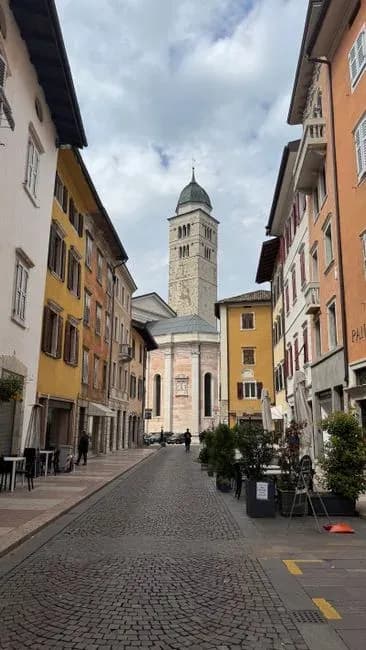
The city experiences two peak periods for visitors: the months from May to September, perfect for outdoor walks, and the window between late November and early January, driven by the Christmas markets. Planning your trip during these weeks calls for booking well in advance, both for overnight stays at hotels like Grand Hotel Trento or Hotel Buonconsiglio, and for entry to the main attractions.
The urban layout divides sharply between the old town and the modern or hillside districts. The historic centre is compact and entirely pedestrianised, a grid of streets you can easily explore on foot without needing public transport. Leaving the city core is straightforward too: the urban cable car takes you up into the hills in just a few minutes, while for trips to the surrounding lakes or peaks, you are best off relying on a hire car or the Trentino Trasporti regional bus network.
How to structure your four days
Day 1 — The ancient core and historic palazzi
Morning
Start your discovery of the city on foot in its monumental heart, exploring Piazza Duomo e Fontana del Nettuno. This eighteenth-century masterpiece by Francesco Antonio Giongo dominates the square and takes about thirty to forty-five minutes to appreciate in all its detail. Overlooking the same square stands the Cattedrale di San Vigilio (Duomo di Trento), an imposing Romanesque-Gothic building closely linked to the events of the Council of Trent. Entry is free outside of religious services, and the visit takes another forty-five minutes. Right next door, the former bishop's palace houses the Museo Diocesano Tridentino e Palazzo Pretorio, showcasing Flemish tapestries and medieval sacred art; the complete route takes an hour and a half, wrapping up your morning.
Afternoon
Continue along Via Belenzani, the Renaissance spine of the city centre. The frescoed façades of the noble palazzi are well worth a thirty-minute photo walk. At the end of the street, you'll come to the Chiesa di Santa Maria Maggiore, a Renaissance church built from red Trento stone that hosted solemn sessions of the Council of Trent and can be visited fairly quickly. Heading underground, the itinerary continues to the S.A.S.S. Spazio Archeologico Sotterraneo del Sas beneath Piazza Cesare Battisti. This subterranean site reveals the remains of ancient Roman Tridentum and takes about forty-five minutes to explore.
Evening
Dinner is in the heart of the historic centre, around Via del Simonino. Ristorante Ca' dei Gobj serves traditional local fare, with a menu centred on canederli and regional meats.
Day 2 — Modern science and ancient residences
Morning
Head towards the Quartiere Le Albere, a modern, eco-friendly district on the banks of the Adige river, defined by contemporary architecture, gardens, and water channels. An hour-long stroll sets you up nicely before entering the MUSE - Museo delle Scienze, the avant-garde building designed by Renzo Piano. The exhibition is interactive and includes a tropical greenhouse as well as nature trails. The average visit lasts between two and three hours; if you're visiting on a weekend, you must book your ticket online well in advance to guarantee entry.
Afternoon
Heading back into the historic centre, dedicate your entire afternoon to the Castello del Buonconsiglio e Torre Aquila, for centuries the residence of the prince-bishops. The whole complex requires two to three hours to explore. Its absolute highlight is the frescoed Cycle of the Months inside the tower; admission slots are strictly limited by time, so you must book your access ahead of your visit to avoid missing out.
Evening
Staying close to the castle on Via San Marco, you can dine at Ristorante Antica Trattoria Due Mori, a historic spot celebrated for homemade fresh pasta and traditional recipes.
Day 3 — The hillside and historical memory
Morning
Head over to the Piedicastello neighbourhood. Your first stop is Le Gallerie di Piedicastello, a project that transformed two former bypass road tunnels into exhibition spaces focused on contemporary history and Trentino identity, lasting about an hour. A short walk away, a leafy footpath leads up to Doss Trento e Mausoleo di Cesare Battisti. This historic hill overlooking the Adige features early Christian ruins and a grand circular monument; allow up to two hours to explore the grounds fully.
Afternoon
For the second part of the day, hop on the Funivia Trento-Sardagna. The cable car sweeps up from the valley floor in mere minutes; it's best timed around sunset. Once at the top, explore the Borgo di Sardagna, a village clinging to the slopes of Monte Bondone and crisscrossed with ancient lanes. From here, particularly from the viewing point known as the 'Busa degli Orsi', you can enjoy sweeping views over the city and the Adige valley.
Evening
Back down in the centre, on Piazzetta Bruno Lunelli, stop for dinner at Ristorante Il Cappello, an osteria serving creative twists on Trentino classics alongside polenta, carne salada, and local cured meats.
Day 4 — Mountain heights and day trips
Morning
Spend your final day up in the mountains, heading to Monte Bondone e Conca delle Viote. Known as 'Trento's mountain', this area offers hiking trails through forests and high-altitude peat bogs in summer, while winter turns it into a hub for skiing and snowshoeing. Set aside at least half a day or a full day to make the most of the trails, travelling either by car or regional bus.
Afternoon
Heading down into the valley, a twenty-minute drive towards the Valle dei Laghi brings you to Lago di Toblino e Castel Toblino. The fortified castle sits directly over the water, framed by Nosiola vineyards and reed beds, with a lovely stroll along the boardwalk. Alternatively, if you'd rather delve into the valleys' cultural heritage, drive to San Michele all'Adige for the METS - Museo Etnografico Trentino San Michele. Its exhibits chronicle local farming, folklore, and rural life, easily filling a good two hours.
Evening
Enjoy your final dinner at Forsterbräu Trento on Via Paolo Oss-Mazzurana. Combining a beer hall and Tyrolean restaurant, it serves hearty alpine dishes, goulash, and pork knuckles paired with Forst beers.
Top tips for a seamless trip
- It is well worth asking for the Trentino Guest Card, often provided free of charge by hotels when you stay at least two nights. This pass cuts costs significantly, giving you unlimited travel on provincial public transport and the Sardagna cable car, alongside free or discounted entry to MUSE, Castello del Buonconsiglio, and MART.
- Since the city centre is a restricted traffic zone, drivers can park in the underground garage at Piazza Fiera or Parcheggio Duomo in Piazza Mosna. Those travelling by camper van will find space at Piazzale San Severino, handy for reaching the museums, or at the parking areas near the cable car and Campo CONI.
- A common pitfall is turning up at Castello del Buonconsiglio expecting to see Torre Aquila without a booking: time slots to view the Cycle of the Months are strictly limited and sell out quickly. Keep an eye on the weather forecast too, as sudden gusts of strong wind can temporarily suspend the cable car.
- Excluding accommodation, the average daily cost when visiting Trento is around €55 to €80 per person for dining in traditional osterie. If you do not have the Guest Card, factor in an extra €15 to €25 for individual museum admissions.
Where to stay in Trento
A four-star hotel just steps from Piazza Dante and the train station, ideal if you want a central base.
View on Booking →A modern building set within the eco-friendly district, especially handy for walking to the nearby science museum.
View on Booking →A base surrounded by greenery just a few minutes' drive from city traffic, complete with a dedicated wellness area.
View on Booking →