

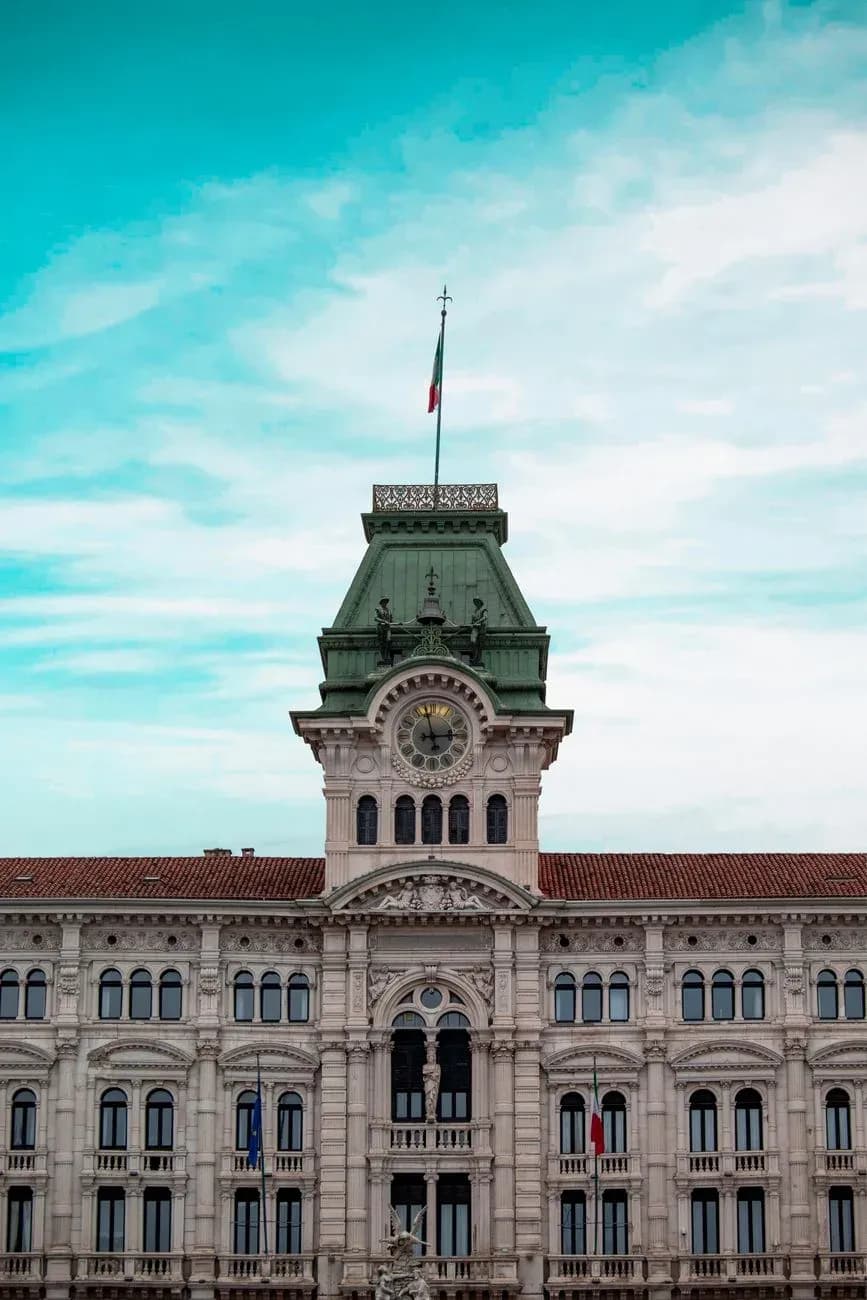
In Trieste, Christmas starts early. Thanks to the Greek maritime community that introduced the cult of San Nicolò in the late 18th century, presents arrive on the night between 5 and 6 December. The mercatini di Natale are split between a century-old fair and wooden chalets in Borgo Teresiano, lending the city a unique Habsburg charm.
The best time to enjoy this festive atmosphere runs from late November to Epifania. The biting chill of the Bora wind can catch you unawares, but the festive lights reflected in the sea and the historic buffet bars serving hearty traditional dishes make it well worth the effort.
Get ready to stroll through squares opening onto the Adriatic and ancient alleyways. To warm up, you can take refuge in literary cafes, 19th-century pastry shops, or grab a steaming mug of vin brulé among the wooden stalls.
How to plan your festive weekend
Day 1 — Adriatic lights and wooden chalets
Morning
Start your day with a stroll along Canal Grande di Trieste. Here, the water reflects the palazzi of Borgo Teresiano and the first market stalls. Stop at the Chiesa di Sant'Antonio Taumaturgo (Sant'Antonio Nuovo), which closes the vista, before heading down towards the canal to snap a few photos in the morning light. For lunch, pop into the nearby Trattoria da Giovanni on Via San Lazzaro: perfect for a classic rebechin, perhaps with a crostini of baccalà mantecato and a glass of white wine.
Afternoon
Spend the early afternoon at the Tempio Serbo-Ortodosso della Santissima Trinità e di San Spiridione. Its bright blue domes are a striking reminder of the city's multicultural soul; allow around thirty minutes to look inside. Next, head over to Piazza della Borsa and Borgo Teresiano to explore the Mercatino di Natale di Trieste. You'll find more than seventy wooden chalets selling Central European crafts, sweet treats, and decorations—ideal for gifts. Stalls remain open until 20:00 (until 21:00 on Fridays and Saturdays).
Evening
Late afternoon is the best time to see the illuminations. Make your way to Piazza Unità d'Italia, decorated with lit fir trees and a dramatic lighting display that flickers on as dusk falls. To warm up, grab a table at Caffè degli Specchi, the aristocratic salon beneath Palazzo Stratti, and order a capo in b with views straight onto the square. Before returning to Hotel Nuovo Albergo Centro, brave the wind (if it isn't blowing a gale) with a walk along Molo Audace: 200 metres out over the sea, looking back at the illuminated square.
Day 2 — From the hill of San Giusto to the port
Morning
Take the Park San Giusto lift or bus 24 up to Castello di San Giusto. This 14th-century fortress features rampart walkways with sweeping views over the gulf; budget an hour or two. Right next door stands the Cattedrale di San Giusto Martire, the city's cathedral, famous for its Byzantine mosaics (free entry outside Mass times, allow 30-45 minutes). Walking back down into the old town, pause at the open-air Teatro Romano for a quick 15-20 minute stop. For a quick but authentic lunch, head to Buffet da Pepi (open since 1897) for a mixed platter of boiled meats with freshly grated kren.
Afternoon
If you are visiting in early December, make your way to Piazza Barbacan for the Christmas edition of Barbacan Produce (open 10:30 to 18:30): an independent craft and design market set at the foot of the ancient Arco di Riccardo. Afterwards, wander down to the Cavana district to visit the Museo Revoltella - Galleria d'Arte Moderna. It is a splendidly preserved aristocratic palace housing one of Italy's finest modern art collections; allow around two hours for your visit.
Evening
For dinner, Trieste's culinary heritage takes centre stage at Buffet Storico Siora Rosa in Piazza Attilio Hortis. Here you can tuck into genuine jota (sauerkraut, bean, and potato soup), goulash with polenta, and boiled meats; it gets busy, so book ahead. If you're staying near the station, B&B Hotel Trieste offers comfortable rooms inside a handsome neoclassical Habsburg building.
Day 3 — Castles overlooking the sea
Morning
Leave the historic centre behind and catch bus 6 from Stazione Centrale (around 20-25 minutes) to Castello di Miramare e Parco Botanico. Commissioned by Archduke Maximilian of Habsburg, this dramatic residence crowns the Grignano headland. If you visit on a weekend or bank holiday, it is best to book your ticket in advance; allow 2-3 hours to explore the historic apartments and 22 hectares of parkland. Heading back towards the centre, stop at Caffè San Marco on Via Cesare Battisti. Opened in 1914, this historic Central European cafe also houses a bookshop: the perfect setting to enjoy a slice of gubana.
Afternoon
If you are visiting towards late November or early December, take a walk down Viale XX Settembre for the Fiera di San Nicolò. You'll find over 90 stalls selling crafts, toys, and roasted candied almonds (it stays open into the evening until 21:00-23:00). Heading up towards the hill of Gretta (near Barcola), take in the views from Faro della Vittoria. This monumental lighthouse offers a 360-degree panorama of the entire gulf and the Carso; allow about 45 minutes.
Evening
Heading back into the heart of the city, catch the sunset beside Canal Grande, where the Pista di Pattinaggio su Ghiaccio di Ponterosso ice rink is set up. The festive lights and neoclassical palazzi make for a magical backdrop. To finish in style, if you're looking for luxury on the seafront just a stone's throw from Piazza Unità, consider the Savoia Excelsior Palace Trieste.
Day 4 — History and Habsburg pastries
Morning
Head out to the Valmaura district to visit Risiera di San Sabba. This national monument is the only Nazi concentration camp with a crematorium on Italian soil. Entry is free, but allow an hour or a little more for a quiet, reflective visit. On your return, make for Borgo Teresiano to stock up on traditional treats. At Pasticceria La Bomboniera, baking with its original wood-fired oven since 1836, you can pick up pinza triestina, presnitz, and putizza: classic Austro-Hungarian festive delicacies.
Afternoon
Use your final hours to pick up any souvenirs you missed. The Christmas market stalls around Ponterosso are ideal in the early afternoon on weekdays to escape the crowds, while the stalls along Viale XX Settembre always offer quiet corners to browse without feeling rushed. Recharge with warm roasted chestnuts or a fresh frittella and enjoy one last stroll along the seafront, hoping the Bora treats you kindly.
Evening
Your weekend draws to a close here. Take one last look at Piazza Unità before heading home, with the scent of vin brulè lingering on your coat and the Christmas lights shimmering across the sea.
Top tips for your trip
- Trieste hosts two distinct markets. The Fiera di San Nicolò (usually late November to early December) is a traditional fair focused on toys and sweets. The actual Mercatino di Natale (from the Immacolata weekend until Epifania) features handmade crafts and hot regional food from the Alpe Adria across Borgo Teresiano and Piazza della Borsa.
- To dodge the queues at the wooden chalets and ice rink, visit the market in the morning or early afternoon on weekdays.
- Watch out for the wind. In winter, the Bora can exceed 100 km/h: check the forecast before venturing out onto Molo Audace, always pack a windproof coat, and map out a few historic cafes where you can seek shelter in the warm.
- Consider picking up the FVG Card (€30 for 48h or €45 for a week). It includes free admission to the castles of Miramare and San Giusto as well as Museo Revoltella, quickly paying for itself across just two visits while letting you skip ticket queues.
- At the markets, warm your hands with vin brulé and roasted chestnuts, but in the local buffet bars, be sure to order the traditional 'caldaia' (mixed boiled pork platter) served with mustard and kren, or a steaming bowl of jota.
Where to stay in Trieste
Very convenient for exploring on foot, right by Canal Grande and just a few steps from the Christmas market stalls.
View on Booking →Modern rooms inside a handsome neoclassical palace opposite the station, handy for buses heading out to the castles.
View on Booking →A historic luxury hotel facing the seafront, just moments from the illuminated Piazza Unità.
View on Booking →