

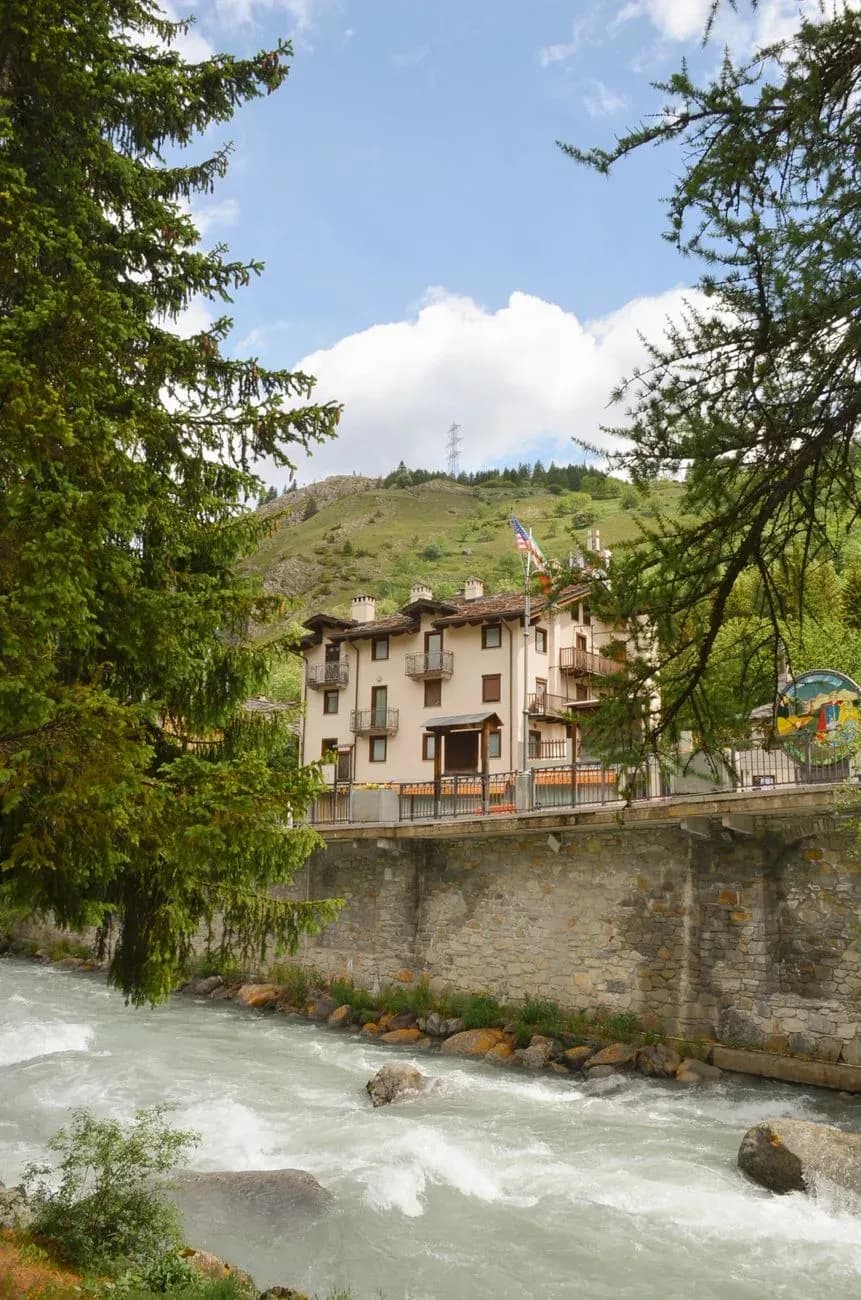
Valle d'Aosta is easy to explore if you have a car. The A5 motorway cuts through the middle of the region, quickly connecting all the valley-floor towns from Pont-Saint-Martin to Aosta and up to Courmayeur. From there, it usually takes just 30 to 45 minutes along regional roads to head up into the side valleys. The best time to visit depends on your priorities: from June to the end of September trails are clear and alpine lakes are pristine, whilst December to March brings Aosta's Christmas markets and snow on the peaks.
Three days is the ideal amount of time to put together a varied itinerary without rushing from one end to the other. The route follows a logical geographic progression, grouping Roman ruins, high altitudes, and woodland walks. For the best-known accommodation and cable cars you will need to book well in advance, whereas historic sights offer far more flexibility.
Day by day
Day 1 — From the lower valley to Roman sights
Morning
The route begins in the lower valley. First stop is Forte di Bard, a massive Savoyard fortress perched on a promontory guarding the entrance to the region. Allow around one to two hours in total for your visit; take the free panoramic lifts to reach the top comfortably, home to the Museo delle Alpi and various art exhibitions. Getting back in the car on the A5 motorway heading west, you reach Castello di Issogne, an ancient Renaissance manor that once belonged to the Challant family. Its inner courtyard features walls adorned with detailed frescoes depicting scenes of daily life, along with an unusual pomegranate fountain forged from wrought iron.
Afternoon
Continuing north towards Fénis brings you to Castello di Fénis, one of the region's best-known medieval castles. Entry is strictly by timed 30-minute guided tour, departing every half hour. The afternoon then takes you into the centre of Aosta to focus on the ruins of Augusta Praetoria. The Teatro Romano di Aosta stands out with its southern facade reaching 22 metres in height. Just a short walk away, beneath the cathedral gardens in Piazza Papa Giovanni XXIII, you can explore the Criptoportico Forense. This long semi-subterranean gallery takes around half an hour to visit. From here, you can round off the day with a stroll under the Arco d'Augusto e Porta Praetoria.
Evening
For dinner, stay in the centre of Aosta. Right next to the historic city gate sits Trattoria Praetoria, on Via Sant'Anselmo. The menu focuses squarely on great Valdostan classics, especially carbonada served with polenta and generous selections of alpine cheeses. Alternatively, near Via Edouard Aubert, Osteria dell'Oca serves honest, home-style regional cooking, with goose specialities, jugged venison, and polenta concia.
Day 2 — Monte Bianco and panoramic thermal baths
Morning
An early start is essential today to reach the hamlet of Entrèves, in Courmayeur. The goal is Skyway Monte Bianco, the modern cable car with 360-degree rotating cabins that climbs to 3,466 metres at Punta Helbronner. Book your ascent slot between 7:30 and 9:00: weather conditions and visibility over the peaks are far better at this time of day. As the lift is always in high demand, secure your tickets online at least one to two weeks in advance.
Afternoon
Back in the valley, just a few kilometres away lies the historic spa complex of QC Terme Pré-Saint-Didier, right at the foot of Monte Bianco. It features large outdoor panoramic pools, but here too admission must be booked online well in advance to avoid being turned away at the door. In the late afternoon, on the drive back towards Aosta, Castello Reale di Sarre is well worth a stop just west of the regional capital. A former hunting lodge of the Kings of Italy, its grand halls are decorated with thousands of ibex and chamois horns.
Evening
Wrap up the day back in the streets of Aosta. On Via Croce di Città, you can dine at Trattoria Aldente, recognisable by its original stone vaulting. The kitchen focuses on traditional first courses, preparing fresh homemade pasta and crespelle alla valdostana.
Day 3 — Alpine reflections and Gran Paradiso National Park
Morning
Sunday morning begins in Valtournenche, driving up to Breuil-Cervinia. Along the SR44 regional road lies Lago Blu (Lac Bleu), a small alpine lake fringed with larch forests. The basin is positioned so that the pyramid of the Cervino reflects mirror-like on the water. The short path to the shore is easy, and the lack of wind typical of the early morning makes for ideal photography conditions. Once you have finished your walk, head south on the regional roads before winding up towards Val di Cogne, a drive of around 45 minutes.
Afternoon
Once in Cogne, stop for lunch on Rue Bourgeois. La Brasserie du Bon Bec is a historic spot with period wood panelling, specialising in fondues, hearty traditional local soups, and twists on mountain classics. In the early afternoon, head to the nearby hamlet to explore the Cascate di Lillaz. Set within the Parco Nazionale del Gran Paradiso, the Urtier torrent tumbles down in three distinct consecutive waterfalls. The easy circular trail starts from the village car park and takes around an hour and a half to two hours to complete.
Evening
Before heading home, enjoy your final meal of the weekend in Lillaz, right along the path to the waterfalls. Lou Tchappé is a cosy chalet with an outdoor terrace where you can order traditional Valdostan soca, polenta concia, and chestnut gnocchi. If you wish to stay overnight close to these valleys, Hotel Du Grand Paradis makes a comfortable base in the nearby pedestrian centre of Cogne.
Practical tips for your trip
- A car is the most practical way to tackle this entire trip. The A5 motorway connects the valley-floor towns quickly, whilst driving up into side valleys like Cogne or Breuil-Cervinia takes roughly 30 to 45 minutes along regional roads.
- When visiting Forte di Bard, skip the paid multi-storey car parks and head to the free P2 San Giovanni car park along the SS26. It is about 200 metres away and lets you walk up to the base of the fort via a quick stroll under the chestnut trees.
- If you are visiting Aosta's historic sights, it pays to buy the €10 'Aosta Archeologica' combined ticket, which covers entry to the Teatro Romano, the Criptoportico, and other circuit monuments under one pass.
- Top attractions require good timing. To secure a morning slot on the Skyway (between 7:30 and 9:00), book one to two weeks in advance. The same goes for QC Terme, where you risk being turned away without an online booking.
- Expect an average budget of €160 to €220 per person for three days, excluding accommodation. The main expenses are cable cars (from €59 for the Skyway) and thermal baths (around €48–54), whilst a meal in a typical osteria costs between €25 and €40 on average.
Where to stay
Elegant five-star hotel featuring a panoramic swimming pool and a wellness centre carved into the rock.
View on Booking →Historic, romantic hotel in the village centre, complete with alpine-style decor and the La Baita spa.
View on Booking →Boutique hotel right at the entrance to the village, with a wellness area built over the ancient Via delle Gallie.
View on Booking →