

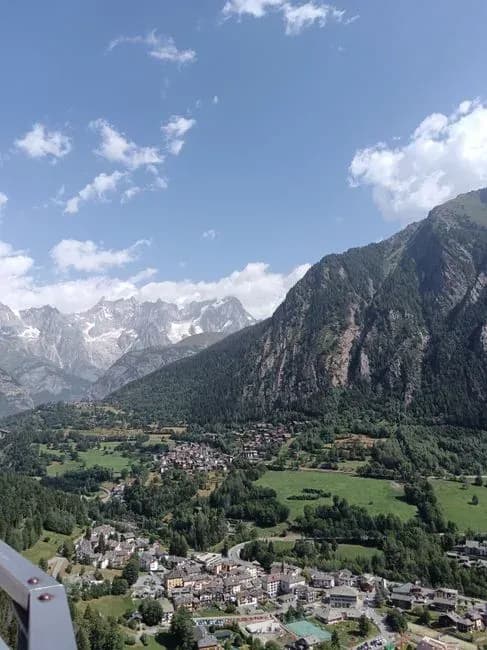
A long weekend in Valle d'Aosta requires a bit of logistical planning to balance the distances between the valley floor and the side valleys. Mountain roads are scenic but winding: always budget 35 to 50 minutes of driving from Aosta to higher destinations like Cogne or Courmayeur.
A car or camper van is the most efficient way to cover these distances. The period from June to October is particularly ideal for hiking up to high-altitude lakes, and in autumn the larch forests turn a brilliant, striking gold. If you are travelling by camper van, the region has excellent designated sites both down on the valley floor and up in the side valleys, though during bank holiday weekends and the peak summer season it is best to arrive early in the morning to secure an available pitch.
4-day local itinerary
Day 1 — Entering the valley and its castles
Morning
The itinerary begins in Bassa Valle, crossing the Ponte Romano di Pont-Saint-Martin, a monumental 1st-century BC stone arch spanning the Lys stream that once carried the ancient Roman Via delle Gallie. From here, continue towards the Forte di Bard, an imposing 19th-century Savoy fortress. Allow around 2–3 hours for the visit: panoramic lifts take you up to explore the spaces of the Museo delle Alpi. It makes a very convenient stop right at the entrance to the region.
Afternoon
The afternoon focuses on the historic residences along the valley floor. Start with the Castello di Issogne, an elegant Renaissance residence belonging to the Challant family: the tour takes about 45 minutes and lets you admire the wrought-iron pomegranate fountain and frescoes depicting everyday life in the 15th century. A short drive away stands the famous Castello di Fénis, recognisable by its double curtain walls and frescoed courtyard. The guided tour of this medieval stronghold lasts between 45 and 60 minutes. Keep in mind that for most historic sites managed by the Valle d'Aosta Heritage network, tickets must be booked online in advance, especially at weekends.
Evening
Head into Aosta for dinner and an overnight stay. Right beside the historic centre and overlooking Roman monuments is Bistrot Chez Julie, near the Arco d'Augusto. The menu showcases classic regional dishes. If you are travelling in a camper van, you can base yourself just outside town at Lazy Bee Camping Village.
Day 2 — Roman Aosta and the Via Francigena
Morning
Dedicate the day to Augusta Praetoria and its remarkably well-preserved Roman remains. The ancient colony's main pedestrian axis starts between the Arco d'Augusto e Porta Praetoria. Nearby stands the Teatro Romano di Aosta, famous for its majestic southern façade that soars 22 metres high. A visit here takes about 30 minutes and pairs effortlessly with the rest of the archaeological trail. Rounding off the city centre's cultural highlights is the Collegiata dei Santi Pietro e Orso: this medieval religious complex features a 12th-century Romanesque carved cloister, well worth another 40 minutes of your time.
Afternoon
Leave the valley floor and head up the Valle del Gran San Bernardo to the Borgo museo di Etroubles. Crossed by the historic Via Francigena, this medieval village displays open-air works of art along its cobbled alleys. The visit is entirely on foot and takes about an hour. For a nature break, venture into the neighbouring Valpelline for a stop at Lago Lexert in Bionaz, an alpine lake surrounded by larch woods and glacial peaks, ideal for quiet strolls well off the beaten track.
Evening
Staying at higher altitude, you can spend the evening around Etroubles, taking advantage of local valley sites such as Camping Tunnel International for grassy camper van pitches or glamping options.
Day 3 — The Monte Bianco massif
Morning
Head to Courmayeur, in the hamlet of Entrèves, to board the rotating Skyway Monte Bianco cable car. The system whisks you up to Punta Helbronner at 3,466 metres. Expect to spend 2–3 hours at the summit. You need to book your ticket in advance, and it is strongly advisable to take an early-morning slot on clear days, as clouds and wind frequently pick up at the summit after midday.
Afternoon
Head back down to Courmayeur for lunch. At Ristorante Le Vieux Pommier, situated in Piazzale Monte Bianco, the setting is full of rustic timber charm and the menu revolves around Valdostan fondue, polente concie, and traditional meat dishes. In the afternoon, carry on towards Colle San Carlo for a hike to Lago d'Arpy. The trail is easy and takes about an hour and a half round trip. At 2,066 metres above sea level, the water mirrors the Monte Bianco and Grandes Jorasses ranges. Alternatively, head to Plan du Bois in Pré-Saint-Didier, home to the Parco Avventura Mont Blanc: it offers treetop trails through pines and firs and a long zip-line suspended over the gorge, with views of the massif throughout.
Evening
Descend back into the main valley. To break up the return journey eastwards, you can stop around Sarre, home to Camping International Touring.
Day 4 — Gran Paradiso and the side valleys
Morning
In the morning, drive to Cogne and the Parco Nazionale del Gran Paradiso. From the car park in Lillaz, an easy 1–2 hour loop walk leads to the Cascate di Lillaz, three dramatic waterfalls formed by the Urtier torrent. For an extra excursion, make your way to Lago Blu (Lac de Layet) in Breuil-Cervinia, a turquoise alpine pool famous for mirroring the Cervino; park along the road and walk up in around 20 minutes.
Afternoon
Heading back into the centre of Cogne, the ideal lunch stop is Ristorante Bar à Fromage on Rue Grand Paradis: a classic mountain chalet specialising in raclette, fondues, and platters of local alpine cheeses. Spend the afternoon exploring Valgrisenche, a valley dominated by the historic Diga di Beauregard, renowned for its hiking trails and a fontina cheese ageing facility built inside a former military fort.
Evening
To round off the four days with local flavours, head up to the hamlet of Valnontey above Cogne for dinner at Ristorante Pizzeria Lou Talapen, a spot nestled at the foot of the massif serving wood-fired pizzas and Valdostan dishes.
Practical tips and logistics
- A car is essential for keeping to schedule. The roads linking Aosta to Cogne or Courmayeur consistently take 35 to 50 minutes of driving, being winding mountain routes.
- Camper van travellers will find generous designated sites in several hubs (Cogne, Breuil-Cervinia, Étroubles), but during peak summer and bank holiday weekends you must arrive early in the morning to snag an empty pitch.
- There is a handy discount partnership: showing your Skyway Monte Bianco ticket earns you reduced admission to the museums at Forte di Bard, and vice versa, offering an 8% discount on the cable car.
- Time your ascent to Punta Helbronner for the very first departure of the morning—the only reliable slot for clear views before afternoon clouds and wind set in.
- The castles of Fénis and Issogne, along with Aosta's Roman sites, do not always allow on-the-day ticket purchases: check opening times on the Valle d'Aosta Heritage portal and book online well ahead.
Strategic bases to stay
Offers grassy camper van pitches and glamping options along the Valle del Gran San Bernardo.
View on Booking →Set just outside Aosta, featuring a spacious shaded camper stop convenient for touring the valley floor.
View on Booking →An alpine campsite set directly on the shores of its namesake lake, nestled among the woods.
View on Booking →