

The Veneto demands mileage. A car is essential to connect the mountain stops with the historic villages and coastal nature reserves. Travel times will shape your whole schedule: count on two hours to get from Venezia or Treviso to Cortina d'Ampezzo along the SS51, and around an hour and forty-five minutes between Lago di Garda and the hills of Valdobbiadene.
If you are aiming for outdoor activities, beaches or nature walks, it is best to plan your trip between late May and mid-October. September, in particular, offers reliable weather and quieter trails. Conversely, if you want to ski with a lake view or on the Dolomite peaks, the window runs from December to March.
Four Days Between Peaks and Lagoons
Day 1 — Dolomite Peaks and Vineyards
Morning
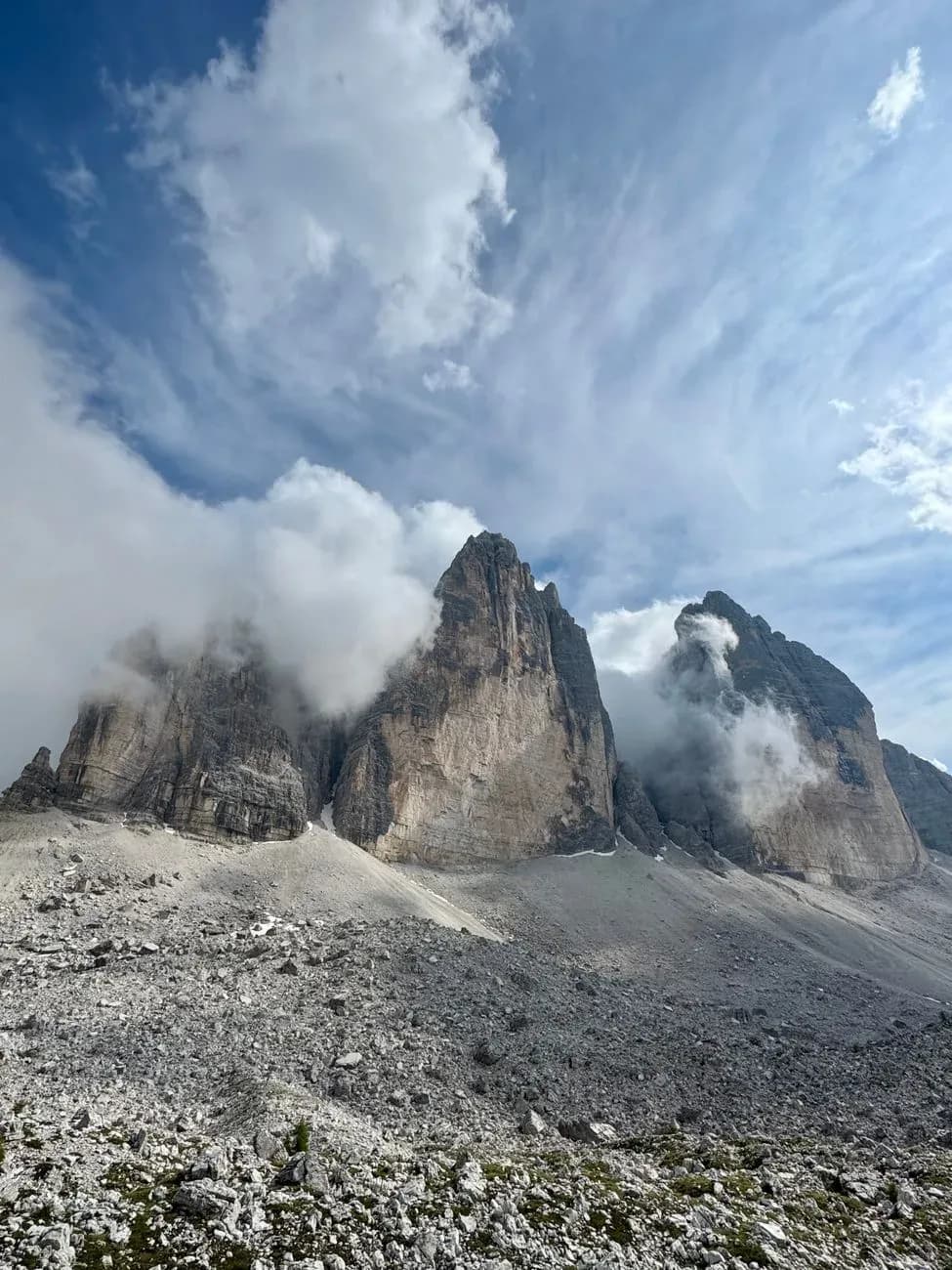
Your day begins in the area around Auronzo di Cadore and the Dolomiti Bellunesi. The circular hiking trail around the Tre Cime di Lavaredo covers roughly 10 kilometres and is among the most famous in the Alps. The route takes four to five hours of walking, starting from Rifugio Auronzo. A few kilometres further down the valley, Lago di Misurina offers an alpine lake framed by the peaks of Ampezzo and Cadore, ideal for a walk around the shore or hiring a rowing boat.
Afternoon
The road heads south towards Refrontolo and Valdobbiadene. The Colline del Prosecco e Molinetto della Croda reveal a hilly landscape protected by UNESCO. The area is defined by terraced vineyards and historic seventeenth-century watermills carved directly into the rock face, bearing witness to local milling heritage.
Evening
For dinner, head to Trattoria Alla Cima in Valdobbiadene, at Via della Cima 13. It is a hillside restaurant renowned for homemade pasta and traditional meats, with sweeping views over the Cartizze vineyards. Keep an eye on opening hours: it is closed on Monday evenings and all day Tuesday.
Day 2 — Coastal Oases and the Northern Lagoon
Morning
Moving on to Caorle, the Spiaggia della Brussa e Oasi di Vallevecchia protects a coastal area of around 900 hectares. The reserve encompasses sandy dunes, pine woods, and between 10 and 14 kilometres of cycling and walking trails designed for birdwatching. Nearby, the Laguna e Casoni di Caorle forms a maze of lagoon channels dotted with traditional reed-and-wood huts. Once a favourite haunt of Hemingway, it can be explored on foot, by bike or by boat.
Afternoon
Approaching Venezia, Isola di Torcello lies in the northern lagoon. It is the oldest settlement in the area, famous for the Byzantine Basilica di Santa Maria Assunta. With vast open spaces and very few residents, it is the quietest corner of the entire lagoon basin.
Evening
Heading back to the main island of Venezia, in the sestiere of Dorsoduro (Fondamenta Briati 2540), you will find Osteria da Codroma. It is a historic Venetian spot known for unpretentious seafood cooking, using fresh lagoon fish and serving classic dishes such as bigoli in salsa.
Day 3 — The Heart of Venezia and Chioggia
Morning
The Piazza San Marco e Bacino Marciano in the heart of Venezia brings together the basilica and Palazzo Ducale. To beat the crowds, the best time to visit is early in the morning, when the grand square is still empty and the architecture makes its fullest impression.
Afternoon
Stop for lunch in the San Polo sestiere, near Rialto, where Osteria Bancogiro overlooks the Canal Grande. It serves glasses of local wine and seasonal lagoon cicchetti right by the bridge. Afterwards, sail towards the southern end of the Laguna Veneta to reach Chioggia.
Evening
The Canal Vena e Centro Storico di Chioggia mirrors Venetian architecture with its historic palazzi and arched bridges. A sunset stroll along Corso del Popolo lets you take in the facades reflected in the water. To round off the day, have dinner in the area before heading back to the Veneto mainland.
Day 4 — From Lago di Garda to Verona
Morning
On the Veronese shore, in Malcesine, the Funivia Malcesine-Monte Baldo climbs an altitude difference of over 1500 metres in rotating panoramic cable cars. The terraces of Monte Baldo provide access to hiking trails in summer and skiing in winter. In Brenzone sul Garda, in the hamlet of Sommavilla, the Passeggiata Balot Tacà Via follows a dry riverbed through a rocky gorge up to a giant boulder wedged between the cliffs; skip this walk on rainy days.
Afternoon
In Valeggio sul Mincio, Borghetto sul Mincio preserves historic watermills, pastel-toned houses and the Ponte Visconteo, perfect for an afternoon wander. Once in central Verona, the Casa di Giulietta features the famous Shakespearean balcony and historic courtyard; booking your ticket in advance is essential to avoid long queues at the entrance.
Evening
At sunset, Ponte Pietra e Centro Medievale di Verona offers the most dramatic view towards the hill of San Pietro. Head for dinner in the Quartiere Filippini, at Via Dietro Pallone 1, at Antica Trattoria Tipica Al Bersagliere. The cellar holds several vintages of Amarone to accompany traditional Venetian pasta e fagioli and classic meat dishes.
Tips for Planning Your Trip
- To reach the Tre Cime di Lavaredo by car via the toll road from Misurina to Rifugio Auronzo (the toll is €40), you must book your parking space online in high season, or you will be turned away at the barrier. Alternatively, take Shuttle Bus 444 from Dobbiaco, which also requires advance booking.
- When visiting cities like Venezia or Chioggia, leave your car at the park-and-ride facilities on the mainland, at Punta Sabbioni, or in Chioggia itself, and get around solely on ACTV vaporetti.
- Access to the Oasi di Vallevecchia and Brussa beach has a 1200-space car park. It costs around €5 per day per car from June to September, while parking is free in winter. Take a photo of the trail map at the entrance, as waymarking inside is limited, and take care not to trample the sand dunes.
- For mountain and nature spots such as the Malcesine cable car or Lago del Mis e Canyon di Soffia, aim to arrive before 09:00 on weekends, as roadside parking spaces fill up very quickly.
- For a four-day long weekend, expect an average budget of around €60-90 per person per day, excluding accommodation. This covers tolls such as the Tre Cime road, boat tickets, cable car fares, and meals in trattorie, calculated at €25 to €45 a head.
Where to Stay
An alpine retreat finished in stone and Dolomite wood, featuring a well-appointed spa to unwind after a day on the trails.
View on Booking →Refined rooms and a scenic terrace where you can wake up overlooking the vineyards of Treviso's hills.
View on Booking →A historic property set in thermal grounds with a spa and lodges, ideal for unwinding at the end of each day.
View on Booking →