

The Tuscia region boasts a rich tapestry of history and natural scenery that is hard to exhaust in a short visit, but four days are plenty to get a true feel for the area. This landscape is shaped by volcanic rock, sixteenth-century gardens, and sweeping lakes. The shoulder seasons—particularly April to June or September to October—offer the best weather for a road trip. During these months, the crisp air makes long walks a pleasure and lets you enjoy open-air thermal baths well past sunset, without the sweltering heat that grips the inland plains in summer.
If you're driving, the provincial capital makes an ideal base before venturing out towards the lakes and medieval strongholds. The historic centre of Viterbo is enclosed by thick defensive walls and is largely pedestrianised, its streets framed by the grey peperino stone that defines nearly every façade. The town has an unpretentious, down-to-earth atmosphere, far removed from the mass tourism of neighbouring provinces. In the historic osterie of the old town, you'll find hearty peasant dishes centred on local hand-rolled pasta and charcoal-grilled meats, while just a few kilometres away lie tranquil nature reserves perfect for an afternoon in the wild.
Four days around Viterbo
Day 1 — The city of the popes and thermal springs
Morning
Start your trip by heading straight into the historic centre. To avoid the ZTL inside the walls, the easiest option is to leave your car at the free car park in Valle Faul; from there, scenic public lifts take you directly up to the cathedral hill in Piazza San Lorenzo. This square brings together the city's oldest civic and religious buildings. Allow about an hour for the Palazzo dei Papi e Loggia delle Benedizioni. It's best visited in the morning to admire the intricate tracery of the Gothic loggia and the halls that hosted the longest papal conclave in history. Right next door stands the Cattedrale di San Lorenzo, a Romanesque cathedral easily spotted by its elegant fourteenth-century striped bell tower.
Afternoon
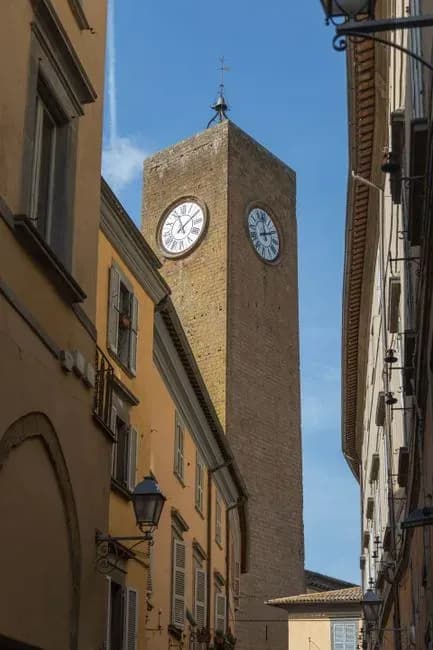
Heading south brings you into the Quartiere Medievale di San Pellegrino. This is the largest preserved thirteenth-century quarter in Europe, a dense maze of volcanic-stone bridge-houses, artisan workshops, and distinctive external staircases known as profferli. Continuing towards Piazza del Plebiscito e Palazzo dei Priori, you'll reach the civic heart of the city, dominated by the clock tower and housing sixteenth-century frescoed halls open to visitors. For lunch, nearby Trattoria Porta Romana on via della Bontà serves generous plates of cavatelli and lombrichelli all'amatriciana in a rustic setting with a handwritten menu.
Evening
As dusk falls, leave the walled centre behind and head along Strada Bagni towards Terme dei Papi. This historic, monumental thermal pool is fed directly by the Bulicame spring, which bubbles up at over 50°C. It is the perfect spot to spend a warm evening soaking your muscles after a day on your feet. Back in town, head for dinner at Osteria del Vecchio Orologio on via Orologio Vecchio, serving guests since 1966 beneath exposed peperino arches. The menu draws on local peasant traditions, featuring chestnut gnocconi and lombrichelli.
Day 2 — Sixteenth-century gardens and natural oases
Morning
Just outside the city limits, the village of Bagnaia is home to Villa Lante. A masterpiece of the Italian Renaissance, the estate unfolds across formal Italian gardens, tiered terraces, and monumental fountains where running water plays with the natural slope of the hill. Plan around two hours to take it all in. Moving on to the neighbouring hamlet, visit the Santuario di Santa Maria della Quercia, a major Renaissance Marian shrine containing a delicate marble temple by Andrea Bregno, glazed terracottas by the Della Robbia workshop, and an ornate, gilded coffered ceiling.
Afternoon
Back in Viterbo, Il Richiastro serves seasonal, unpretentious cooking in a delightfully atmospheric period setting right in the historic centre. In the mid-afternoon, set off along Strada Garinei. Parco Termale Il Bagnaccio is a natural open-air thermal site; it lacks the grand architecture of the historic baths, but offers a series of hyperthermal and hypothermal pools scattered across open fields. It is a wonderfully affordable spot to unwind, surrounded by the flat, rugged countryside typical of northern Lazio.
Evening
Staying close to the ZTL, round off the day at a relaxed pace. For dinner, Hostaria Lo Spito on via San Leonardo welcomes you with exposed stone walls and outdoor tables. The kitchen specialises in grilled meats and hearty inland classics at very fair prices. After dinner, it's well worth strolling through the Quartiere Medievale di San Pellegrino once more: bathed in the soft glow of the street lanterns, the stone façades and narrow alleys reveal a dramatic charm you simply don't catch by day.
Day 3 — Carved tufa and crater lakes
Morning
Today covers more ground, so you will need your own wheels, as regional buses are few and far between at weekends. First stop is Bomarzo to explore the Sacro Bosco di Bomarzo (Parco dei Mostri). This curious sixteenth-century esoteric garden is filled with monstrous mythological figures carved straight out of the bedrock. On public holidays, book your tickets well in advance. A 20-minute drive away stands Palazzo Farnese di Caprarola, conceived as a pentagonal fortress before being transformed into a noble residence. The visit takes about an hour and a half, culminating at the grand spiral staircase adorned with Mannerist frescoes.
Afternoon
Descending into the Monti Cimini, you'll reach Lago di Vico e Riserva Naturale. This volcanic lake is ringed by dense beech woods and reed beds, making it a favourite haunt for birdwatchers and kayakers alike. If you're touring by campervan, you'll find dedicated stopovers right on the grassy shores. For dinner back in town, L'Antica Taverna on via Sant'Agostino in Viterbo focuses on homemade lombrichelli and prime cuts of meat grilled over an open hearth.
Evening
After a day navigating winding country roads, keep your evening straightforward. Staying inside the walls, for instance at B&B Centro Storico Viterbo, lets you head out on foot to sample the bars and cafes around nearby Piazza del Plebiscito, leaving the car safely parked outside the historic centre without any extra driving.
Day 4 — Cliffside villages and black sands
Morning
Your final route points due north through the province. Make an early stop at Tuscania e Basiliche di San Pietro e Santa Maria Maggiore. These two Romanesque basilicas stand outside the fortified medieval town, isolated against the rolling tufa landscape. Head northeast to Montefiascone e Belvedere della Rocca dei Papi, the historic home of the white wine Est! Est!! Est!!!. From the elevated viewpoint, you get a sweeping panorama across the entire rim of the volcanic caldera framing Lake Bolsena below.
Afternoon
Heading down to the shore, Lago di Bolsena e Borgo Medievale greets you with distinctive dark volcanic sands. This is the largest volcanic lake in Europe, watched over by the imposing Rocca Monaldeschi and bordered by a pleasant lakeside promenade. Tucked among Bolsena's narrow lanes is the Basilica di Santa Cristina e Catacombe, an early Christian site steeped in history, uniting the martyr's shrine with the memory of the Eucharistic Miracle of Bolsena.
Evening
Wrap up your journey at Civita di Bagnoregio. Perched precariously on an isolated tufa outcrop, the village can only be reached via a long pedestrian bridge. Arriving in the late afternoon is a smart move: you'll catch the village just as the day-trippers depart, leaving its weathered alleys wonderfully quiet. You will need an entry ticket, and on spring bank holiday weekends it is essential to book online well ahead to skip the ticket office queues. From here, hop on the motorway or head back to comfortable digs like Hotel Salus Terme to finish your trip.
Practical tips and getting around
- A car is essential for navigating the country roads linking the lakes, woodlands, and hilltop fortresses of northern Lazio, as public buses run very infrequently on Saturdays and Sundays.
- Campervan travellers will find excellent pitches at Camping Natura on Lago di Vico, as well as sites along the shores of Bolsena and at the Il Bagnaccio thermal baths, ideal for parking right by the pools.
- To explore central Viterbo without risking a fine, leave your vehicle at the large Valle Faul car park and take the free scenic lifts that link the valley floor straight to Piazza San Lorenzo.
- If you're visiting Civita in spring, book your ticket online before arriving at the footbridge, and aim for late afternoon to enjoy the village once the morning tour groups have moved on.
- The Viterbo area is very affordable: budget around €35 to €50 per person per day to cover admissions and hearty, traditional meals in local osterie.
Where to stay
A modern four-star resort on Strada Bagni featuring a full wellness centre and its own indoor and outdoor thermal pools.
View on Booking →Rooms set inside a sturdy fourteenth-century palazzo just steps from Piazza del Plebiscito, perfect for exploring on foot.
View on Booking →A comfortable four-star hotel just outside the ancient city walls, handy for heading straight out onto regional roads.
View on Booking →