

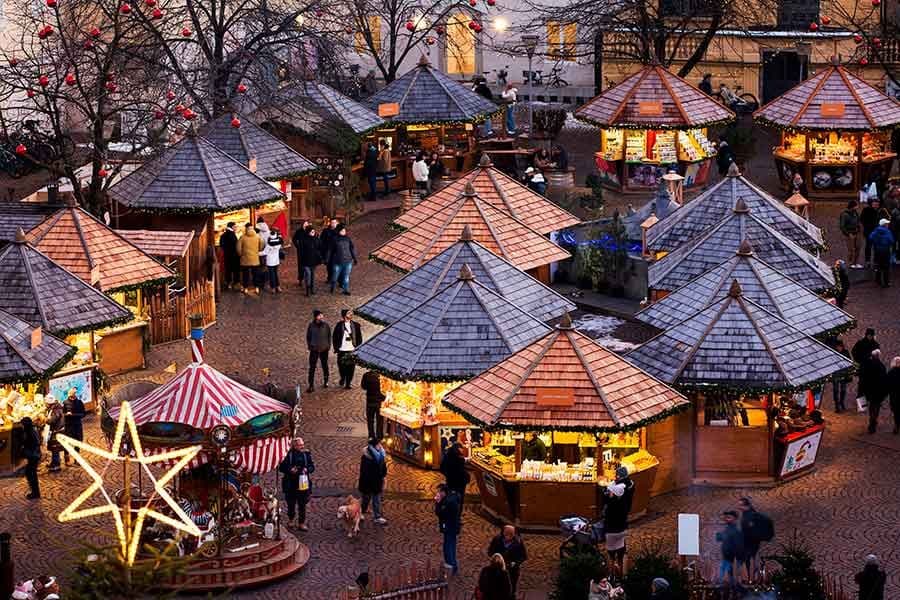
Winter in Valle Isarco transforms the city, especially from late November until Epiphany. During this period, the historic centre hosts the mercatini di Natale, a tradition that draws thousands of visitors attracted by the wooden chalets and the scent of vin brulè and freshly baked pastries. The town's edition stands out as a certified Green Event, with a strong focus on zero-kilometre local produce, from boiled loden slippers to sheep's milk soaps. The stalls remain closed on 25 December, but otherwise stay busy throughout the season.
The main drawback during weekends, and particularly over the Ponte dell'Immacolata holiday, is the sheer crowding. The central streets fill up quickly, making it difficult even just to stroll between the stands. The secret to soaking up the Christmas atmosphere without the stress is to flip the usual timetable: the main square is best appreciated early in the morning or on weekday afternoons. When the crowds gather around the food stalls, slip away into the outer quarters, the town's museums, or the warmth of a thermal bath complex, saving your evenings for the light shows and dinners in traditional stube.
Four days in Valle Isarco
Day 1 — The square and the evening lights
Morning
If you arrive by train, the station is just a five- to ten-minute walk from the centre. Head straight for the Mercatino di Natale di Bressanone in Piazza del Duomo, aiming for around 10:00 or 11:00. At this time of the morning, you can browse the thirty-plus Tyrolean craft stalls without any jostling, and the vintage carousel spins almost empty. It is the ideal moment to inspect the hand-carved wooden figurines. Once you have finished browsing the stalls, simply cross the square to enter the Duomo di Santa Maria Assunta e San Cassiano. Its baroque interior, featuring monumental vaults and imposing frescoes by Paul Troger, rewards a good 30 to 45 minutes of your time. Right next door is the Chiostro del Duomo di Bressanone, renowned for its medieval Gothic frescoes. Among the depicted scenes, the 'horse-elephant' stands out; plan for another 30 to 40 minutes here.
Afternoon
For lunch, Ristorante Traubenwirt in Portici Maggiori offers tables set beneath medieval vaults and pressed spinach canederli; booking is essential at weekends. Temperatures drop quickly in the afternoon. A brilliant vantage point for watching the square without freezing is the Biblioteca Civica di Bressanone, also in Piazza del Duomo. This modern building features heated first-floor panoramic windows that offer a splendid view over the illuminated stalls below. Around 17:00, make your way back through the historic centre to secure a spot for the Spettacolo di Luci e Musica all'Hofburg. This Light Musical is projected across the inner courtyard facades of the historic palace. Performances run daily at 17:30 and 18:30, with an extra slot at 19:30 on Fridays and Saturdays, but booking well ahead is strongly recommended to guarantee entry.
Evening
Dinner is at Ristorante Fink, set in Portici Minori. This historic dining room reinterprets South Tyrolean cuisine using short supply chains and certified sustainable sourcing; here too, booking an evening table in advance is a must.
Day 2 — Historic pharmacies and alpine steam
Morning
Start the day by strolling along Via Portici Maggiori e Portici Minori. The medieval town's covered shopping arcades stay open during Advent weekends and are distinguished by elegant facades with characteristic crenellated oriel windows (erker) and hanging festive lights. Along this stretch you will find the Museo della Farmacia (Pharmaziemuseum) in Portici Maggiori. Housed in a historic townhouse, it displays medical instruments, antique remedies, and oddities collected over four hundred years by the Peer family. The visit takes around 45 minutes.
Afternoon
At midday, stop at Ristorante Oste Scuro (Finsterwirt) in Vicolo del Duomo, an intimate historic stube where you can sample regional specialities. The afternoon is reserved for shaking off the winter chill. Acquarena Bressanone, in Via Mercato Vecchio, is an indoor wellness and thermal complex open from 9:00 to 22:00. It features heated pools, a saline pool, and an extensive alpine sauna area: the most practical way to spend the coldest hours of the late afternoon, far removed from the town centre bustle.
Evening
Once you are dried off, head to the Torre Bianca (Parrocchia di San Michele) in Piazza Parrocchia, which runs special evening guided tours during the Advent season. From the top of this 72-metre tower, you can gaze down over the rooftops and twinkling lights of Valle Isarco. To round off the day with a hearty, informal meal, Ristorante Pizzeria Valentina in Via Millan serves generous portions and easily digestible pizza, just beyond the medieval core.
Day 3 — Snow-capped heights and ancient alleys
Morning
To escape the urban rhythm entirely, catch the ski bus or cable car up towards the Sant'Andrea in Monte / Plose area. This alpine playground lies 7 km from the centre and easily fills half a day. The main draw for non-skiers is the Plose e Pista Slittino RudiRun toboggan run, alongside well-marked trails for scenic winter walks. By using the BrixenCard provided by participating accommodations such as Arthotel Lasserhaus, local ski buses and provincial public transport are entirely free.
Afternoon
Before heading back down into town, stop for lunch at Osteria Contadina Burgerhof in Burgerhofweg. This mountain farm belongs to the Gallo Rosso network and focuses on its own organic meats, Kaminwurz (smoked sausages), and artisan wines. Back in the valley, spend the rest of the day exploring the Quartiere Stufles. As the town's oldest settlement, it sits wedged at the confluence of the Isarco and Rienza rivers. It is entirely pedestrianised, made up of narrow lanes and artisan workshops. It retains a peaceful, secluded atmosphere, sitting well outside the main current of seasonal tourism.
Evening
The food stalls in the main square stay open later than the artisan chalets. This is the moment to wrap up your evening by sampling traditional festive pastries and sweets directly from the stalls, such as spiced Zelten fruit bread or hot Strauben funnel cakes.
Day 4 — Nativity scenes and rural cloisters
Morning
Your final morning takes you north into the Comune di Varna, home to the Abbazia di Novacella (Kloster Neustift). This Augustinian monastery complex dates back to 1142 and encompasses a rococo basilica, a Gothic cloister, the Castel Sant'Angelo chapel, and a famed historic library. A complete visit takes around an hour and a half. The abbey is open Monday to Saturday (10:00-17:00), with guided tours requiring advance booking, while it remains closed on Sundays and religious public holidays. If visiting independently, arrive well before 15:00 to avoid finding the museum wings already locked.
Afternoon
Back in the Centro storico of Bressanone, spend the afternoon exploring the former seat of the prince-bishops. The Palazzo Vescovile (Hofburg) is notable for its expansive Renaissance courtyard lined with loggias; on Advent Wednesdays and Fridays, special themed tours depart at 15:00. Inside lies the Museo dei Presepi nel Palazzo Vescovile, housing one of the world's finest collections of historic nativity scenes, best explored over an hour or so. Leaving the palace, stretch your legs in the Giardino dei Signori (Hofburggarten), a walled garden of geometric flowerbeds and a Biedermeier fountain, perfect for a quick 20- to 30-minute turn.
Evening
Spend your final moments in the centre around dusk on a weekday—the perfect time to admire the illuminated decorations at their visual best, before weekend day-trippers arrive to fill the streets once more.
Practical tips for Valle Isarco
- Traffic during December weekends is very heavy and the centre is closed to motor vehicles. If you arrive by car, you will find spaces at Parkgarage Bressanone on via Dante, Autosilo Stufles, or the Acquarena car park, all within five minutes' walk of the Duomo. If you prefer free parking, the Bressanone Sud car park along the Statale road costs nothing, but requires around a 20-minute walk to reach the cathedral.
- Guests staying at partner hotels receive the BrixenCard. This travel card eliminates local transport costs, giving you free use of city buses, South Tyrolean regional trains, and the ski buses needed to reach the slopes of Plose, as well as discounts on several attractions.
- If you plan to visit the Abbazia di Novacella, always double-check the calendar: the complex is completely closed on Sundays and religious holidays. Those opting for a self-guided visit should watch the afternoon timings, arriving before 15:00 to allow sufficient time to view the library and museum before they shut at 17:00.
Where to stay in and around Bressanone
A four-star hotel strategically set right along the river in the historic centre, just steps from the Museo della Farmacia.
View on Booking →A charming boutique hotel tucked away among the pedestrian lanes of the ancient Stufles quarter, on the banks of the Isarco.
View on Booking →A historic wine-estate property located in Novacella, exceptionally handy for visiting the Abbazia first thing in the morning.
View on Booking →