

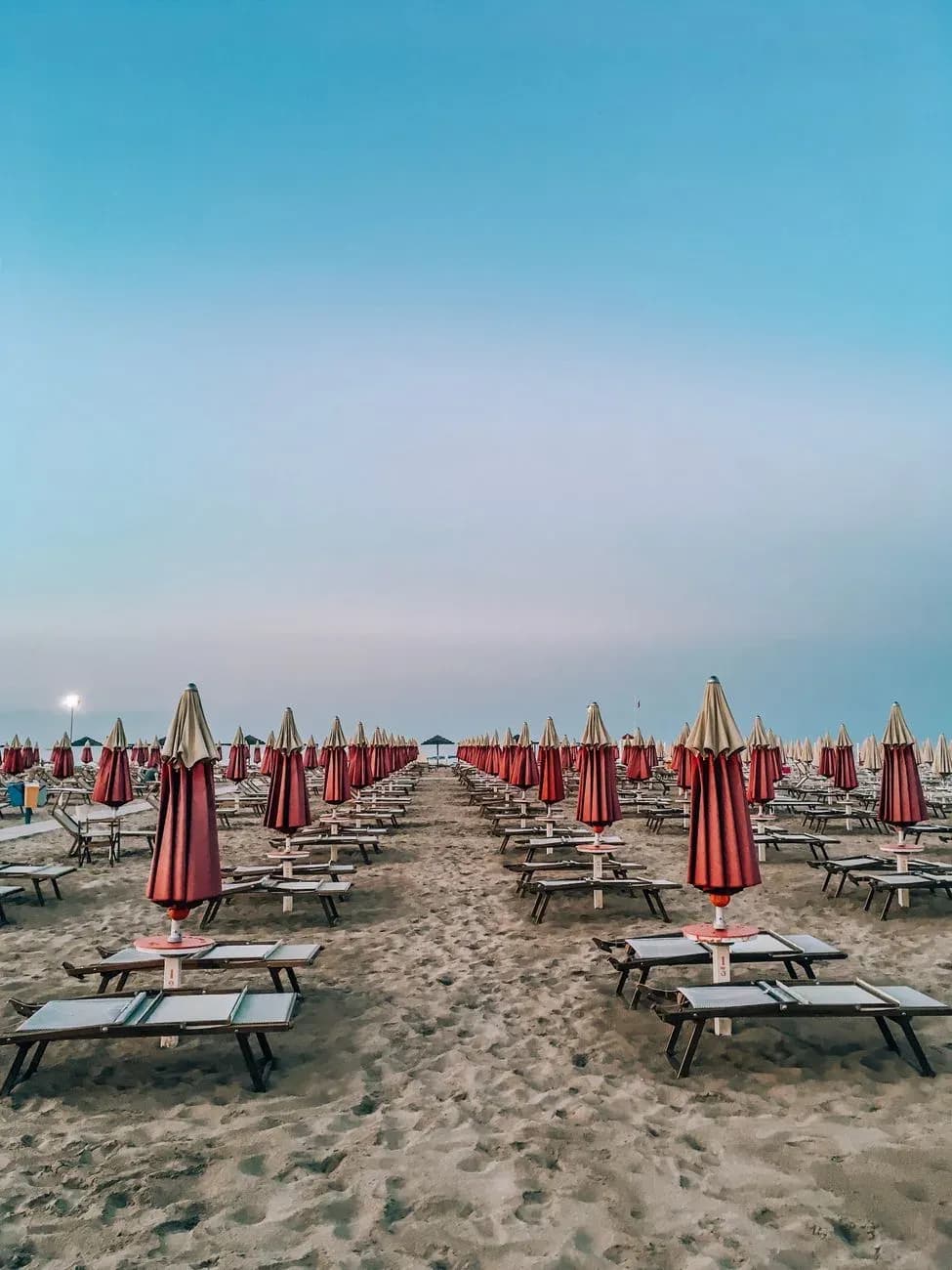
The best time to plan a weekend in Rimini is in spring, particularly between April and May, or in early autumn across September and October. During these weeks the mild weather lets you enjoy the promenade and open-air spaces to the full, without the heavy crowds of the summer beach season. The city's layout is ideal for train arrivals: the railway station is just a ten to twelve-minute walk from Piazza Tre Martiri and around a quarter of an hour from the Marina Centro district, making a car entirely unnecessary for your whole stay.
The urban landscape, spanning the coastline and the ancient heart, is completely flat and criss-crossed by continuous cycling and walking paths. This allows you to move effortlessly between the main sights, transitioning easily from Roman archaeological areas to historic quarters rooted in fishing traditions. If you prefer staying right among the old alleys, places like DuoMo Hotel are set just a short walk from key monuments, cutting your travel time between stops even further and letting you explore at an unhurried, relaxed pace.
How to plan your days in Rimini
Day 1 — From Roman heritage to village osterie
Morning
Your day begins in the Centro Storico, an easy walk from the station. The natural starting point is the Arco d'Augusto, built in 27 BC, marking the ancient entrance to the Via Flaminia and standing as the world's oldest surviving Roman triumphal arch. Take twenty to thirty minutes to take in the monument and its surroundings. From here, strolling through the central streets leads you to the Tempio Malatestiano. This Renaissance cathedral designed by Leon Battista Alberti houses frescoes by Piero della Francesca and Giotto's renowned crucifix. Morning is the best time to visit, and you should set aside around forty-five minutes. When lunchtime comes, step over near the arch to Ristorante Dallo Zio, a historic establishment serving Adriatic fish and traditional Romagna specialities.
Afternoon
In the afternoon, head towards Piazza Ferrari, still in the Centro Storico, to explore the Domus del Chirurgo. This Roman archaeological site preserves a vast expanse of mosaics and displays the world's richest collection of ancient surgical instruments. Pair this with a visit to the nearby Museo della Città 'Luigi Tonini', set in a former Jesuit college, tracing Rimini's full story from Roman antiquity through to the twentieth century. Both sites take about an hour and a half to see; keep in mind the museum opens for the afternoon from 16:00 to 19:00, Tuesday to Sunday. Afterwards, a brief stroll brings you to Piazza Cavour e Vecchia Pescheria, the civic hub where you'll find the Fontana della Pigna, Palazzo dell'Arengo and the eighteenth-century arches, which begin filling up towards the end of the day for the first aperitivo.
Evening
As the sun dips, head towards the northern edge of the centre to cross the Ponte di Tiberio e passerella galleggiante. This two-thousand-year-old Roman bridge of Istrian stone spans the Marecchia river, bordered by a floating walkway right on the water, ideal at sunset. Cross the river into Borgo San Giuliano, an ancient fishing quarter renowned for its pedestrianised alleys and building facades adorned with murals celebrating Federico Fellini. For dinner, the quarter's spots offer varied takes on local flavours: Osteria de Borg focuses on hand-rolled fresh pasta and Mora Romagnola cured meats, while Trattoria La Marianna, right by the entrance near the bridge, is famed for sardoncini al testo and tagliolini allo scoglio.
Day 2 — Fellini's cinema and the seafront
Morning
The second morning is dedicated to cinema, starting with a return to the Centro Storico. Head first to Castel Sismondo e Fellini Museum, a fifteenth-century fortress built by the Malatesta family and now converted into an immersive multimedia space dedicated to the filmmaker. Doors open at 10:00, and it is closed on non-holiday Mondays. Expect to spend one to two hours wandering through the rooms; booking ahead is recommended if you wish to join a guided tour. Leaving the fortress, continue to Cinema Fulgor, a historic picture house closely tied to Fellini's youth. Exploring the exhibition floors across the palazzo takes around forty-five minutes, rounding off your tribute to the great director.
Afternoon
Before moving towards the coast, stop for a quick bite steeped in local tradition by heading back towards Borgo San Giuliano to Nud e Crud, an informal eatery serving artisan piade and Romagna cassoni made with locally sourced ingredients. Next, head straight towards the marina and canal harbour to join La Palata e Molo di Levante, a favourite promenade among locals that famously featured in Amarcord. The walk skirts moored fishing boats and offers wide views across Marina di Rimini all the way to the lighthouse. Stepping off the pier, you reach Marina Centro to take in the Spiaggia e Parco del Mare, an extensive stretch of sandy shore flanked by a renewed promenade with cycle lanes, green spots and outdoor fitness areas.
Evening
Spend the evening entirely around Marina Centro, making the most of the pedestrianised promenade for a relaxing final stroll. Staying along the coast lets you watch the evening lights reflecting over the canal harbour and linger in the open spaces near the sand. The route draws to a close just steps from grand historic landmarks such as Grand Hotel Rimini, set right inside Parco Fellini.
Practical tips for your trip
- When visiting the archaeological and museum sites, pick up the €7 combined ticket, which covers entry to both the Domus del Chirurgo excavations and the collections of the Museo della Città 'Luigi Tonini'.
- If driving into town, avoid the ZTL restricted-traffic gates in the historic centre and head directly for Tiberio car park, situated near the bridge and perfectly placed for walking to both the main squares and Borgo San Giuliano.
- To get the best out of your time and the scenery, plan to visit Borgo San Giuliano in the late afternoon: the sunset light is ideal for admiring the murals, leaving you poised for an aperitivo or dinner at the local eateries.
- There is no need for a car: the historic centre, Marina Centro and neighbouring quarters are entirely flat and seamlessly linked by walking and cycling paths, making every trip quick and effortless.
Where to stay in the city
A 5-star Liberty-style hotel with a private beach, set along the seafront within Parco Fellini.
View on Booking →A 4-star design hotel created by architect Ron Arad, just a short walk from Tempio Malatestiano.
View on Booking →A bed and breakfast three hundred metres from the pedestrianised centre, convenient for exploring on foot.
View on Booking →