

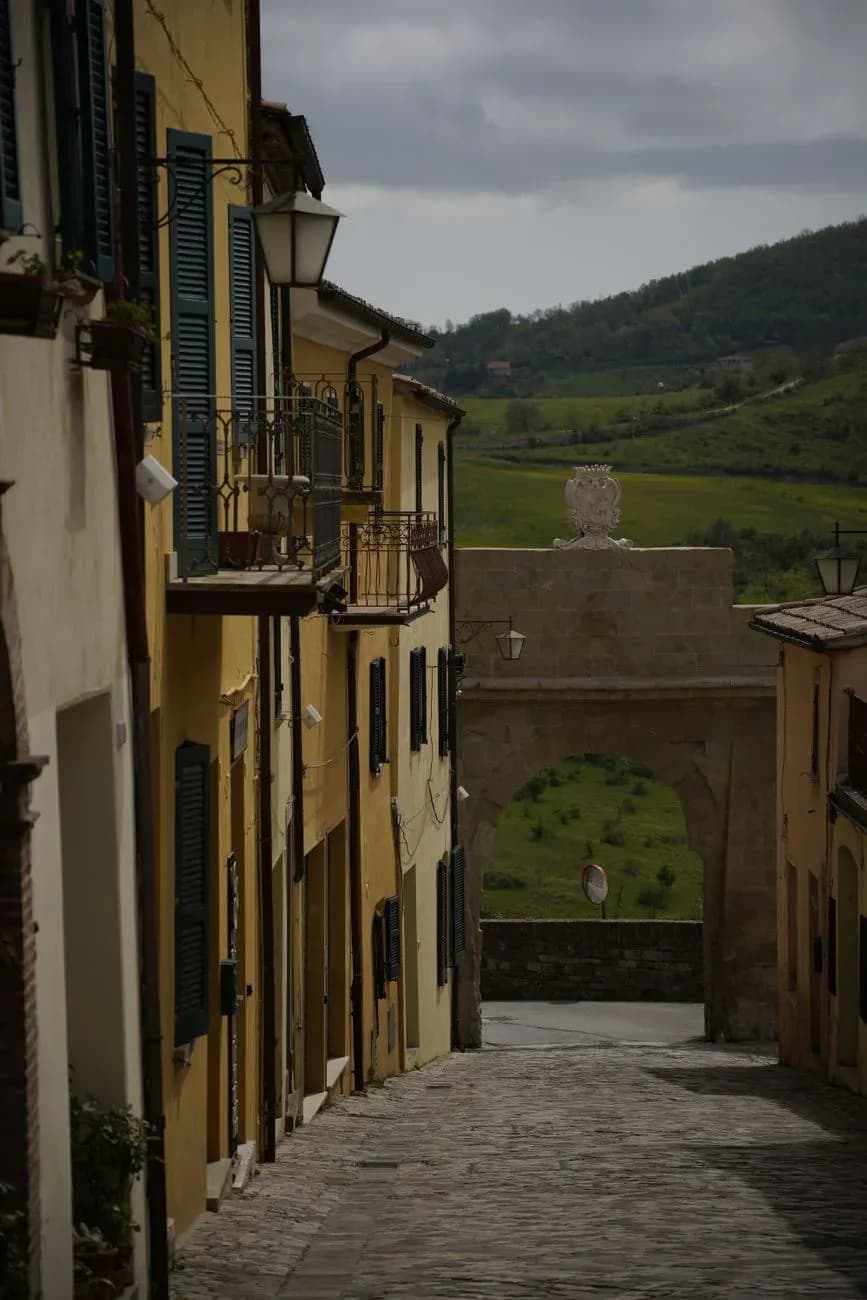
Rimini might immediately bring to mind parasols and sandy beaches, but its historic centre and hinterland tell a very different story. From ancient Roman landmarks to the places lived in by Fellini, the city offers far more than just the sea.
Heading inland, Valmarecchia reveals historic villages perched on rocky spurs and hiking trails winding through calanchi and woodland. The best time to combine city strolls with Apennine trails is from April to early June or between September and late October, when temperatures are pleasant and you will avoid the summer coastal crowds.
How to plan your 4 days
Day 1 — Roman remains and Fellini's world
Morning
Start the day with a walk towards the historic centre to see the Arco d'Augusto, the oldest surviving Roman triumphal arch, dating back to 27 BC. You will need about 20-30 minutes to take it in. Then head to the nearby Domus del Chirurgo, a 3rd-century Roman dwelling where a rich collection of surgical tools was unearthed; allow around an hour for the visit. Continue to the Museo della Città 'Luigi Tonini' to delve into Roman artefacts and the picture gallery (allow 1-2 hours, closed on non-holiday Mondays).
Afternoon
After having lunch nearby, make your way to the Fellini Museum - Castel Sismondo. The immersive exhibition inside the Brunelleschian Malatesta fortress takes about an hour and a half; it reopens at 16:00. Drop into the nearby Palazzo del Fulgor (Fellini Museum) too, home to the Fellini Cinemino (open continuously until 19:00). Before heading towards the sea, dedicate 45 minutes to the Tempio Malatestiano, a Renaissance masterpiece housing frescoes by Piero della Francesca.
Evening
Head over to the Marina Centro area and enjoy a relaxed dinner at Casina del Bosco, overlooking Piazzale Fellini and renowned for its thin-crust piadine.
Day 2 — From the Covignano hills to Borgo San Giuliano
Morning
Leave the centre behind by hiring a bike (the cycle paths are continuous) to reach the hills of Covignano. Stop here for lunch at Bar Ilde, a local institution run for four generations and famous for its wide variety of piadine to enjoy outdoors.
Afternoon
Head back towards the pedestrian centre and make for Borgo San Giuliano, an old fishermen's quarter filled with colourful houses and Fellini-themed murals. Explore the alleys on foot in the late afternoon, leading up to the nearby Ponte di Tiberio, a Roman bridge built in Istrian stone that is ideal to photograph at sunset.
Evening
Stay in the borgo for dinner. You can opt for the cappelletti and Mora Romagnola cured meats at Osteria de Borg (booking is recommended) or the seafood tagliolini at the historic Trattoria La Marianna.
Day 3 — Fortresses and sweeping views across Valmarecchia
Morning
Take the car (essential for this day out) and drive for 25 minutes along the SP258 Marecchiese to the Rocca Malatestiana di Verucchio. Set aside an hour and a half for this cliff-top fortress overlooking the valley. Get back in the car for another 20 minutes or so to reach San Leo. Visit the Fortezza di San Leo, a spectacular stronghold perched on a rocky spur (around 2 hours).
Afternoon
Explore the surroundings of the cliff along the walking paths down to the Convento Francescano di Sant'Igne, an evocative 13th-century hermitage nestled amid woods and pastures (allow about 45 minutes). If you still have energy, drive towards Torriana to admire the Santuario della Madonna di Saiano, framed by the meanders of the Marecchia river.
Evening
Returning to the city or staying at DuoMo Hotel in the historic centre, you can head for dinner at Osteria Angolo Divino in Borgo San Giuliano, open since 1985 with an extensive wine selection and traditional local dishes.
Day 4 — Trekking through calanchi and poetic villages
Morning
Drive to Maiolo for the hike up to Rupe e Ruderi del Castello di Maioletto. This trail runs among the calanchi and climbs to the ruins of the medieval castle, rewarding you with 360-degree views across the valley. Alternatively, take on the Trekking Creste dei Tausani (a circular route of around 7.5 - 9.4 km, taking 2-3 hours of walking) through the rocky pinnacles known as the 'Little Dolomites of Valmarecchia'.
Afternoon
Continue up towards Alta Valmarecchia to visit Pennabilli e I Luoghi dell'Anima. Wander through this village, turned into an open-air museum by the poet Tonino Guerra, exploring themed gardens and outdoor installations.
Evening
Head back to Rimini for a quick, organic final meal at Nud e Crud on Viale Tiberio, specialising in cassoni filled with fresh ingredients from the local countryside.
Practical tips for your weekend
- To get between the centre, Borgo San Giuliano, and the seafront, it is best to hire a bike from the station's Bike Park. Low-emission zones (ZTL) and expensive car parks make having a car inconvenient in town.
- A car is essential for exploring Valmarecchia, however: public transport does not run frequent services to the villages or hiking trailheads.
- If you plan on visiting the city's museums, consider the Art Card (€14): a combined pass for Domus del Chirurgo, Museo della Città, and Fellini Museum, valid for 5-7 days.
- If driving close to the centre, use Parcheggio Clementini (€4 after 4 hours of parking) or Parcheggio Italo Flori, but watch out for market-day parking restrictions on Wednesday and Saturday mornings.
Where to stay
An elegant 5-star historic hotel in Art Nouveau style, set right opposite the sea.
View on Booking →A modern, design-forward property, ideally located for exploring the town centre.
View on Booking →Seafront accommodation surrounded by a park, complete with an on-site swimming pool.
View on Booking →