

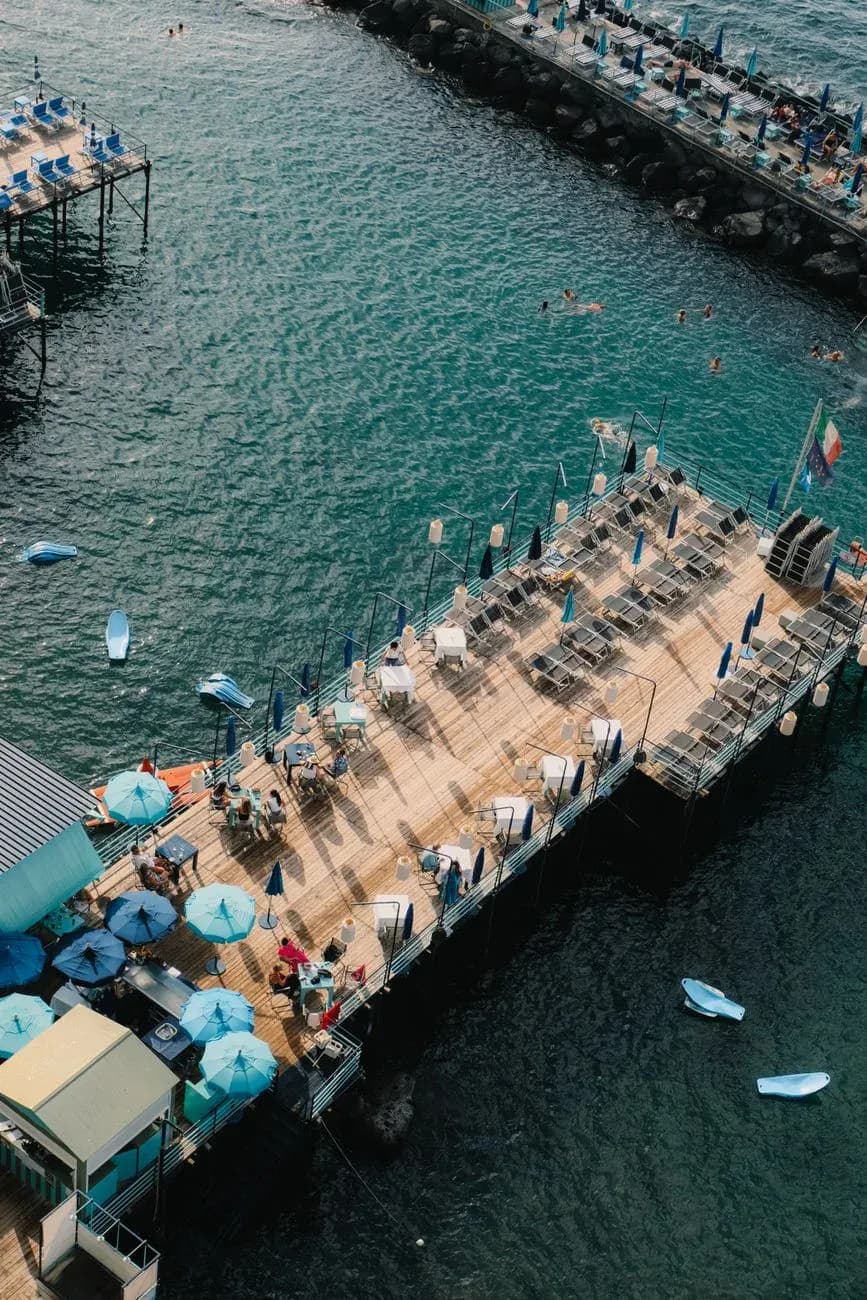
Planning a weekend on the coast requires pragmatic time management, especially given the challenging local road network. The best months for hiking the trails and exploring the towns are in spring, between April and May, followed by autumn in September and October. Conversely, the second half of July and all of August bring gruelling traffic along the Strada Statale 145 and heatwaves that make daytime walks exhausting.
Those arriving by car will have to contend with a chronic lack of free parking on white lines. It is best to head straight for the large paid car parks in the town centre. For exploring the surrounding area, the Circumvesuviana train covers the journey to Pompei in twenty minutes, while the ferries and hydrofoils departing from the port of Marina Piccola are the only effective way to reach Capri, Positano and Amalfi without getting stuck in coastal traffic jams.
How to divide your days
Day 1 — The historic centre and villas
Morning
The natural starting point to get your bearings is Piazza Tasso, named after the poet and designed as a genuine open-air lounge. Just a few metres away, you only need to peer over the railings to spot the Vallone dei Mulini. This deep natural gorge cradles the ruins of a 16th-century mill at the bottom, now completely overgrown with wild vegetation; the photo stop takes under fifteen minutes. Wandering through the alleys, you will soon reach the Chiostro di San Francesco, notable for its interlaced tuff arches. It is best to plan this visit early in the morning before religious ceremonies begin, allowing around twenty to thirty minutes. For lunch, head to Via Santa Lucia to grab a table at Trattoria Torna a Surriento, a small, home-style eatery off the main tourist trail, known for local dishes and gnocchi alla sorrentina.
Afternoon
Spend the first part of the afternoon exploring the rooms of the Museo Correale di Terranova on Via Correale. Visiting this noble villa, surrounded by a leafy park, takes about an hour and a half and allows you to admire historic porcelain collections, period furnishings, and paintings by the Scuola di Posillipo. Returning to Corso Italia, stop off at the Cattedrale dei Santi Filippo e Giacomo. The town cathedral requires half an hour to properly take in the intarsia ceilings and wooden choir stalls, one of the finest expressions of local Sorrentine craftsmanship. Towards late afternoon, walk down to the Villa Comunale di Sorrento: this public terrace perched sheer above the water is at its best at sunset, offering sweeping views across the Golfo di Napoli and Vesuvio.
Evening
For dinner, head down to Marina Grande, an old fishing village painted in pastel colours and used in the past as a film set. Here, old houses overlook the sand and dining tables sit right by the water's edge. Ristorante O' Puledrone is a trattoria run by fishermen, where the day's catch goes straight into the fritture di paranza, served just metres from the moored boats.
Day 2 — Limestone cliffs and citrus groves
Morning
Your second day heads towards Capo di Sorrento. Once you have parked nearby, a downhill walk of around twenty minutes leads to the Bagni della Regina Giovanna. The site consists of a vast saltwater pool enclosed by high limestone cliffs and connected to the open sea via a large natural arch. All around the water, the foundations and surviving walls of the ancient Roman villa of Pollio Felice still cling to the rocks.
Afternoon
After hiking back up the path, a short journey brings you to Marina di Puolo. Here lies the Spiaggia di Puolo, a sheltered cove tucked between the territories of Sorrento and Massa Lubrense. This fishing village can be reached either via a footpath or by road. The calm waters of the bay make it ideal for an extended afternoon swim, sheltered from the gulf's prevailing winds.
Evening
Bear in mind that from April until the beginning of November, from 19:30 onwards, Corso Italia closes to vehicles and becomes pedestrianised. Dine right along this street by stepping inside O' Parrucchiano La Favorita. The restaurant has a long history and is renowned as the birthplace of cannelloni; dinner tables are laid beneath the leafy canopy of a dense, historic lemon grove. Due to high demand, booking well in advance is strongly recommended.
Day 3 — On the peninsula's trails
Morning
Today involves travel on local bus routes. Tickets for SITA buses heading to Massa Lubrense and Termini are not sold on board; you must buy them in advance from cafes or tobacconists. In peak season, arrive at the bus stop very early to beat the long queues. From the village of Termini, set off on the Sentiero di Punta Campanella e Monte San Costanzo, located at the very tip of the peninsula opposite Capri. The easy route follows a flat path for 4 km, taking two hours there and back. Those looking for more elevation can tackle the Monte San Costanzo loop, covering between 7 and 9 km and taking nearly four hours. In either case, bringing plenty of drinking water is essential, as there are no natural springs along the trails.
Afternoon
Remaining in the neighbouring municipality, head towards the hamlet of Nerano to pick up the Sentiero Nerano - Baia di Ieranto. The walking trail descends steadily, weaving between olive groves and dense patches of Mediterranean scrub. It leads down to a protected bay managed by FAI and included within the Area Marina Protetta di Punta Campanella.
Evening
Head back to Piazza Tasso for a pre-dinner drink while watching the town centre buzz with life. Just a few metres from the square, on Via Correale, you will find Ristorante Tasso. The menu pairs pizza with a variety of well-crafted dishes based on regional ingredients from Campania; here too, booking ahead by phone is best.
Day 4 — The Monti Lattari and ancient lanes
Morning
Your final hike heads into the heights of the Monti Lattari for the Trekking al Monte Faito e Monte Molare. This mountain environment is entirely different from the coast, defined by the deep shade of ancient beech woods and deep pits in the ground once used as ice houses to store snow. Reaching the summit of Monte Molare, also known as San Michele at an altitude of 1444 metres, involves a demanding three-hour ascent, but rewards you with clear, commanding views over both Campanian gulfs.
Afternoon
Back in town, stroll down Via San Cesareo, one of the oldest streets in the historic centre. Along the way, take a quick look at the Sedil Dominova, the last surviving noble council seat in the region, crowned with a colourful majolica dome and decorated with 18th-century frescoes. Right after, head onto Corso Italia to visit Villa Fiorentino: built in a distinct neo-Renaissance style and surrounded by neat citrus groves, it is now managed by Fondazione Sorrento to host exhibitions and temporary events.
Evening
Your farewell dinner is on Corso Italia. Pizzeria da Franco is an informal, historic local hangout, best known for its pizza served by the metre, offering great value for money. Unlike other pizzerias in the area, dinner reservations are not accepted here.
Planning and transport
- Finding a free parking space on white lines is practically impossible. It is better to leave your car at Parcheggio Achille Lauro on Via Correale, which costs around €2.50 per hour up to a daily maximum of €25, or at the garage near the harbour if departing by boat.
- Tickets are not sold on board regional buses: you must buy them in advance from a tobacconist. In summer, arrive at the bus stop well before departure to avoid being left behind because of long queues.
- For onward travel to the ruins of Pompei, the Circumvesuviana train remains the most affordable option and takes just twenty minutes. To reach Positano, Amalfi or the island of Capri by sea, ferries and hydrofoils from the port allow you to bypass coastal road jams entirely.
Where to stay
A scenic property directly overlooking the gulf, located along the road on Via Capo.
View on Booking →A hotel set sheer against the sea cliff, featuring wide terraces opening out towards the horizon.
View on Booking →Elegant spaces with an outdoor infinity pool and a sea-facing terrace, just outside the town centre.
View on Booking →