

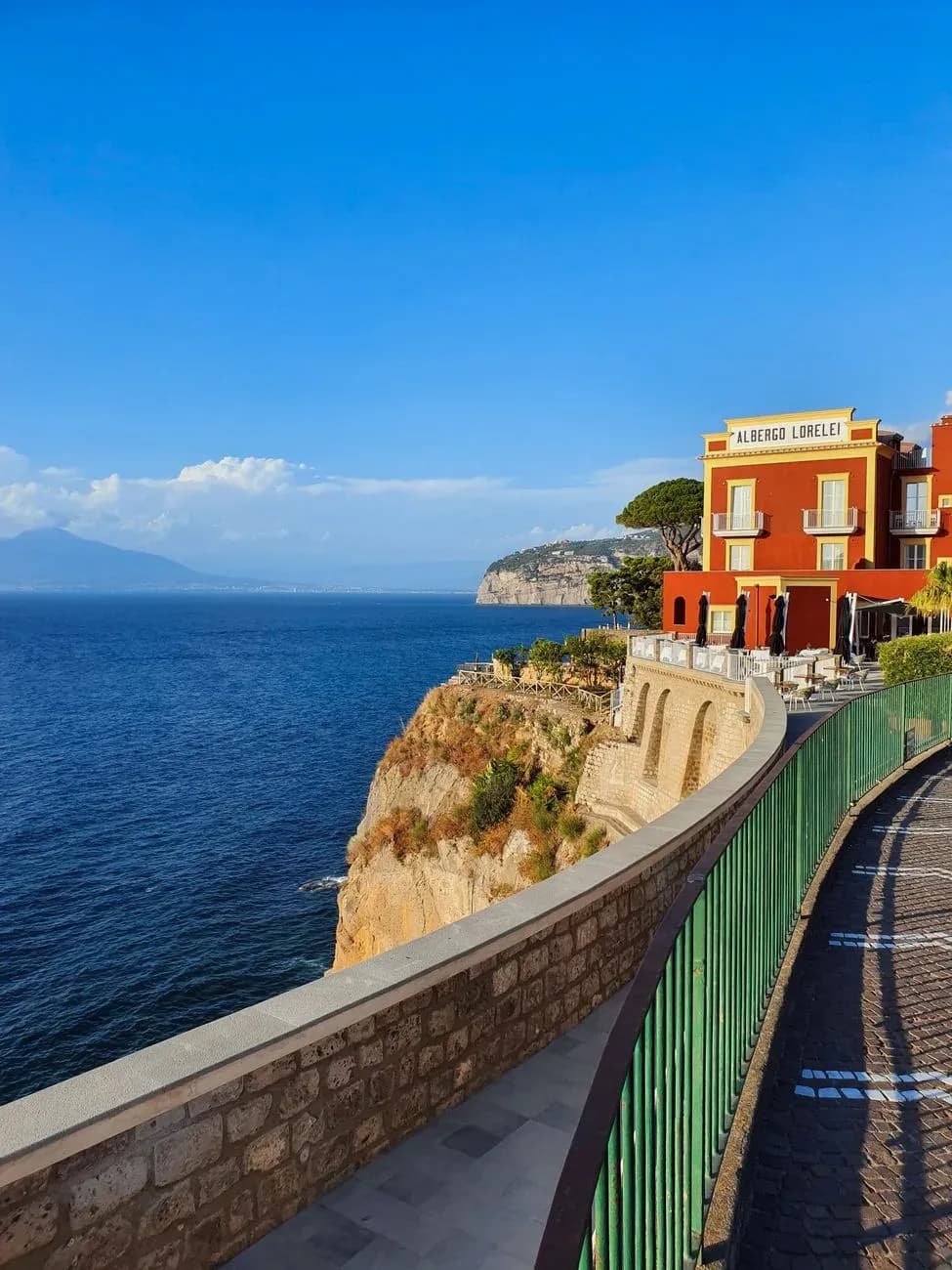
Planning a weekend in Sorrento calls for a bit of strategy. The town is often associated purely with shopping and summer crowds, yet it hides lesser-known corners that tell the story of its industrial and agricultural past. April, May, September and October are ideal months to enjoy mild temperatures and avoid the traffic jams that bring roads to a standstill in July and August.
The historic centre unfolds across a vast pedestrian area, closed to traffic, where walking is effortless along paved streets. For heading up into the hills or down to the cliffs, you'll need to rely on the EAV or SITA local buses, as private cars face heavy restrictions along the main routes.
Driving here often means steep parking fees and scarce spaces. It's best to leave your car in the paid car parks at the edge of town, such as the Parcheggio Vallone dei Mulini or the one at the Museo Correale di Terranova, and then get around solely on foot or by public transport.
How to plan your days in town
Day 1 — From industrial ruins to historic marquetry in the centre
Morning
The natural starting point to get your bearings is Piazza Tasso, the hub of pedestrian life and the start of the stroll along Corso Italia. Just a short walk away, peering over from Via Fuorimura, you'll spot a deep natural gorge: the Vallone dei Mulini. Down at the bottom stand the stone ruins of a 10th-century mill, now completely swallowed by wild vegetation that thrives on the ravine's moisture. Carrying on into the inner streets of the historic centre, a walk of about ten minutes brings you to the Duomo di Sorrento (Cattedrale dei Santi Filippo e Giacomo). A visit takes between 30 and 45 minutes and gives you an up-close look at the intricate wooden choir stalls crafted by local artisans. For an informal midday meal, head to Pizzeria Da Franco on Corso Italia, a popular spot for pizza by the metre and quick bites at friendlier prices than the local average.
Afternoon
The craft of local woodworking has its own dedicated exhibition space at the Museo Bottega della Tarsia Lignea, housed inside Palazzo Pomarici Santomasi. Set in an 18th-century building, it brings together historic masterworks of the Sorrento tradition; allow around an hour for the collection. Heading back towards the streets near the sea, entry to the Chiostro e Chiesa di San Francesco is free. Its 14th-century architecture features pointed arches framed by plants and shrubs; a 30- to 40-minute stop is plenty to wander the entire cloister.
Evening
Before the sun goes down, the finest vantage point across the water sits right on the edge of the pedestrian area. The Villa Comunale di Sorrento is a public garden ending in a panoramic terrace perched high above the sea, looking straight out towards Vesuvio and the Golfo di Napoli. From the terrace, a lift connects the street level directly to the port quays below. For dinner, make your way back into the streets between Piazza Tasso and Piazza Sant'Antonino: Ristorante Zi' Ntonio on Via Luigi de Maio serves typical Campanian dishes and cooks its seafood risotto, risotto alla pescatora, directly in the pan.
Day 2 — Roman cliffs, green hills and fishing hamlets
Morning
The early morning is the best time to beat the coastal crowds. Catch a local bus from the centre out to the Capo area. From here, a footpath leads in 20 to 25 minutes of walking to the Bagni della Regina Giovanna e Villa Romana di Pollio Felice. This sea lagoon enclosed by limestone rocks is overlooked by the ruins of an expansive Roman villa. Once you've explored the cliffs, the Passeggiata storica e naturalistica Capo di Sorrento - Priora heads up the hillside along old mule tracks lined with olive and lemon groves. Heading back into the town proper, lunch requires good timing: Trattoria La Cantinaccia del Popolo, tucked away in Vico Terzo Rota, does not take bookings. Aim to arrive right as the doors open to secure a table and tuck into their mixed platters or parmigiana di melanzane.
Afternoon
The eastern side of town is home to the Museo Correale di Terranova. This civic museum is set within a sprawling citrus park, where collections of Neapolitan school paintings, fine porcelain and archaeological finds easily reward an hour or two of your time. After your visit, stroll down through town towards Marina Grande, the original fishing quarter. Here, weathered, colourful houses hug the water's edge, flanked by fishing boats hauled up onto the sand and a run of seafood restaurants perched on stilts and stone piers.
Evening
To round off your trip right by the water, the tables at Ristorante Bagni Delfino offer an uninterrupted perspective across the bay of Marina Grande. The restaurant serves the catch of the day and rich seafood risotto. Alternatively, if you'd rather stay along the pedestrian stretch of Corso Italia, Ristorante O' Parrucchiano La Favorita sets its tables beneath a dense canopy of lemon trees; its kitchen claims to have invented Sorrento's famous cannelloni, first created here in 1870.
Practical tips for getting around the peninsula
- Traffic along Corso Italia often grinds to a halt. To reach outlying hamlets or neighbouring towns, opt for EAV or SITA public buses rather than a car.
- Getting to the Bagni della Regina Giovanna e Villa Romana di Pollio Felice requires preparation: there are no beach clubs or cafes down on the rocks. Bring drinking water, wear closed shoes for the paved path and wooden steps, and pack water shoes for getting into the sea.
- Waterfront restaurants in Marina Grande book up completely at weekends; if you're planning on having dinner there, be sure to reserve a table a few days in advance.
Where to stay for the night
A four-star hotel perched right on the cliff edge over the sea, ideal if you want to stay within easy walking distance of the town centre.
View on Booking →A historic five-star property built directly on the cliffs, just one kilometre outside Sorrento.
View on Booking →A four-star hillside hotel offering sweeping, unobstructed views across the entire gulf.
View on Booking →