

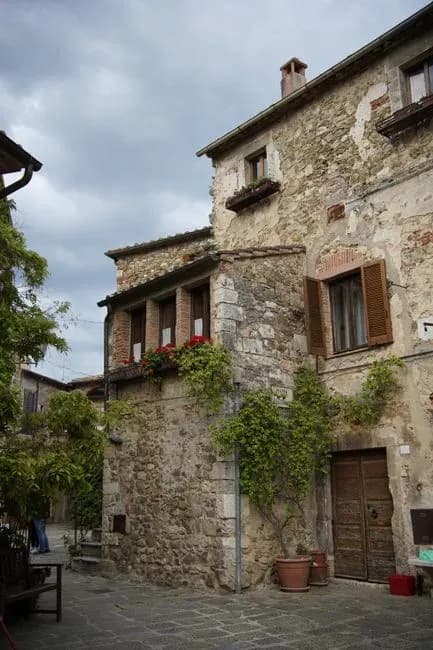
There is a side to Toscana that asks you to slow right down: a landscape of narrow valleys, mountain villages and hot springs tucked away in deep woodland. A car is essential to stitch these areas together, bearing in mind that roads heading up into the Appennini passes and across the Garfagnana are narrow and winding. Your average speed will rarely exceed 40–50 km/h, calling for an unhurried, measured pace.
Late spring (May and June) or autumn (October and November) offer ideal conditions for this itinerary. In autumn, local chestnut festivals get underway alongside stunning mountain foliage, and cooler air makes stepping into thermal pools pure bliss. Careful planning is vital to avoid spending the entire day behind the wheel: group your stops by area, and set off early to beat the parking queues.
Planning your three-day road trip
Day 1 — The Valle del Serchio and subterranean wonders
Morning
Start your day in Borgo a Mozzano with a stop at the Ponte del Diavolo (Ponte della Maddalena). This medieval humpback bridge, famed for its sweeping asymmetric arch over the river Serchio, is best admired early in the morning when the water is mirror-flat and crowds have yet to arrive. A self-guided walk takes about 30–45 minutes. Aim to arrive before 9:30 to secure roadside parking (free or blue pay-and-display bays) before the tour coaches roll in. For lunch, head just up from the bridge to Ristorante Pizzeria Branduzzi on Piazza XX Settembre, a cosy spot with a wood-fired oven serving hearty home-style Tuscan cooking.
Afternoon
In the afternoon, make your way towards Fornovolasco in the Parco delle Alpi Apuane to explore the Grotta del Vento. This subterranean karst system offers three guided routes lasting one, two or three hours through underground streams and towering stalactites. During peak season, booking your ticket well in advance is essential.
Evening
Drive up the valley to reach Barga in time for sunset. The historic centre, ranked among I Borghi più Belli d'Italia, is crowned by the Duomo di San Cristoforo e Borgo di Barga. Built from pale alberese limestone, this Romanesque cathedral looks out across the peaks of the Alpi Apuane; allow around two hours for the visit. Stay in the historic centre for dinner at Trattoria L'Altana on Via di Mezzo 1, celebrated for its garmugia soup, homemade ragù ravioli and desserts made with local chestnut flour. If you're staying overnight in the area, consider Renaissance Tuscany Il Ciocco Resort & Spa.
Day 2 — Medieval fortresses and submerged villages
Morning
Day two focuses on upper Garfagnana. Your first stop is San Romano in Garfagnana to tour the Fortezza delle Verrucole. This remarkably well-preserved medieval stronghold now houses a living museum and archaeological park. The entire site is explored via a guided tour lasting roughly an hour and a half. Afterwards, head down to Pieve Fosciana for lunch at Ristorante Il Pozzo, a historic trattoria serving rustic mountain fare such as venison pappardelle, farro soup and fresh porcini mushrooms gathered in the Appennini.
Afternoon
Continue towards Vagli Sotto to visit the Lago di Vagli e Ponte Sospeso. This artificial reservoir conceals the drowned remains of Fabbriche di Careggine, now a ghost village. You can walk across the valley via the scenic suspension bridge; admission costs €2, payable on the spot. In the late afternoon, head to Castelnuovo di Garfagnana to see the Rocca Ariostesca e Centro Storico. This 13th-century trapezoidal fortress overlooks the main square and was once governed by Ludovico Ariosto; set aside an hour to stroll through the lanes.
Evening
Stay in Castelnuovo di Garfagnana for dinner at Osteria Vecchio Mulino on Via Vittorio Emanuele 12. This traditional bottega serves boards of aged cheeses, prosciutto bazzone, biroldo, mondiola and classic hearty soups made with IGP farro.
Day 3 — Hot springs and thermal steam
Morning
Your third day takes you south towards Manciano and the Cascate del Mulino di Saturnia. These natural travertine pools are open around the clock with free admission. The sulphurous water flows out at a constant 37°C. To secure a parking spot and beat the peak crowds, arriving at first light is by far your best bet.
Afternoon
From the Grosseto area, drive towards Monte Amiata to reach Castiglione d'Orcia, home to the Terme Libere di Bagni San Filippo (Balena Bianca). Access to these wooded springs is on foot and completely free. The water emerges at up to 48°C, cascading over dramatic, brilliant white limestone formations. For a restful evening just a stone's throw from the springs, look at Hotel Terme San Filippo.
Evening
After a day of soaking in thermal pools, wind down with an easy, unhurried evening in the tiny village of Bagni San Filippo, soaking up the quiet of the surrounding forest before heading home.
Practical tips for your trip
- Rubber water shoes are essential for reaching Balena Bianca and Fosso Bianco at Bagni San Filippo, helping you avoid slipping on thermal mud and wet limestone. Keep in mind that stepping or climbing on the fragile white calcium formations is strictly forbidden.
- Inside Grotta del Vento, temperatures stay at a steady 10.7°C all year round, with 99% humidity. Even in the height of summer, you'll need a light windbreaker or a warm fleece, alongside sturdy closed-toe shoes with good grip.
- For a relaxing weekend covering mountain roads, excluding hotel costs, budget roughly €120–€170 per person. This covers lunches and dinners in traditional osterie (around €25–€35 a meal), petrol, and admission fees.
Recommended places to stay
A fully equipped property featuring a wellness centre, set amidst the rolling natural hills that frame the valley.
View on Booking →A hotel with private grounds and access to an affiliated thermal spa facility, situated right in the village.
View on Booking →A resort featuring a panoramic swimming pool and wellness area, ideal for direct access to the mountains.
View on Booking →