

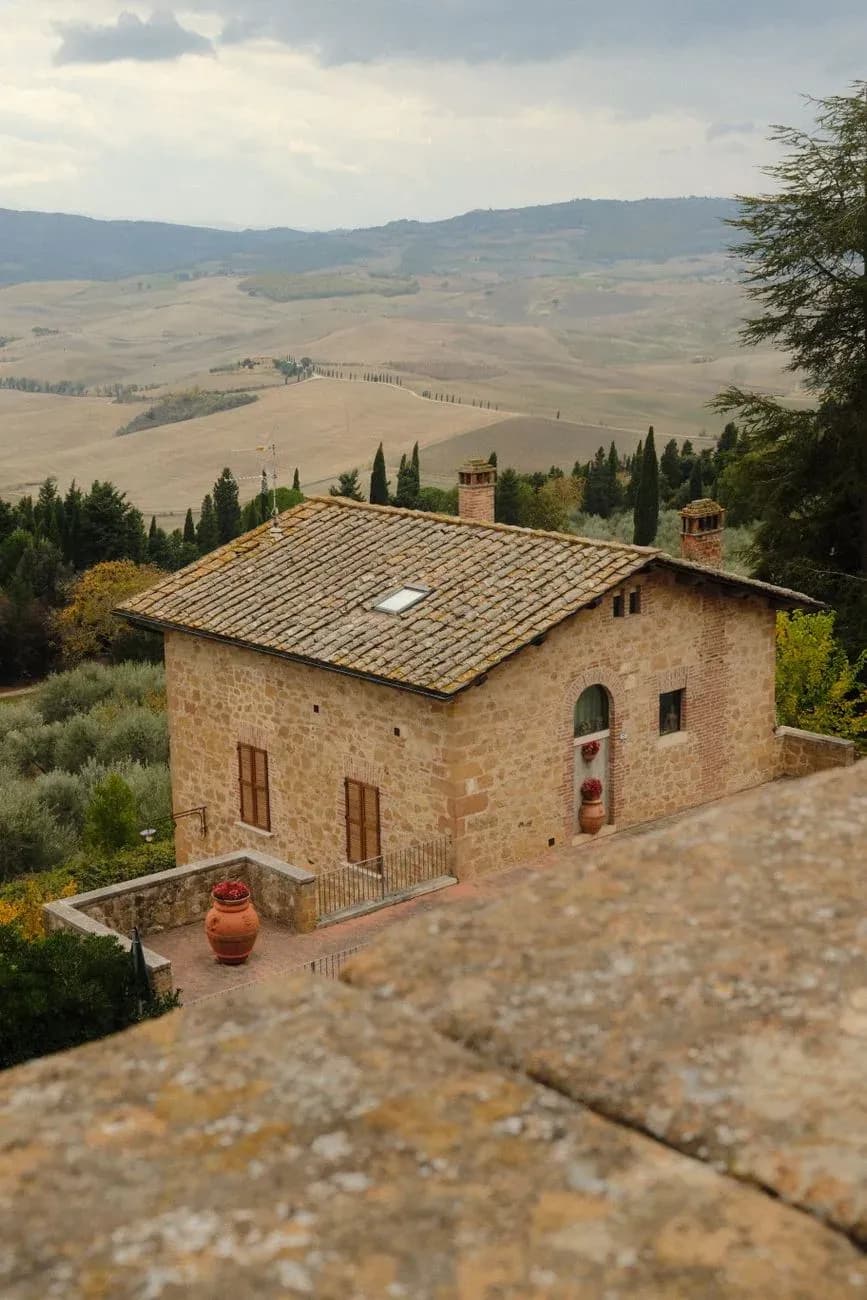
Toscana is a region of dramatically diverse landscapes, depending on which way you point the satnav. This three-day itinerary brings together two utterly distinct souls of the area: on one side, the rugged peaks and deep gorges of Garfagnana; on the other, the clay hills and cypress avenues of Val d'Orcia.
While Val d'Orcia's scenery is best enjoyed in spring and autumn to escape the stifling heat, the adventurous routes through the gorges of Garfagnana have a much tighter visiting window, running from June to mid-September. Distances on paper look deceptively short, but you should count on average speeds of 40–50 km/h on the twisting mountain and hillside roads.
How to plan your weekend in Toscana
Day 1 — Deep into Garfagnana
Morning
Your first morning is set aside for an adventure along the riverbed of the Pelago stream. The Riserva Naturale Statale Orrido di Botri, in Bagni di Lucca, features a spectacular natural canyon explored via a river trek lasting around 3–4 hours. The route is only open between June and September; helmets and hiking shoes are mandatory for entry.
Afternoon
In the afternoon, head towards Fabbriche di Vergemoli to visit the Grotta del Vento, one of Europe's most dramatic subterranean karst systems. You can choose from guided tours lasting 1, 2, or 3 hours, and booking in advance is strongly recommended. Later on, still in the municipality of Fabbriche di Vergemoli, you'll find the [Eremo di Calomini](booking-tour), a sanctuary carved sheer into the limestone rock, taking around 45 minutes to visit.
Evening
For the evening, arrive in Castelnuovo di Garfagnana. The historic centre of the village is home to the Rocca Ariostesca e Fortezza di Mont'Alfonso, imposing fortifications boasting panoramic views across the peaks of the Apuan Alps. The full visit takes around 2 hours, making it the perfect way to wrap up day one.
Day 2 — Lakes, villages, and the Apuan Alps
Morning
Day two starts in Careggine, on the shores of the Borgo e Lago di Isola Santa. This historic stone village is mirrored in an emerald-green mountain reservoir, well worth a stop of about 1–2 hours. A short drive away, carry on to the Lago di Vagli e Ponte Sospeso in Vagli Sotto, an artificial reservoir concealing the submerged ghost village of Fabbriche di Careggine. The pedestrian suspension bridge lets you take in the area on a circuit of around 1–2 hours.
Afternoon
The afternoon is dedicated to pure hiking in the Parco delle Alpi Apuane. From the Stazzema side, set out on the Sentiero per il Rifugio Forte dei Marmi e Monte Procinto. The climb, which takes around an hour and a half, winds through beech woods and vertical rock faces for a classic Apuan trekking route.
Evening
At this point in the itinerary, head south. (The distance between Garfagnana and Val d'Orcia is considerable, so the drive will take up most of the evening).
Day 3 — The rolling hills of Val d'Orcia
Morning
The morning focuses on San Quirico d'Orcia. The Sentiero dell'Anello dei Cipressini della Val d'Orcia starts from here: a walk of around 3 hours cutting through Brunello vineyards and distinctive clay hills to reach the famous cypress grove. Nearby, you'll also find the Cappella della Madonna di Vitaleta, an iconic isolated chapel reached via a 15–20-minute country walk. Sunrise is one of the best times to see it.
Afternoon
Head over to Montalcino for lunch at Boccon DiVino, a restaurant with a huge terrace overlooking the valleys, serving traditional dishes alongside an extensive selection of Brunello. A few minutes from Montalcino (Castelnuovo dell'Abate) stands the Abbazia di Sant'Antimo, a Romanesque Cistercian masterpiece set among ancient olive trees and renowned for its Gregorian chants. The visit takes about an hour. Later, continue to Pienza. Here you can stroll the town walls to take in the valley and the Centro Storico di Pienza e Cinta Panoramica (around 2 hours). For a quick bite, Sette di Vino is an informal osteria on the little square, famous for its bruschette and melted cheeses. At sunset, cocktail bar Idyllium boasts a superb panoramic perch on the historic walls.
Evening
The final stop is Bagno Vignoni for the Piazza delle Sorgenti. This is a vast thermal pool steaming at 52°C right in the village centre; the visit takes about an hour and is particularly atmospheric after dark. For dinner or a late bite, La Bottega di Cacio overlooks the pool and specialises in platters of cured meats, cheeses, and porchetta.
Practical tips for the trip
- You will need your own car to get between the villages and trailheads. Plan for longer journey times than the map suggests, reckoning on average speeds of 40–50 km/h on the mountain and hillside roads.
- For the Orrido di Botri trek, hiking shoes with deep-tread soles are mandatory (sandals and water shoes are banned). Helmets are provided at the visitor centre. Trekking poles are advised against because of the slippery riverbed.
- The historic centres of Castelnuovo, Pienza, and Bagno Vignoni are closed to traffic. You'll need to leave your car in the pay-and-display car parks outside the walls to avoid hefty fines.
- At weekends, the most popular restaurants in Pienza and Bagno Vignoni fill up quickly; make sure you book a table well in advance.
Where to stay for the northern leg
Overlooking the river, this is a strategic base for exploring Garfagnana and Orrido di Botri.
View on Booking →A Liberty-style residence set in the mid Valle del Serchio.
View on Booking →A convenient location for exploring the village centre on foot and reaching the local hiking trails.
View on Booking →