

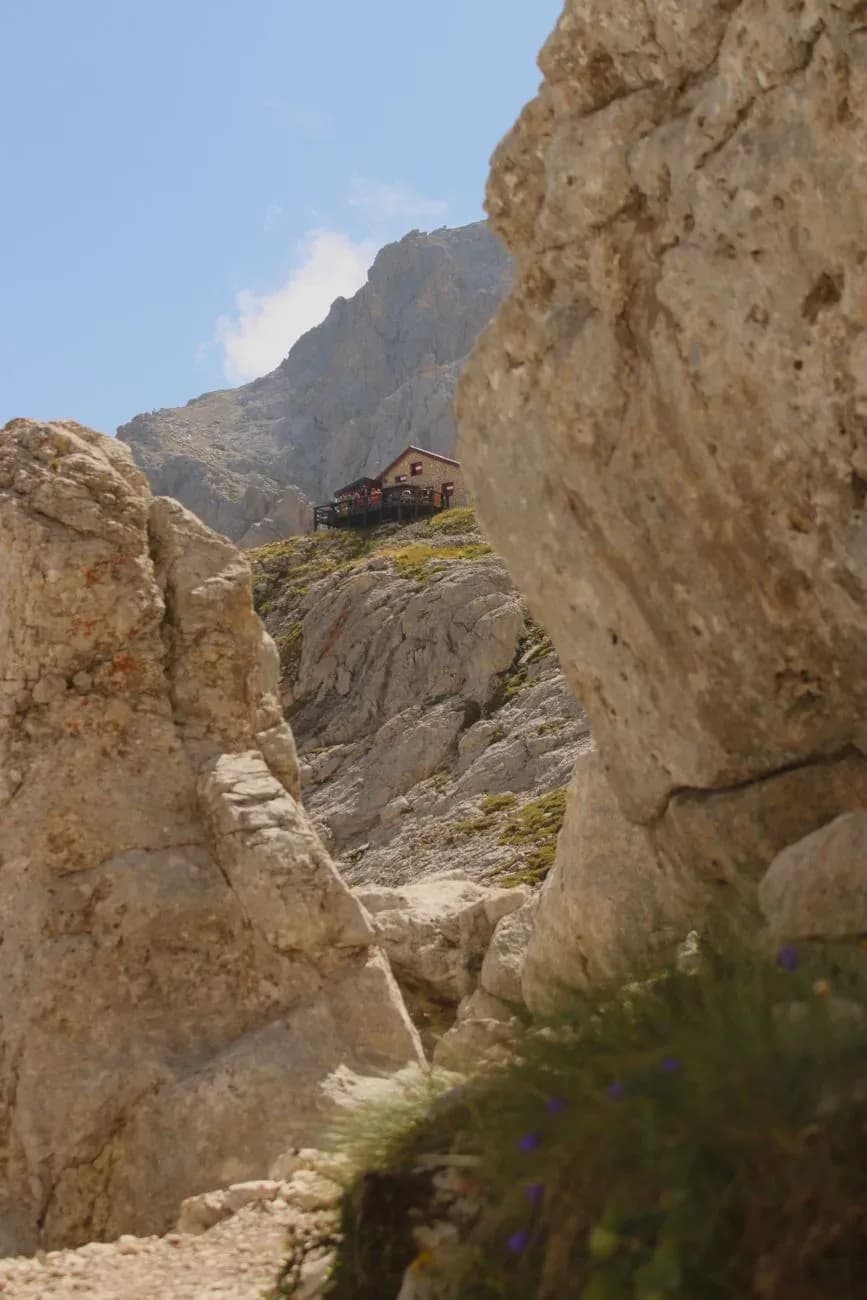
Planning a trip to Abruzzo means factoring in miles of provincial roads that cut across karst plateaus, climb rocky canyons, and eventually plunge into the sea. Distances on the map can be deceptive: the mountain routes connecting the national parks have tight bends and constant changes in elevation, so covering stretches of 40 km often takes a good hour of driving. A car proves essential for moving between valleys without relying on fragmented timetables, allowing you to go from the 2,000-metre altitude of Gran Sasso to the Adriatic shore on the very same day.
When you visit significantly affects trail conditions and venue opening times. The months from May to October ensure stable weather for tackling high-altitude paths or coastal walks. Spring brings widespread blooms across the plains of Piccolo Tibet, while autumn lights up the woods in red and yellow, coinciding with the saffron harvest and the region's first food festivals.
For accommodation, the village of Santo Stefano di Sessanio offers a central base for the first part of the journey, for instance staying in the historic rooms of Sextantio Albergo Diffuso or the spaces of Locanda Sul Lago. From there, you can easily reach both the peaks around L'Aquila and the surrounding valleys before heading south-east for the final coastal leg.
The route day by day
Day 1 — Gran Sasso and high-altitude fortresses
Morning
Your first day begins driving along the hairpins that climb to the Altopiano di Campo Imperatore. This vast karst plain within the Parco Nazionale del Gran Sasso is known as Piccolo Tibet and offers wide-open landscapes devoid of tall trees. It is best to park in the designated lay-bys and set off on foot along one of the well-trodden paths that criss-cross the pastures, taking a couple of hours to explore the area before clouds gather over the peaks in the early afternoon.
Afternoon
Head south towards Calascio. To protect the site, vehicles must be left in the parking areas at the foot of the village. From there, a dirt track involves a walk of around 20 to 30 minutes to reach Rocca Calascio, a military fortress perched at an altitude of 1,460 metres. Along the climb, you come across the Chiesa di Santa Maria della Pietà, an octagonal 17th-century church well worth a 20-minute stop. Entry to the fortress is free and ungated: the ideal time to reach the top is sunset, when the low light strikes the stone walls and the valley below.
Evening
Heading back down to the valley, move on to the Borgo di Santo Stefano di Sessanio, a fortified settlement founded under the Medici. Its paved alleys and covered passages still house workshops that work wool and sell local saffron. It takes about an hour to complete a walking tour of the historic centre. For dinner, La Bettola di Geppetto in the heart of the village serves saffron ravioli and a soup made with local lentils, a Slow Food presidium; tables are few, so book several days ahead.
Day 2 — Archaeology, murals, and confetti
Morning
Drive west towards the Fucino plain. Your first stop is the Area Archeologica di Alba Fucens in Massa d'Albe, an ancient Roman colony built at the foot of Monte Velino. The site preserves the remains of the amphitheatre and original paved roads; touring the excavations takes around 1.5 to 2 hours. A short distance away lies the village of Aielli, famous for the Murales di Aielli - Borgo Universo. Perched at 1,000 metres, the village has become an open-air museum dedicated to street art and astronomy. The dozens of works painted on house facades can be explored on an easy two-hour stroll along its uphill streets.
Afternoon
In the early afternoon, drive towards the Valle Peligna to Sulmona. Just outside the centre, you will find the Museo Pelino dei Confetti, a historical exhibition dedicated to the confectionery production that began in 1783. Inside, you can see the original machinery used over the centuries and sample the products; the visit lasts around 45 minutes.
Evening
Step into Sulmona's historic centre for a walk in Piazza Garibaldi e Acquedotto Medievale. This monumental open space is framed by the 21 arches of the 13th-century Swabian aqueduct and the Fontana del Vecchio. The square fills with locals towards evening, offering a glimpse of authentic town life. For dinner, head back to Santo Stefano di Sessanio and take a seat at Sextantio Cucina on Via Principe Umberto. Run by the albergo diffuso, the restaurant revives historic Abruzzese recipes using heritage flours and wild herbs, served in candlelit rooms.
Day 3 — Sagittario canyons and Lago di Scanno
Morning
Set off early towards Anversa degli Abruzzi to visit the Gole del Sagittario, a WWF nature reserve characterised by limestone cliffs carved out by water. Morning is the best time to tackle trail number 18 towards Castrovalva: a circular route of about 7 km that heads deep into the canyon and calls for proper hiking footwear due to the uneven, damp terrain.
Afternoon
Continue along the winding road to the pay-and-display car park near the lake. From here begins the Sentiero del Cuore e Lago di Scanno, an uphill dirt track of about an hour that climbs 250 metres in elevation. Reaching the Eremo di Sant'Egidio, you look down on the lake, which from this exact vantage point takes on a heart shape. Once back down, make your way to the Centro Storico di Scanno, renowned for bobbin lace-making and the Presentosa, a traditional filigree jewel. The village has steep, narrow lanes you can explore in a couple of hours.
Evening
Before heading back, take a detour to the Borgo di Pescocostanzo. The village features Baroque and Renaissance architecture, clearly visible in the details of its historic palazzi, wrought-iron balconies, and the interior of the Basilica di Santa Maria del Colle. An hour and a half is plenty to wander through the settlement. End the day by returning to the area around L'Aquila for dinner at La Locanda sul Lago in Santo Stefano di Sessanio, where zero-kilometre produce goes into traditional mountain dishes.
Day 4 — From clear river waters to fishing machines
Morning
Your final day brings together fresh water and the sea. Start in the area between Bussi sul Tirino and Capestrano with a trip in a Canoa sul Fiume Tirino. Guides lead Canadian canoes along the crystal-clear currents of the river for an outing of about two hours; this trip must be booked in advance, especially on summer weekends. Alternatively or in addition for keen walkers, head to Roccamorice for the path leading to the Eremo di San Bartolomeo in Legio. The hermitage is hollowed out under a rock overhang within the Parco Nazionale della Maiella: allow about 45 minutes each way, on terrain that strictly requires closed-toe walking shoes.
Afternoon
Head down into the province of Chieti to stop at the Castello Medievale di Roccascalegna. This fortified structure perches on an isolated sandstone crag sheer above the Rio Secco valley. You enter via stone ramps, and touring the interior, including the watchtowers, takes exactly an hour.
Evening
Finally, reach the sea between Fossacesia and Rocca San Giovanni, along the stretch known as the Costa dei Trabocchi e Via Verde. The coastline is punctuated by wooden stilt structures historically used to lower fishing nets into the sea, now linked by a paved cycle path running metres from the water. Have dinner above the waves at Ristorante Trabocco Punta Cavalluccio on the SS16 Adriatica. Run by the Verì family, it serves set menus of fresh Adriatic catch while you sit suspended over wooden planks. Space is extremely limited, so book your table months ahead.
Practical tips for the itinerary
- A car is essential for connecting the mountain parks. Distances may look short, but winding roads keep average speeds low: always allow 40-60 minutes for journeys of 30-40 km.
- In Sulmona, park for free at Piazzale Cartiera dell'Annunziata, right by Porta Romana, or use the paid Santa Chiara underground garage below Piazza Garibaldi. In Scanno, there is a large paid car park near the start of the Sentiero del Cuore.
- For the walk up to Rocca Calascio, you must leave your car in the parking areas at the bottom of the village. From there, tackle an uphill walk of about 30 minutes: bring water and wear shoes with good grip.
- Reaching hermitages like San Bartolomeo in Legio and hiking Maiella trails requires footwear suited to slippery rocks. Dogs are not allowed in strictly protected nature reserves (Zona A of the national parks).
- Dining on historic trabocchi or in the small trattorie of Santo Stefano di Sessanio requires forward planning: book well ahead, as venues have limited covers and high summer demand.
Where to stay
Rooms set within the fortified village's 17th-century palazzi, with underfloor heating.
View on Booking →Located below Castello Piccolomini, convenient for reaching the archaeological site of Alba Fucens.
View on Booking →Set in town, within walking distance of both Corso Ovidio and the aqueduct in Piazza Garibaldi.
View on Booking →