

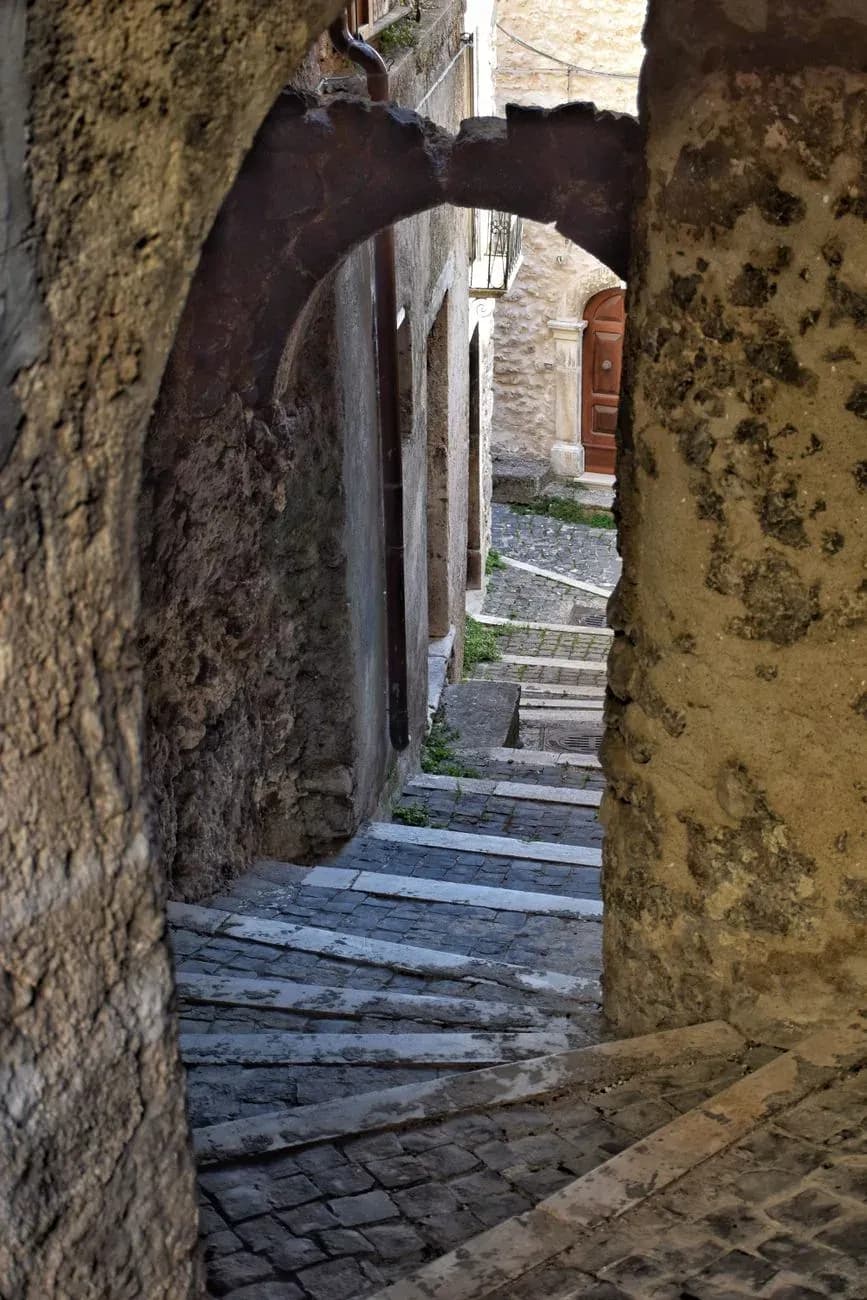
The high-altitude Abruzzo of stone-built villages cannot be rushed. Between June and early October you will find the ideal weather to travel between the Apennine peaks and mountain reservoirs. Expect to do plenty of driving: the scenic routes are a joy to navigate but full of bends, and journeys between villages and high plateaus consistently take between thirty and sixty minutes.
Above sixteen hundred metres on the Altopiano di Campo Imperatore, winds blow hard and the air turns biting even in the height of summer: pack layers and a windproof jacket. Distances and gradients will set the pace for these two days.
How to plan two days in the park
Day 1 — From the high plateau to the fortified village
Morning
Start walking early along the trails of the Altopiano di Campo Imperatore, in the Parco Nazionale del Gran Sasso. The altitude exceeds 1,800 metres in this area nicknamed "Little Tibet": you can hire an e-bike or tackle on foot the Trekking al Rifugio Duca degli Abruzzi e Monte Aquila. It is a high-altitude hike above two thousand metres, with sweeping views over the peaks of Corno Grande and the Apennine plateaus. When hunger strikes, stop at Ristoro Mucciante, in the locality of Fonte Vetica. You buy fresh arrosticini at the counter and grill them yourself over the outdoor braziers and charcoal grills set beside wooden tables. Try to arrive before 12:30, otherwise the grills and seating will be completely taken.
Afternoon
Head down into the valley to reach the Borgo Medievale di Santo Stefano di Sessanio, sitting at an altitude of 1,250 metres. This is an ancient fortified village with a Medici layout, preserved intact: spend the afternoon wandering its narrow alleys and passing beneath stone arches. Then get back in the car to drive to Calascio. From here, walk up towards Castello di Rocca Calascio e Chiesa di Santa Maria della Pietà, an isolated medieval fortress standing at 1,460 metres. Set aside a couple of hours for the visit and linger until sunset to watch the light shift over Gran Sasso.
Evening
For dinner, head back down to the old quarter at the foot of the fortress and stop at La Taberna di Rocca Calascio, housed inside a stone building and serving dishes tied to Abruzzese mountain traditions. Alternatively, in Santo Stefano di Sessanio, book a table at Ristorante L'Elisir del Poeta on Piazza Cristoforo Colombo, if you are looking for zero-kilometre produce, pasture-raised cheeses, and the famous lentil soup of Santo Stefano.
Day 2 — The lakes of Valle del Sagittario
Morning
Head towards Valle del Sagittario for a morning walk around Lago di Scanno, the celebrated natural lake in Abruzzo renowned for its heart-like shape. Begin by strolling along the water's edge, then pick up the circular route signposted as trail Y3. This path, known as Sentiero del Cuore (Lago di Scanno), climbs high above the lake: from up there, the heart shape becomes unmistakably clear.
Afternoon
Head down towards Villalago to reach Lago di San Domenico ed Eremo. The contrast between the emerald-green water of this mountain reservoir and the surrounding rock is striking. You can reach the medieval hermitage by crossing a picturesque stone footbridge over the water. If you still have time in the late afternoon, extend your route to see Lago di Barrea, in the Parco Nazionale d'Abruzzo, Lazio e Molise, a mountain basin framed by walking paths and dominated by a perched village.
Evening
To conclude your journey around the table, return towards the foot of Gran Sasso, in Castel del Monte, to Ristorante da Loredana on Via di Campo Imperatore. Its home-style cooking focuses on local meats, fresh pasta, and mountain pasture cheeses. If you prefer to stay around Calascio, drop into Ristorante Da Clara, a family-run trattoria championing the area's authentic pastoral flavours.
Practical tips for your weekend
- A car is essential: journeys between the lakes, the Campo Imperatore plateau, and the villages almost always require between thirty and sixty minutes of driving on mountain roads.
- Driving access to Rocca Calascio is not always permitted: during busy periods, the road from Calascio is closed. You will need to park in the lower village and take the shuttle bus, or tackle the climb on foot along the old trail.
- If you plan to grill arrosticini at Ristoro Mucciante in summer or at weekends, arrive before 12:30 or after 14:30. In between, the braziers and tables are practically impossible to reach due to the crowds.
- In tiny villages such as Santo Stefano di Sessanio and Calascio, restaurants have very few tables: do not simply turn up on the night; call to book a few days in advance.
Where to stay
Rooms set within ancient stone dwellings at an altitude of 1,250 metres, in the heart of the fortified village.
View on Booking →Panoramic apartments offering characterful views over the historic centre of the medieval village.
View on Booking →A convenient option in the historic village to stay just metres from the fortress and Chiesa di Santa Maria della Pietà.
View on Booking →