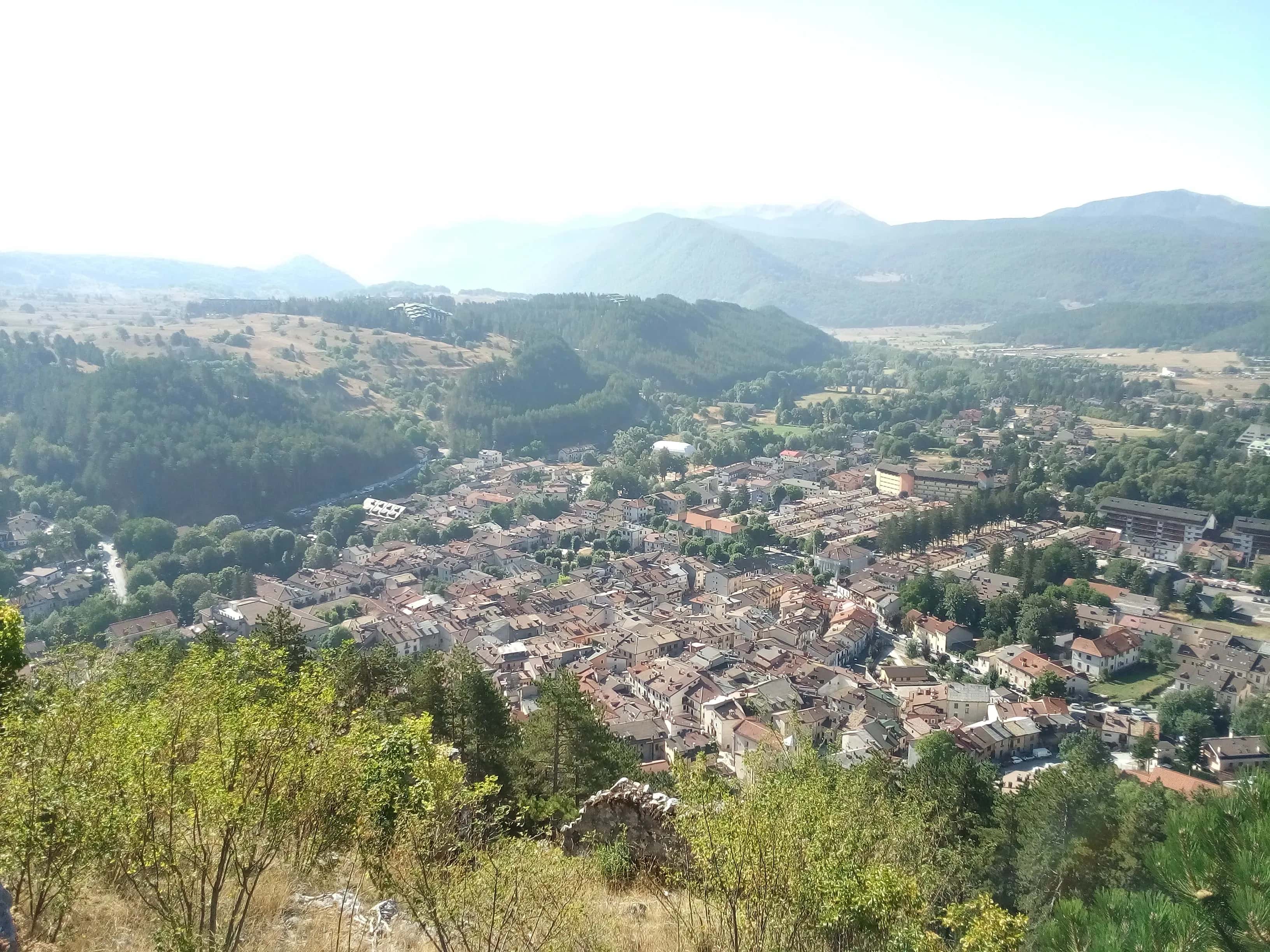

Arriving in Valle dell'Aterno means encountering a rugged mountain landscape marked by recent history. Winding up towards the fortified village at 670 metres above sea level, the air turns crisp at once—you will want a jumper in the evenings even at the height of summer. If you are wondering what to do in Fontecchio, the answer lies in unhurried rhythms, ancient strongholds, and a karst landscape that shapes the territory from deep within. October is an ideal month to travel here: local fields begin harvesting Zafferano dell'Aquila DOP, and mild temperatures make for pleasant walking without the harsh midday heat.
You cannot tell the story of this corner of Abruzzo without acknowledging the complex ongoing reconstruction. Strolling through the village, you will frequently spot restoration scaffolding and barriers around buildings being brought back to life. It is a tender, tangible sign of an urban fabric steadily rising again after the earthquake, where scaffolding sits comfortably beside seventeenth-century palazzi and medieval workshops. This continuous restoration defines the place's authentic identity—far from polished postcards, yet deeply rooted in the daily lives of its residents.
A journey around here strictly calls for a car. Public transport links connecting the valley's isolated parish churches, lakes, and outlying sights are scarce, and the local L'Aquila-Sulmona railway line alone does not offer enough flexibility. Basing yourself in charming restored stone dwellings such as Costa di Maggio - Ospitalità Diffusa or Casa Torre Del Cornone, you will spend three days exploring neighbouring hamlets, venturing into subterranean caves, and stopping at osterie that cook with wild mountain herbs.
How to Plan Three Days in Valle dell'Aterno
Day 1 — The Fortified Village and the Ancient Clock
Morning
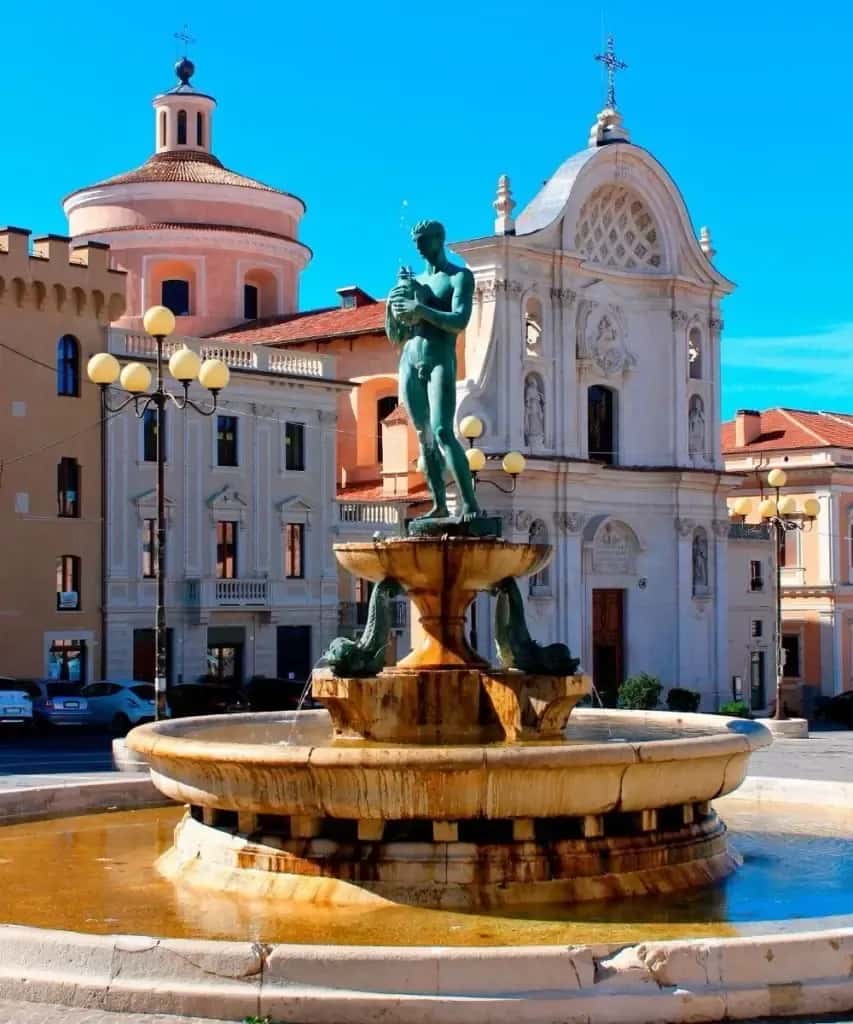
The alleys inside Fontecchio's walls are narrow and steep, with sections closed to cars. Leave your vehicle in the car parks along the provincial road on the valley floor, then climb on foot up to Piazza del Popolo. Fresh spring water pours from the carved stone faces of the Fontana Monumentale di Piazza del Popolo, a fourteenth-century polygonal stone basin worth inspecting for twenty minutes. A few paces further, paths lead you to the Antico Forno Comunale e Botteghe Medievali: stone remains and historic public spaces preserved from the Middle Ages, easily visited on a half-hour stroll.
Afternoon
Defensive architecture takes centre stage in the afternoon. Palazzo Corvi e Porta dell'Orso hugs the village's original gateways. This fortress recalls the siege of 1648, successfully repelled—according to historical chronicles—under the command of the Marchesa Corvi. Just next door, weaving past ongoing restoration barriers, stands the fourteenth-century Convento e Chiesa di San Francesco. Its walls still protect fragments of Giotto-school frescoes. Simply walking through the cloister gives you a true sense of the deep silence found at these altitudes.
Evening
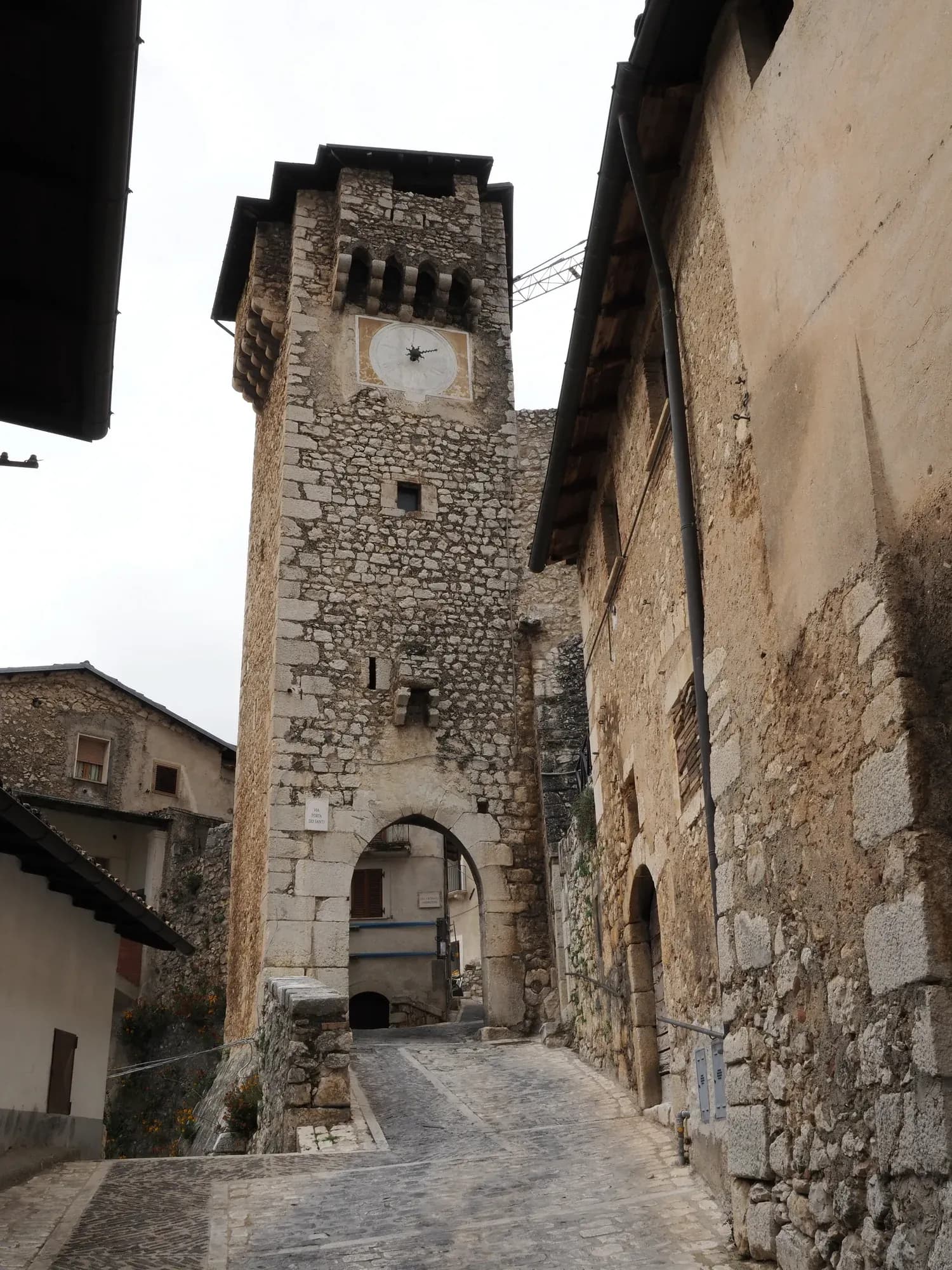
Head to Torre dell'Orologio e Spazio della Memoria at sunset. There is no better time to see this civic tower, featuring a rare six-hour clock mechanism. As dusk falls, the great bell chimes 50 times; set aside 45 minutes in total to also view the earthquake photography exhibition hosted inside. For dinner, stay in the medieval historic centre. Ristorante Costa di Maggio occupies a seventeenth-century palazzo with just a handful of tables. Its inventive cooking calls for booking days in advance.
Day 2 — Underground Waterfalls and Shimmering Lakes
Morning
San Demetrio ne' Vestini puts you in close contact with raw nature. Underground flows an active subterranean river: Grotte di Stiffe is a living karst spring system complete with an indoor waterfall. The guided tour lasts one hour in a constant temperature of 10 degrees, so a windproof jacket is essential even in August. Entry is strictly regulated in timed slots. At weekends, book your ticket online before setting off to avoid missing out. Back above ground, Visconti Kitchen & Cooking Experience lays out local produce for short, guided tastings.
Afternoon
Head back towards Fontecchio, letting waterside landscapes fill the afternoon. Oasi di Fontecchio ed Ex Conceria serves as a visitor centre for Parco Sirente-Velino: once a leather tannery, it now marks the start of a nature trail focused on water. The walk winds down to the river Aterno, taking roughly an hour and a half. Afterwards, a 15-minute drive brings you to the banks of Lago Sinizzo. Fed by karst mountain springs, this serene body of water is ringed by weeping willows and grassy lawns—perfect for resting your legs at the end of the day.
Evening
Hearty, generous dishes round off the evening. Drive back to San Demetrio ne' Vestini to secure a table at Ristorante Leda e Santino, a historic trattoria beloved by locals. Expect grilled meats and primi flavoured with local DOP saffron, cooked according to traditional rustic recipes with zero fuss.
Day 3 — Abruzzo's Sistine Chapel and Roman Ruins
Morning
A 15-minute drive connects Fontecchio to Bominaco, a tiny hamlet boasting an extraordinary density of sacred art. Spend 45 minutes inside Oratorio di San Pellegrino to admire thirteenth-century frescoes covering every wall and a rare medieval liturgical calendar, earning it the moniker of the Sistine Chapel of Abruzzo. Right beside it stands Chiesa di Santa Maria Assunta a Bominaco, a white limestone Romanesque abbey with carved capitals and a striking ambo. Check the oratory's opening times on the morning of your visit with the parish warden, or knock at Bominaco B&B.
Afternoon
Prata d'Ansidonia straddles ancient transhumance drovers' roads. Sito Archeologico di Peltuinum preserves the remains of a Roman settlement built along the Tratturo Magno; exploring the open-air Roman theatre takes about an hour. On clear days, the peaks of Gran Sasso and Sirente stand out sharply on the horizon. Another 20 minutes behind the wheel brings you into Valle Subequana to admire Tempio Italico di Castel di Ieri, a Republican sanctuary from the second century BC that still retains parts of its original mosaic floor.
Evening
Close to the archaeological sites, rustic stone frames the dining room at Osteria Il Borgo Dei Fumari. Enjoy legume soups, mature cheeses, and tagliolini with truffle. Alternatively, route 261 leads to the hamlet of San Pio and Ristorante Del Rio. Here you will find dependable fare, traditional arrosticini, and handmade pasta infused with wild herbs gathered across the meadows of Valle dell'Aterno.
Practical Tips for Valle dell'Aterno
- Entry to Grotte di Stiffe at weekends is strictly via advance online purchase, as timed entry slots are inflexible. Visiting the interior of Oratorio di San Pellegrino in Bominaco also requires planning around the parish keyholder's availability.
- Post-earthquake restoration work can restrict your movements. In Fontecchio and San Pio, watch out for barriers and scaffolding attached to historic palazzi, as they often narrow alleys and footpaths.
- Driving directly into Fontecchio's defensive core leads to tricky manoeuvres on steep, narrow ramps. The best option is to leave your car in the parking areas on the valley road below the walls and walk up in three to five minutes.
- Budget roughly €40 to €60 per person per day for meals, which covers both rustic trattorie and more refined dining. Add €15 to €25 each for the paid sights along the way, excluding accommodation costs.
Where to Stay Among the Stone
Set in the medieval centre, carefully restored stone suites ideal for travellers seeking the understated charm of historic homes.
View on Booking →An albergo diffuso nestled within the fortified village, blending seamlessly into the historic network of alleys and stone walls.
View on Booking →Just a short walk from Oratorio di San Pellegrino, offering a practical base for exploring the surrounding historic architecture.
View on Booking →