

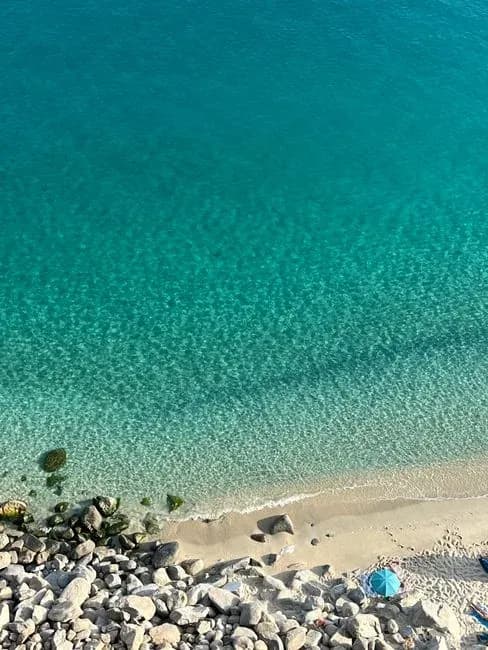
Planning a weekend in Calabria requires precise logistics, especially if you want to explore both the Costa degli Dei and the Costa Viola. A hire car is the best way to manage journeys independently, considering that the drive between Tropea and Scilla takes about an hour and a quarter along the SS522 and the A2 motorway. The secondary coastal roads often have narrow lanes and hairpin bends, so take extra care behind the wheel.
The time of year makes all the difference. Visiting between May and the end of June, or between September and mid-October, means you will avoid the long queues and scorching heat of July and August. The weather remains mild, allowing you to split your time comfortably between relaxing on the beach and strolling through historic villages without the oppressive summer humidity.
This route takes in clifftop fortresses, panoramic terraces and world-renowned archaeological museums. The key is to manage your travel time efficiently between the Tyrrhenian coast and the perched historic centres, leaving enough leeway to find parking in towns where traffic is often restricted by ZTL zones. For your overnight base, places like Hotel Tropis Wellness & Beauty in Tropea or Asterias Residence - Rooms & SPA in Pizzo keep you close to the main stops on the first two days.
Three days between villages and the sea
Day 1 — From Pizzo to Tropea
Morning
Your first day begins in Pizzo, focusing on its historic centre. The starting point is the Castello Aragonese Murat, a cliffside fortress renowned historically for the imprisonment and execution of Gioacchino Murat. The site opens daily from 9:00, with closing times between 19:00 and 20:00. Single admission costs €5, but it is worth buying the €8 combined ticket that covers the subsequent sights in the town.
Afternoon
In the early afternoon, head to La Madonnella, still within Pizzo, to visit the Chiesetta di Piedigrotta. This cave church is entirely carved out of tufa rock right at the water's edge. It is best to plan your visit—which lasts about 30 to 45 minutes—for the afternoon, when the light filters in across the rocks to create striking patterns of shadow. Entry is included in the combined ticket bought at the castle. Back in the main square, stop at Bar Gelateria Ercole at number 18 Piazza della Repubblica to sample their famous artisanal Tartufo di Pizzo, made with chocolate and hazelnut. Afterwards, drive to Tropea for a walk around the Centro Storico e Affaccio del Cannone. This panoramic terrace, flanked by a pedestrian street, offers an open view across the sea to the outline of Stromboli; access is free at all times.
Evening
For dinner in Tropea, Incipit Restaurant on Largo Galluppi 17 features exposed-stone walls and outdoor tables. The menu focuses on classic Calabrian dishes, with a particular spotlight on specialities made with Cipolla Rossa IGP.
Day 2 — Pale sands and cliffs on the Tyrrhenian
Morning
The morning of the second day is dedicated to the coast of Ricadi, around Capo Vaticano. Spiaggia di Grotticelle is a bay characterised by pale sand and turquoise waters. Arriving early in the day makes it much easier to find a spot and lets you make the most of the clear water for snorkelling around the rocky outcrops that frame the coves.
Afternoon
In the afternoon, head back towards Tropea to visit the Santuario di Santa Maria dell'Isola, set atop a sandstone headland dropping sheer into the Tyrrhenian. The sanctuary is reached via a flight of steps; in the warmer months it generally opens from 9:30 until 19:30 or 20:00. A €3 ticket gives access to the flower garden behind the church. The best time to climb up is late afternoon, as the light begins to soften. Straight afterwards, return towards Ricadi to reach the Belvedere del Faro di Capo Vaticano. This vantage point sits 100 metres above sea level and provides wide-open views across the coves below, over the Stretto, and, on clear days, all the way to the Isole Eolie.
Evening
Back in Tropea for dinner, Ristorante Pimm's on Largo Migliarese serves refined seafood inside an old noble palazzo. The restaurant features a tiny panoramic balcony directly overlooking the sea. Tables are very limited, so booking well in advance is essential.
Day 3 — The Bronzes and waterside alleys
Morning
Day three takes you south to Reggio Calabria. Spend the morning in Piazza Giuseppe De Nava visiting the Museo Archeologico Nazionale di Reggio Calabria (MArRC). The museum houses world-class artefacts, including the Testa del Filosofo and the famous Bronzi di Riace. Full-price entry costs €10; the ticket office opens at 9:00 and closes at 20:00, but bear in mind the museum is closed on Mondays. Allow around an hour and a half to two hours for the exhibition rooms. Once finished, walk down to the Lungomare Falcomatà, a coastal promenade dotted with contemporary art installations that offers sweeping views across to Sicily.
Afternoon
After lunch, head back up the coast to Scilla. Your first stop is the Castello Ruffo di Scilla, a fortress perched on the Promontorio Scillèo high above the Stretto di Messina, which also houses an active Marina Militare lighthouse. The visit takes about an hour, is open daily, and standard admission is €2. Once you leave the fortress, late afternoon is the ideal time to explore the Borgo marinaro di Chianalea on foot. Its narrow lanes weave between small houses built right on the rocks, right at the water's edge.
Evening
To round off the itinerary, Ristorante La Lampara, set between Chianalea and the Lungomare di Scilla, specialises in Tyrrhenian seafood. The dining room looks directly onto the waters of the Costa Viola, and the menu centres around freshly caught local swordfish.
Practical tips for planning your trip
- A hire car is essential for easily covering the distances between the Costa degli Dei and Costa Viola; the drive from Tropea to Scilla takes around an hour and a quarter, but drive carefully along the coastal hairpin bends.
- In Pizzo, there is a car park with a flat rate of around €5 right at the foot of the steps to the Chiesetta di Piedigrotta; in Scilla, the best option is to park at Marina Grande and walk down to Chianalea, due to strict ZTL restrictions.
- If you are visiting Pizzo, you can keep costs down by asking for the €8 combined ticket, which covers same-day entry to both Castello Murat and the Chiesetta di Piedigrotta, saving on individual €5 tickets.
- The periods from May to late June and from September to mid-October offer mild temperatures and no crowds, allowing you to enjoy the beaches and walks without peak-summer hassles.
- The Museo Archeologico Nazionale di Reggio Calabria is closed every Monday; plan your visit between Tuesday and Sunday, bearing in mind that last entry is at 19:30.
Where to spend the night
A 5-star hotel set within an ancient convent, complete with panoramic views and a gourmet restaurant.
View on Booking →A resort overlooking the Tyrrhenian with its own private beach and a full thalassotherapy centre.
View on Booking →A property close to the town centre, ideal if you want easy access to an on-site wellness centre and spa.
View on Booking →