
The stretch of Tyrrhenian coastline running south from the province of Vibo Valentia to the Stretto di Messina boasts a concentration of cliffside villages and sandy coves that calls for careful logistical planning. To travel this route, a hire car is the most practical option: the classic itinerary begins at Lamezia Terme airport, heading south along the SS522 and SS18.
The best time to take this trip is from May to June, or from September to early October. During these periods, temperatures remain mild, the sea is warm enough for swimming, and, above all, you avoid the long tailbacks that clog coastal roads at the height of the season. Driving to Tropea, roughly an hour from the airport, is far smoother than during the peak summer weeks.
July and August bring not only heavy crowds, but also strict vehicle restrictions. Historic centres become limited traffic zones (ZTL) and finding a parking space close to the shore becomes tricky. To bypass the problem without missing any stops, it is best to rely on municipal car parks in the upper parts of town and continue on foot, or choose accommodation with private parking.
The day-by-day itinerary
Day 1 — Cliff-top views and pale sand coves
Morning
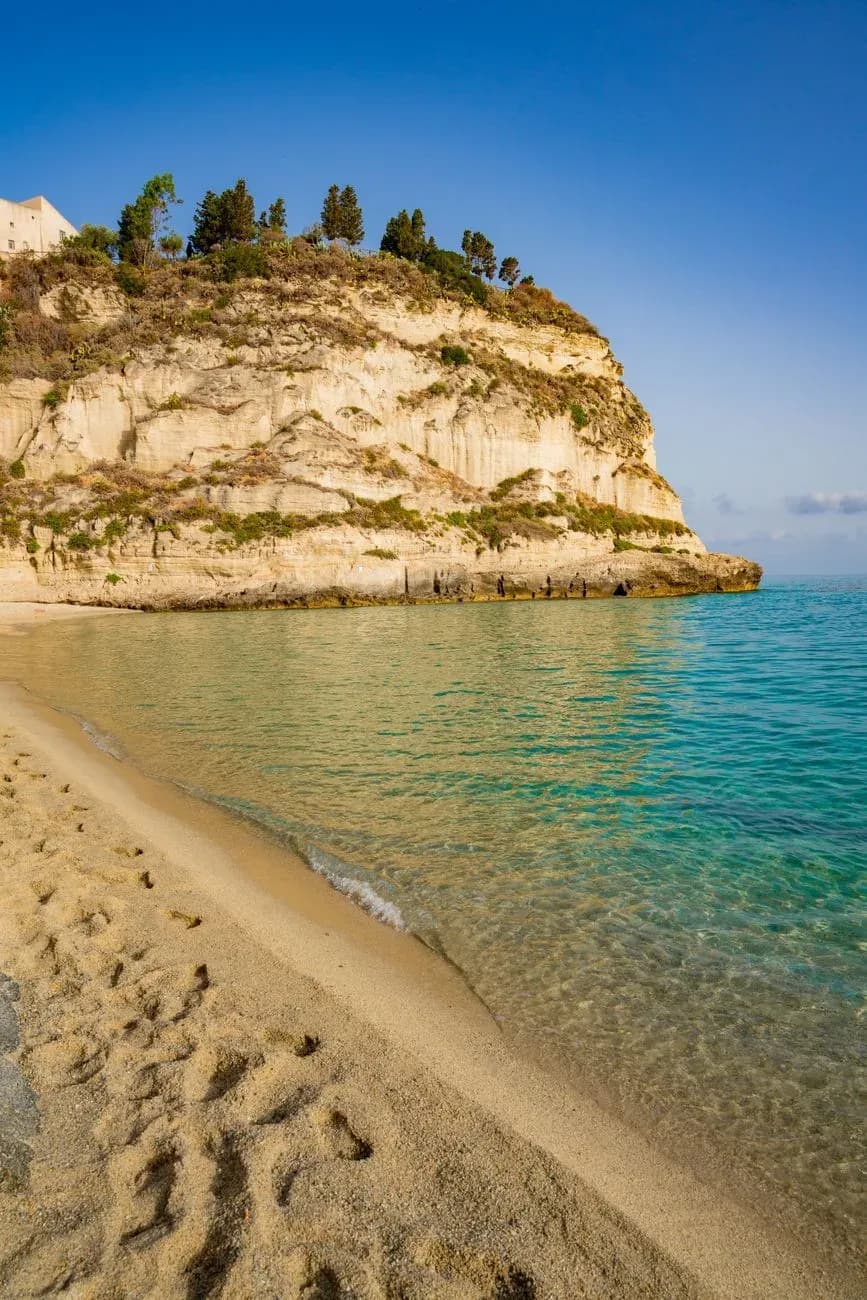
Your first day calls for an early start to tackle the climb up to the Santuario di Santa Maria dell'Isola before the heat sets in. Tropea's iconic landmark stands atop a sandstone crag towering over the coast. A visit takes about an hour and, although it remains open until 20:00 in the summer months, it pays to make the most of the early morning to avoid the heat on the steps. Once back down from the rock, it is just a few metres to the Spiaggia della Rotonda, a stretch of pale sand known for its crystal-clear water, set right at the foot of the headland.
Afternoon
In the afternoon, head to Zambrone to reach the Spiaggia Paradiso del Sub. This cove along the Costa degli Dei is accessed via a dirt trail. Given how exposed the path is to the sun, avoid climbing back up during the hottest hours of the day. The rocky seabed is ideal for snorkelling, so pack a mask and a pair of water shoes to navigate the submerged rocks with ease.
Evening
Returning to Tropea coincides with the best time to stroll through the Centro Storico e Belvedere Piazza del Cannone. Exploring the historic alleys lined with noble palazzi and taking in the terrace views over the Isola and Stromboli takes one to two hours. For dinner, Ristorante Pimm's sits in Largo Migliarese inside a historic palazzo, serving seafood from a balcony perched sheer over the water; book well in advance to secure a table. Alternatively, nearby Ristorante Scacco Matto is a seafood trattoria celebrated for its tonno alla tropeana and swordfish rolls.
Day 2 — From Pizzo to the granite cliffs of Capo Vaticano
Morning
From Tropea, drive north towards Pizzo. The day begins at the Chiesetta di Piedigrotta, a place of worship carved directly into seaside tuff caves, where a visit takes around 45 minutes. A short distance away stands the Castello Murat (Castello Aragonese), a 15th-century fortress tied to the final days of Gioacchino Murat. Allow about 45 minutes here as well to explore the cells and walk along the panoramic ramparts.
Afternoon
Before leaving Pizzo, tradition calls for a seat in Piazza della Repubblica, the town's scenic open-air lounge, to sample its famous artisan tartufo gelato. For lunch, head to Via Colapesce and Ristorante San Domenico, which overlooks the Golfo di Sant'Eufemia and serves dishes based on the local catch. Back in the car, drive south for about twenty minutes towards Ricadi to reach the Spiaggia di Grotticelle at Capo Vaticano. This bay consists of three sandy coves with crystal-clear water, perfect for swimming and snorkelling.
Evening
Just before sunset, make your way to the Belvedere Faro di Capo Vaticano. This viewpoint looks out over granite cliffs plunging into the Tyrrhenian Sea, with views stretching to the Eolie archipelago on the horizon; plan for a 30 to 45-minute stop. Head back to the medieval centre of Tropea for dinner in Largo Galluppi, where Incipit Restaurant serves dishes crafted from local produce, including fresh fish and IGP Tropea red onions.
Day 3 — The fishing village on the Stretto di Messina
Morning
Drive south along the coast for around an hour and a quarter to reach Scilla. The entire morning is set aside for exploring the Borgo dei Pescatori di Chianalea on foot. Known as the little Venice of the South, this neighbourhood features houses built directly onto the rocks, lapped by the sea. Wandering through its pedestrian alleys takes between one and two hours.
Afternoon
Stop for lunch at Cala delle Feluche in Via Oliveto in Scilla, which serves traditional seafood specialities from the Stretto on a terrace over the water. Afterwards, head to the Spiaggia di Marina Grande (Spiaggia delle Sirene), an expansive shingle and pebble beach equipped with lidi. The beach is dominated by the Castello Ruffo, a fortified cliff-top stronghold separating Chianalea from Marina Grande. A tour of the ramparts takes around an hour and offers panoramic views over the Stretto di Messina from above.
Evening
To round off your day along the coast, stay in Scilla and head to Via Omiccioli on the seafront promenade. Here, Ristorante Krataiis offers seafront tables where you can try fresh pasta and pesce spada alla ghiotta, a signature swordfish dish of the Costa Viola.
Day 4 — Masterpieces of Magna Grecia in Reggio Calabria
Morning
The final leg of the journey takes you another half an hour south from Scilla to Reggio Calabria. The main highlight is the Museo Archeologico Nazionale di Reggio Calabria (MArRC) in Piazza Giuseppe De Nava, home to remarkable Magna Grecia collections and the famous Bronzi di Riace. Touring the galleries takes around two hours. Entry to the climate-controlled room housing the bronzes requires passing through a decontamination airlock and is restricted to small groups; book online in advance for summer weekends.
Afternoon
After leaving the museum, spend the rest of your time strolling along Lungomare Falcomatà, the tree-lined seafront promenade that writer Gabriele D'Annunzio famously called the most beautiful kilometre in Italy. From here, uninterrupted views across to Sicilia and the Stretto give you a clear look at the opposite shore before you head home or back to the airport.
Evening
The evening is free to arrange your return journey or enjoy a final drink in the bars of central Reggio Calabria before driving back up the peninsula.
Tips for planning your trip
- During the warmer months, Trenitalia runs the 'Tropea Line'. This regional rail service is ideal for travelling between towns along the Costa degli Dei without a car, with evening services running late enough to visit Pizzo for a tartufo.
- Admission to the Bronzi room at the Museo Archeologico Nazionale di Reggio Calabria (MArRC) is strictly timed and capacity is limited. On peak summer weekends, book your time slot online in advance to avoid missing out.
- In peak summer, parking near the sea in Tropea and Scilla fills up fast and numerous ZTL zones are enforced. Leave your car in the upper municipal car parks, or book accommodation that includes private parking.
- Wild, undeveloped beaches like Capo Vaticano and Zambrone require walking down steep trails with no shade. Avoid making the trek in the midday sun and always pack rubber water shoes for the rocky seabed.
Recommended hotels and B&Bs
Set in an Art Nouveau palazzo in the historic centre, just a short walk from Piazza Vittorio Veneto.
View on Booking →A seafront property, ideal for walking to the beach at Marina Grande and the railway station.
View on Booking →A guest house right by the beach with a sun terrace, open sea views, and restaurants close by.
View on Booking →