

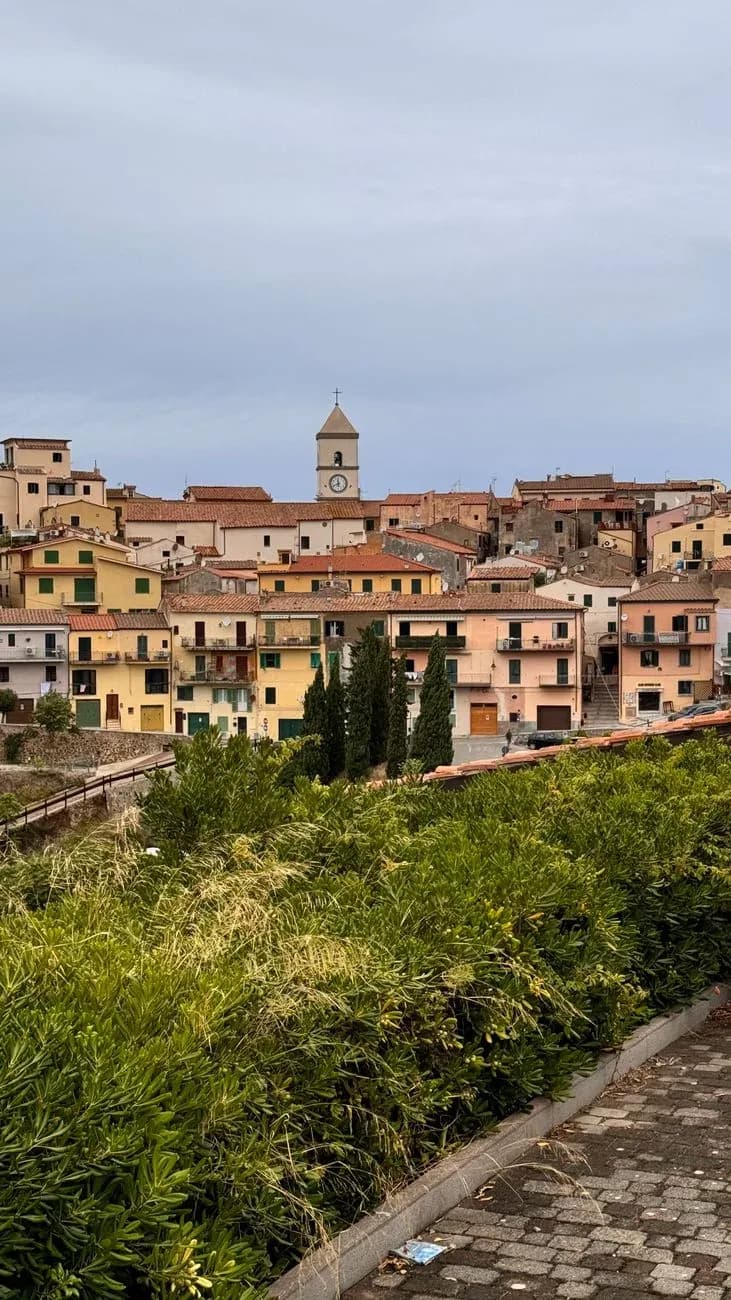
The Lunigiana requires a bit of calculation when it comes to travel times: distances look short on the map, but the hill roads and limited opening hours of some fortresses mean you need to plan your stops well. Basing yourself in Filetto puts you exactly in the centre of this road network, with castles and pievi spread within a maximum 20-minute drive. It is an area where historical evidence ranges from prehistoric finds to the fourteenth-century fortresses of the Malaspina family, often alongside the routes of the Via Francigena.
The best time to plan walks among the chestnut groves and historic cobbled streets is in spring, between April and June, or early autumn in September and October, when temperatures are mild and the main local food festivals take place. If you visit during the week of Ferragosto, however, you will find the whole village transformed into an open-air market for the 'Filetto Rinascimentale' event and the San Genesio fair: in this specific case, it is best to set off very early in the morning to find a parking space, given the large crowds.
To sleep right inside the historic walls, places like Gredo Antica Dimora offer a base overlooking the main square, reducing travel to zero for your first day's visits. The area offers alternatives ranging from rural inns to fully equipped campsites, guaranteeing solutions suited both for those seeking hilltop isolation and those who prefer the convenience of the valley floor.
How to organise your days in Lunigiana
Day 1 — From the chestnut forest to the community mills
Morning
Your day begins just outside the residential perimeter of Filetto, exploring the Selva di Filetto e Oratorio di San Genesio. This is a thousand-year-old sacred chestnut wood, known for being the discovery site of eleven prehistoric stele statues, with a sixteenth-century religious building at its centre; the visit takes about forty-five minutes on your own. Leaving the woods, you should dedicate about an hour to exploring the Borgo Murato di Filetto on foot, a rare example of a quadrilateral fortified settlement of Byzantine origin. The route winds through vaulted passages and cylindrical towers until you reach the central Piazza del Pozzo. Staying in the Piazza della Chiesa area, you will come across the Palazzo dei Marchesi Ariberti e Chiesa dei SS. Filippo e Giacomo. This seventeenth-century complex, flanked by the old Fatebenefratelli convent, features elegant masonry flyovers connecting it to the parish church and the rest of the village; allow half an hour to look at the exterior. For lunch, stay in the stone heart of Filetto, in Piazza Immacolata, at Convivium Venti Venti: a restaurant housed in an old osteria serving updated traditional dishes and hand-rolled fresh pasta. Given the limited seating, you must book a few days in advance.
Afternoon
In the afternoon, head to the historic centre of Villafranca in Lunigiana to visit the Museo Etnografico della Lunigiana. The exhibition spaces have been created inside sixteenth-century community mills and house collections of agricultural tools reflecting the local rural civilisation; the visit takes about an hour. A short distance away are the ruins of the Castello del Malnido e Borgo Vecchio, an ancient Malaspina fortress built along the Via Francigena. This site, where Dante Alighieri once stayed and which today features a square dedicated to him, takes forty minutes to explore fully with a walk among the ruined walls.
Evening
For dinner, head to Piazza San Giovanni 1, also in Villafranca in Lunigiana, to take a seat at Locanda all'Antico Mulino. Situated right next to the historic walls, the osteria offers home-style Lunigiana cooking, local meats, and above all, traditional testaroli with pesto.
Day 2 — High-altitude fortresses and spindle-shaped villages
Morning
The morning of the second day requires strategic use of your car. Driving for about twelve minutes from Filetto, you arrive in Filattiera, in the Sorano area, to see the Pieve di Santo Stefano di Sorano. The Romanesque building stands alone along the Via Francigena, built with river pebbles, and houses original stele statues as well as an early medieval epigraph; the visit takes about forty-five minutes and is made easy by a large adjacent car park. Getting back behind the wheel for another twenty minutes towards Pontremoli, you climb to the Castello del Piagnaro, which houses the Museo delle Statue Stele Lunigianesi. The exhibition preserves anthropomorphic sandstone figures dating from between the 4th and 1st millennium BC, and the sheer number of artefacts means you should allow at least an hour and a half to complete the route.
Afternoon
Heading back south, a ten-minute drive brings you to Bagnone for your lunch stop. In Piazza Marconi, you will find Locanda La Lina, a historic village trattoria specialising in traditional torte d'erbi, tortelli and stewed meats. After your break, dedicate ninety minutes to exploring the Borgo Medievale e Castello di Bagnone, an Orange Flag awarded village perched on the gorge of the stream of the same name. The settlement is divided into different levels, with porticoes, stone bridges, and the upper village dominated by the fortress. From here, move on to Virgoletta, in the municipality of Villafranca in Lunigiana, for a forty-five-minute walk around the Borgo Fortificato di Virgoletta. The urban layout has a peculiar spindle shape stretching along the hill, topped by the feudal castle palace and the church of Santi Gervasio e Protasio. The final stop of the day should be scheduled for the late afternoon, since the Castello di Malgrate (a fourteenth-century fortress known for its cylindrical tower over 25 metres high) only opens its doors on Saturdays and Sundays from 15:00 to 18:00, except in August when it is open every day except Mondays.
Evening
Back in Filetto for the evening, dinner is in the historic centre at Il Tempo Ritrovato. The restaurant boasts a medieval setting and serves local cold cuts, slow-proved pizzas and the characteristic farinata nei testi; because the indoor spaces are very small, booking a table in advance is a practical necessity.
Tips for better planning
- To move between the hamlets, a car is the only truly effective solution: villages like Bagnone, Malgrate and Filattiera are between a 5 and 15-minute drive from Filetto. There is a railway station in Villafranca-Bagnone, but to reach the solitary pievi and explore the mountain valleys, the flexibility of your own vehicle, or alternatively a bicycle using the Lunigiana Bike Area, proves essential.
- To optimise your time and avoid getting your car stuck in narrow alleys, it is best to use the parking area along Via Selva dei Castagni in Filetto. It is located right by the woods, is shaded and free, has a drinking water point and picnic tables, and is only a 500-metre walk from the entrance arch to the walled village.
- Walking in these historic settlements requires very comfortable shoes. The sandstone paving, vaulted alleys and steep inclines found in Filetto, Bagnone and Virgoletta become particularly slippery in the rain, requiring a steady pace and shoes with good grip.
- The order of your stops should be calibrated to opening hours: minor fortresses like the one in Malgrate can only be visited on weekend afternoons. If you also include Pontremoli in your itinerary, you can save money by purchasing the Biglietto Unico (8 €), which grants discounted entry to the Museo delle Statue Stele, the Castello del Piagnaro and the Museo Diocesano, with further discounts for motorhome owners and FAI members.
- In terms of costs, you should budget an average of 55-80 € per day per person, excluding accommodation. This figure covers lunches and dinners in traditional osterie (between 25 and 35 € for meals based on testaroli and zero-kilometre produce), entry to museums (around 5-8 € per ticket) and fuel costs for driving around the valley.
Where to spend the night
A bed & breakfast housed in a historic building overlooking Piazza del Pozzo, inside the walls.
View on Booking →An agriturismo solution with panoramic views of the surrounding hills, ideal for those seeking silence.
View on Booking →A holiday village nestled in a centuries-old wood, equipped with pitches for tents and motorhomes as well as bungalows.
View on Booking →