

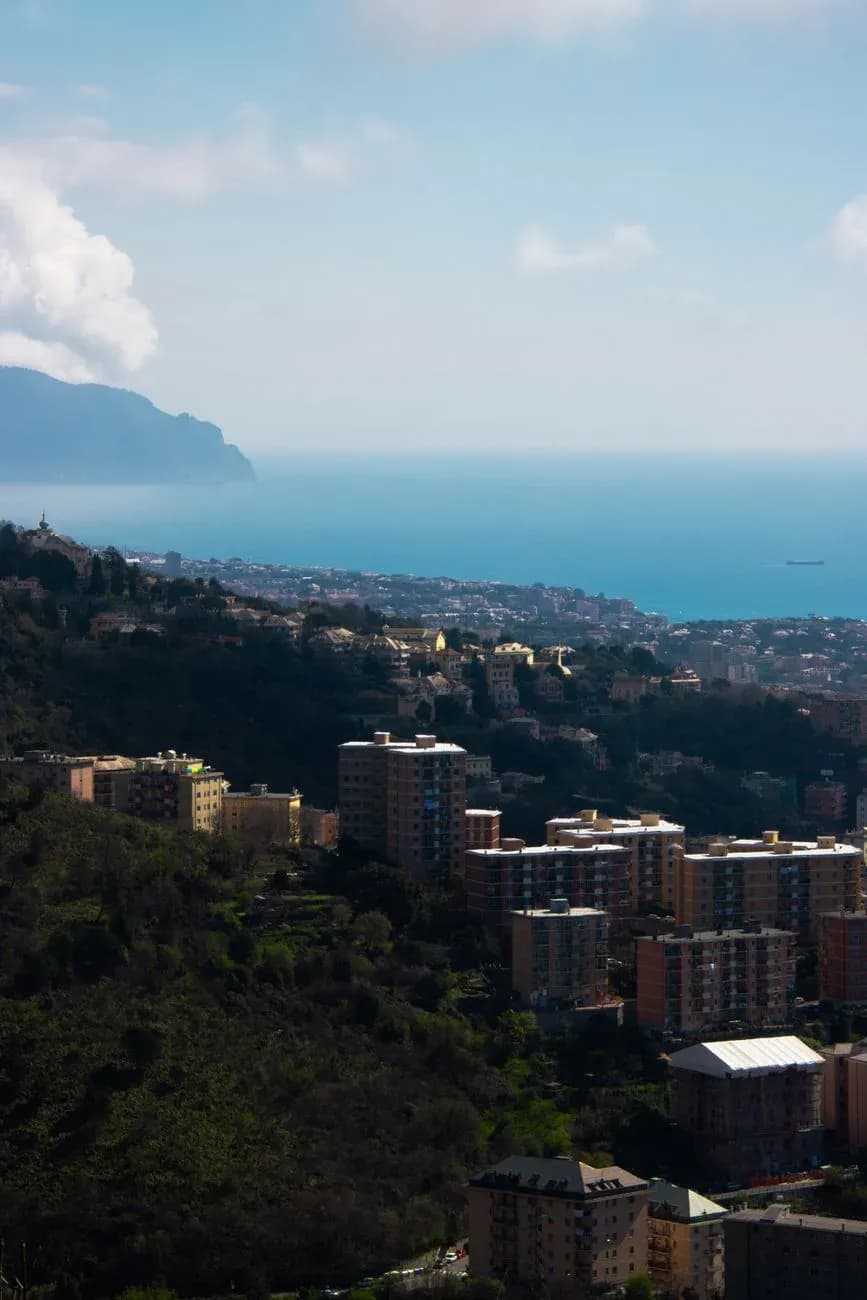
Genova is not a city that lets you pin it down at first glance. Between the austere architecture of noble palazzi, the concrete of port infrastructure, and alleyways that narrow until the light disappears, you need time to get your bearings. The complex terrain forces constant climbs and descents, relying on transport that takes unusual forms here, such as vertical funiculars and lifts hewn directly into the rock.
The most sensible time to pack your bags and tackle the slopes is spring, from late March to early June, or the early autumn months. During these windows the weather is mild, an important factor in avoiding the summer swelter in the caruggi of the centro storico or excessive sun exposure on ridge paths. Driving between the central streets and the coast is virtually impossible due to limited traffic zones and the very layout of the roads. It is always best to rely on regional trains and city buses for longer distances, covering the rest on foot.
Four days to discover Genova's contrasts
Day 1 — The waterfront and the caruggi
Morning
The harbour marks the lower edge of the city, and the entire morning is devoted to exploring the Acquario di Genova. Home to thousands of marine creatures, it requires an investment of 3 to 4 hours. Aim to arrive at opening time, ideally on a weekday, and make sure you book a timed-entry ticket in advance to skip the constant queue outside.
Afternoon
Once out of the pavilions, satisfy your hunger for a few euros at Focaccia e Dintorni, an artisan bakery on Via Canneto il Curto where piping-hot trays emerge continuously. Heading back to the harbour, step onto the Bigo Panoramico, a rotating metal lift designed by Renzo Piano that climbs to a height of 40 metres, giving you a full panoramic view over the piers. You then head into the alleyways to the Cattedrale di San Lorenzo. The Gothic striped cathedral takes around 45-60 minutes, including a visit to the subterranean Museo del Tesoro.
Evening
Wrap up the day at a table in Trattoria Da Maria on Vico Testadoro. It is an unpretentious osteria with paper chequered tablecloths and zero ceremony, dishing up generous portions of borage ravioli and Ligurian polpettone at pocket-friendly prices.
Day 2 — Noble palazzi and rooftops from above
Morning
Day two focuses on the Renaissance layout, starting at Strada Nuova e Musei di Strada Nuova (Via Garibaldi). Touring the museum complexes and the Palazzi dei Rolli (Palazzo Rosso, Palazzo Bianco, and Palazzo Doria-Tursi) takes around 2-3 hours among courtyards and monumental staircases. Just a short walk away, on Piazza De Ferrari, step inside Palazzo Ducale, the former seat of the doges, well worth exploring for its grand loggias and historic prisons.
Afternoon
To break up the afternoon without weighing yourself down, head over to San Vincenzo for a slice of cheese focaccia from Panificio Mario on Via San Vincenzo, a bustling neighbourhood bakery that has been going strong for decades. With your energy restored, enter the Complesso di Santa Maria di Castello, set on the hill of the same name and famed for its medieval cloisters. Towards late afternoon, make your way to Piazza Portello to catch the Art Nouveau lift up to Spianata Castelletto (Belvedere Luigi Montaldo), a circular terrace overlooking the slate rooftops and the gulf, timed just right for sunset.
Evening
For dinner, head to Trattoria Rosmarino near De Ferrari, a restaurant that reworks classic Genovese recipes using fresh ingredients. To secure a table, booking a few days ahead is strongly advised.
Day 3 — Uphill crêuze and ancient fortifications
Morning
Leaving sea level behind, head to Largo della Zecca to board the Funicolare Zecca-Righi. The cable railway climbs to 298 metres, the starting point for the Parco Urbano delle Mura e Trekking dell'Anello dei Forti. The walking trail links Forte Sperone, Forte Puin, and Forte Diamante, requiring between 3.5 and 4.5 hours of hiking along the mountain ridges.
Afternoon
After heading back down to the centre, lunch is serious business at Ristorante Il Genovese on Via Galata, a spot famed for its mortar-ground pesto and Genoese-style tripe. Once you have digested your meal, make your way towards Monte Galletto. Using the neighbourhood's quirky public lift, visit Castello D'Albertis (Museo delle Culture del Mondo), the neo-Gothic residence of a sea captain, complete with grounds looking out over the water.
Evening
At the end of the day, head towards Sampierdarena to walk along the pedestrian footbridge that leads right beneath La Lanterna di Genova. The medieval lighthouse houses a maritime museum and serves as the iconic beacon for anyone arriving from the sea.
Day 4 — The villages of the Levante coast
Morning
The final stretch of the weekend relies on the regional train. From Brignole you reach Nervi in around 15-20 minutes. This coastal district offers the Parchi di Nervi e Galleria d'Arte Moderna (GAM), a sweeping green expanse featuring rose gardens and grand old residences converted into 19th-century museums. From the parkland, you step right onto the Passeggiata Anita Garibaldi di Nervi, a 2-kilometre pedestrian path carved into the rocky coastline.
Afternoon
Catch city bus 31 to head back towards the Borgo marinaro di Boccadasse, passing through the Albaro neighbourhood. Lunch is enjoyed sitting on the dark pebbles of the cove, picking up a paper cone of fritto misto from Ittiturismo GE 8317. Spend the rest of the time watching the pastel-coloured houses and the fishermen sorting their nets by the shore.
Evening
As the boats come in, take a seat at Trattoria Osvaldo, a historic haunt tucked away in the village alleyways. The menu features exclusively the catch of the day alongside traditional Ligurian seafood recipes.
Practical tips for packing and planning
- If you plan to visit multiple museums and use panoramic lifts, city buses, and funiculars, the Genova Museum Card, available in 24- or 48-hour options, is great value.
- Visitor numbers at the Acquario remain high throughout the year. It is crucial to buy a timed-entry ticket on their website and turn up early in the morning, ideally on a weekday.
- The Anello dei Forti hike is no city stroll: you need proper gripped footwear, a good water supply, and the sense to avoid overly muddy or scorching days, as the paths are fully exposed to the sun.
- Driving between the central alleyways and the coastal villages is a headache, between access restrictions and packed car parks. Regional trains and buses, such as route 31 to Boccadasse, are by far your best bet for getting around.
Where to stay in Genova
Comfortable four-star hotel near Brignole station and Via XX Settembre, ideal for exploring on foot.
View on Booking →Historic, renowned five-star hotel right by Piazza De Ferrari, perfect for stepping straight into the heart of the city.
View on Booking →Hotel set right against the waterfront basin, just steps from the Acquario and the quays.
View on Booking →