

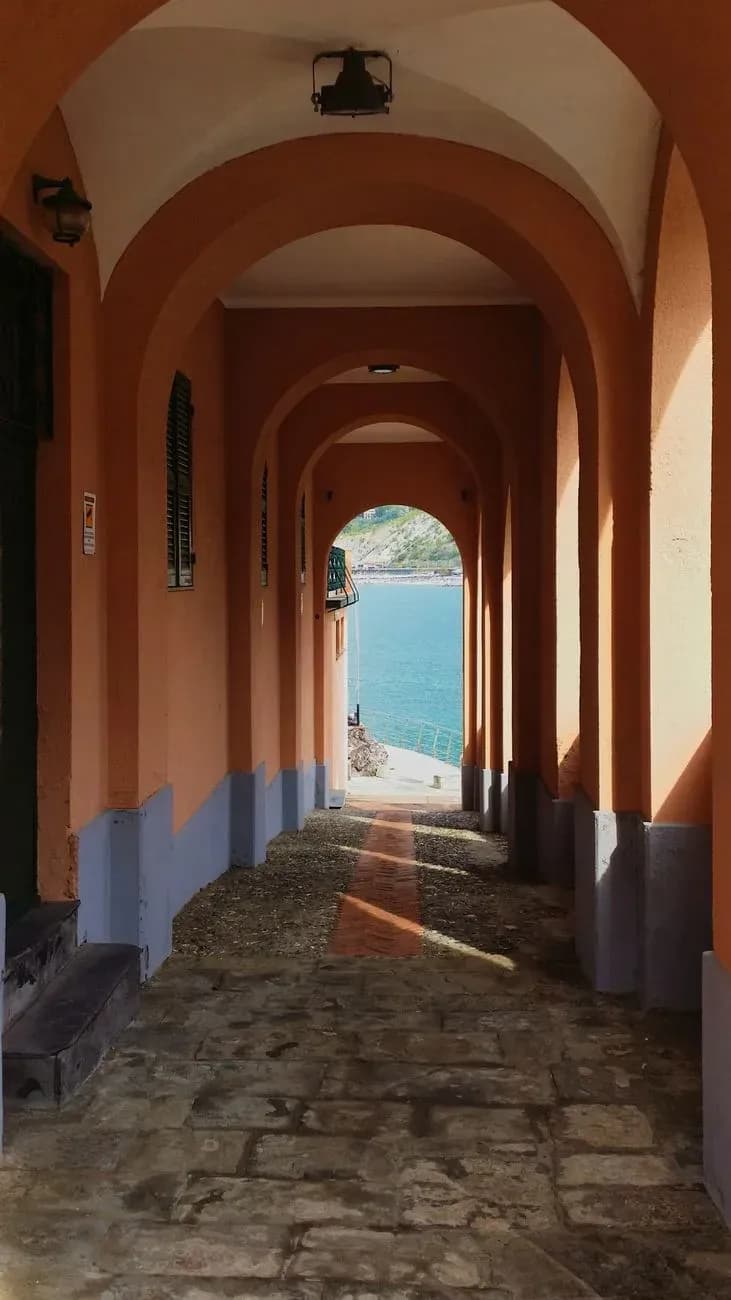
The historic centre of this maritime republic is a tangle of narrow lanes wedged between the coastline and the surrounding heights. Its urban geography is distinctly vertical, forcing you to climb up and down constantly between different street levels. A weekend in Genova calls for shoes that can cope with steep slopes, and the willingness to walk extensively between neighbourhoods. The ideal time of year to tackle these inclines runs from April to June, or through the weeks of September and October. Across these two periods, the weather remains mild, daylight lasts well into the evening, and temperatures allow you to visit the cultural sights without suffering summer humidity, alongside far more manageable museum crowds.
Leave your car in peripheral car parks or multi-storey garages. The entire caruggi district is effectively a vast pedestrianised ZTL, criss-crossed by alleys far too narrow for traffic. Getting around means walking between the waterfront and the inner alleys. For longer stretches, rely on the metro, which links Brignole and Principe stations via Piazza De Ferrari. The climbs up to panoramic viewpoints are handled by a network of public lifts. Booking accommodation close to the centre, such as the NH Collection Genova Marina right on the water, cuts down on wasted travel time.
Day by Day: Planning Your Stops
Day 1 — The Labyrinth of Caruggi and Historic Palazzi
Morning
Begin your route by exploring Via Garibaldi e i Musei di Strada Nuova. This Renaissance street is a UNESCO World Heritage Site, famous for the Palazzi dei Rolli, former noble residences once used to host visiting dignitaries on state business. The museum hub brings together three main buildings: Palazzo Rosso, Palazzo Bianco and Palazzo Doria-Tursi. Wandering through the rooms, moving from one palazzo to the next, takes around two hours. Just steps from the palaces lies Piazza De Ferrari, the city's main hub and its busiest thoroughfare. The square is dominated by a monumental bronze fountain, flanked by Teatro Carlo Felice and the grand Palazzo della Regione. A short walk away is the entrance to Palazzo Ducale, former seat of the Republic's doges and now an art exhibition centre. The complex includes the Torre Grimaldina and the old historical prisons. To break up your walk and stop for lunch, head into Via della Posta Vecchia and seek out Panificio e Grissineria Claretta. This artisan bakery deep in the caruggi is cherished by locals for its classic focaccia made with olive oil, baked fresh all day using the original recipe.
Afternoon
After lunch, walk the short distance from the ducal quarter to the Cattedrale di San Lorenzo. The city cathedral has medieval origins and features a Gothic facade, instantly recognisable by its striking alternating bands of black and white marble. Beneath the floor, the underground rooms house the Museo del Tesoro. Visiting the interior and the crypt takes around forty-five minutes. Continuing your walk among the palazzi brings you to the Casa di Cristoforo Colombo e Porta Soprana. The house is an eighteenth-century reconstruction of the explorer's childhood home, sitting right beside the ruins of the Sant'Andrea cloister and the twin stone towers. Looking around this corner takes about thirty minutes. To spare your legs a steep climb on foot, make your way to Piazza Portello. From there, an art nouveau public lift whisks you up to Spianata Castelletto (Belvedere Montaldo) in just one minute. This terrace hovers above the slate rooftops of the old town, with views sweeping down to the docks. People gather here on the benches to unwind in the minutes before sunset.
Evening
As dusk settles, head back down into the heart of the city. A short stroll from the main fountain brings you to Trattoria Rosmarino, in the Piazza De Ferrari area. The kitchen focuses on time-honoured Ligurian recipes, serving fresh daily pasta and dishes built around local seafood, with a fair balance between quality ingredients and price. Given its popularity every evening, book a table ahead to secure a spot.
Day 2 — From Port Quays to Coastal Hamlets
Morning
Your second day centres on the waterfront, starting with the Porto Antico e Bigo area. This long stretch of concrete and quays was regenerated by architect Renzo Piano. The Bigo panoramic lift is one of its most striking landmarks: the gondola lifts passengers high into the air, offering sweeping 360-degree views from the water across to the hillside homes. Next to the steel cables are the ticket offices for the Acquario di Genova, the largest aquatic biodiversity exhibit in Europe by water volume. Working your way through the pavilions usually takes two to three hours. Come lunchtime, duck into Via di Canneto il Curto to call at Focaccia e Dintorni. This bakery turns out piping-hot Genoese focaccia, slices of chickpea-flour farinata and regional savoury tarts to grab on the go. If you venture towards Via Albaro, look for Al Forno di Albaro, a historic shop bearing the official stamp of authentic Genoese focaccia—crisp outside, soft in the crumb, and also sold topped with onions.
Afternoon
Following the elevated pedestrian walkway leads you to the brick-built Lanterna di Genova. This historic lighthouse remains the main navigational landmark for shipping in the city and ranks among the oldest operating lighthouses in the world. At the foot of the tower lies a leafy park alongside a dedicated museum. Once you have finished at the lighthouse, travel over to the eastern side of town to reach the seaside village of Borgo marinaro di Boccadasse. You have two options: a fifteen to twenty-minute ride on city buses from Brignole or Corso Italia, or a long, straight walk along the seafront promenade. The hamlet retains the secluded feel of an old fishing village, with rows of pastel-painted houses curving around a pale pebble beach.
Evening
Boccadasse is best enjoyed in the late afternoon and evening, when the pebbles fill with locals unwinding at the end of the weekend. Evening life revolves around strolling along the cove, picking up a gelato, and settling by the water's edge for an aperitivo. Alternatively, if you prefer a sit-down dinner back in the centre, make for Locanda Tortuga. Here, the chefs prepare regional pasta staples such as classic trofie with artisan pesto, and bake cheese-stuffed focaccia in full view of diners, following the style of nearby Recco. To round off the weekend well away from the sea, the inland village of Acquasanta is home to Terme di Genova, where you can soak in sulphurous thermal whirlpools surrounded by the woods of the Appennini.
Practical Tips for Your Trip
- Leave the car behind entirely when getting around the city. The historic centre is a vast, fully pedestrianised ZTL with no room to manoeuvre. Travel on foot, taking the metro for longer distances between Brignole, De Ferrari and Principe, and make use of the network of public lifts to tackle the steep climbs up the hills.
- If you plan to visit multiple museums over two days, the Genova Museum Card saves money and is available for twenty-four or forty-eight hours. The pass includes combined admission to the three palazzi of the Musei di Strada Nuova and grants access to several other civic museums, easily offsetting the cost of single tickets.
- Book your tickets for the Acquario di Genova online several days in advance. Selecting your entry time slot beforehand lets you skip the ticket-office queues and avoids the real risk of finding your preferred weekend time slot fully booked.
- The quickest way up to Spianata Castelletto is to take the art nouveau lift that departs from Piazza Portello, moments from Via Garibaldi. The cabin reaches the viewpoint in just one minute, sparing your legs a very steep uphill walk along paved slopes.
- The best time to fit Boccadasse into your itinerary is late afternoon, around sunset. The village lies well to the east of the historic centre, but you can reach it in fifteen to twenty minutes on local buses from Corso Italia or Brignole station.
Where to Stay
Historic four-star hotel on Via XX Settembre, right in the main shopping district just moments from Piazza De Ferrari.
View on Booking →Hotel set inside a historic palazzo on Via al Ponte Calvi, right next to the aquarium.
View on Booking →Five-star property near Piazza Principe railway station, featuring the subterranean spa La Spiaggia Segreta.
View on Booking →