

Siracusa cannot be done in a hurried walk. The divide between the archaeological mainland and the Baroque island calls for careful planning and well-timed days. The best time for this itinerary in Siracusa is spring, between April and June, or during September and October. In these weeks the temperatures let you explore on foot without the summer heat, and the sea is already warm enough for swimming. Spring also coincides with the outdoor season of classical Greek tragedies.
Where you base yourself makes all the difference for getting around. Staying on the island itself, perhaps at historic properties such as the Palazzo Gilistro Boutique Hotel or the Algilà Ortigia Charme Hotel, allows you to explore the pedestrianised centre on foot and return comfortably in the evening, relying on electric shuttle buses to reach the mainland.
How to plan your four days
Day 1 — The tip of Ortigia and its market
Morning
Your first day begins by crossing the bridges that link the mainland to the island. Right at the entrance you will spot the Tempio di Apollo, the oldest Doric stone temple in all of Sicilia, dating back to the 6th century BC. From here, just a few blocks away, it is best to head straight into the Mercato Storico di Ortigia. This local market is best visited before 13:00, when the stalls begin packing up. Surrounded by sea scents and local street food, it quickly turns into lunchtime. A short stroll from the stalls is Trattoria O' Scinà on Via Domenico Scinà, serving fish dishes bought straight from the neighbouring market.
Afternoon
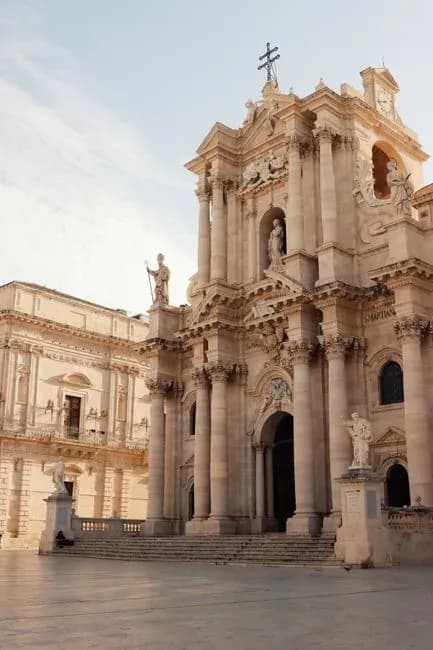
In the afternoon, the route heads into the heart of the island. In Piazza Archimede stands the Fontana di Diana, a monumental fountain portraying the metamorphosis of the nymph Aretusa. From there, it is only a short walk to the theatrical Piazza Duomo, home to the Duomo di Siracusa (Cattedrale della Natività di Maria Santissima). This Baroque cathedral incorporates the columns of the ancient 5th-century BC Doric temple of Athena, clearly visible both from the outside and along the nave.
Evening
Before night falls, make your way to the Fonte Aretusa, a freshwater spring filled with wild papyrus plants growing right beside the sea. A stop here takes about 20-30 minutes and is at its best at sunset. For dinner, La Volpe e l'Uva offers outdoor seating right on Piazza Duomo. As it is very popular, booking well in advance for the evening is recommended.
Day 2 — Ancient Neapolis and archaeological treasures
Morning
The second day focuses on the mainland, away from the island. It pays to arrive at the Parco Archeologico della Neapolis early in the morning to beat the crowds and the heat. The site includes the Teatro Greco and the Ara di Ierone II. Inside, linger at the Orecchio di Dionisio e Latomia del Paradiso, an artificial cave carved out of the limestone, famed for its natural acoustics. Exploring the whole archaeological park takes around an hour and a half to two hours, wandering among ancient quarries and tiered seating.
Afternoon
After having lunch near Neapolis, head over to the Parco di Villa Landolina to visit the Museo Archeologico Regionale Paolo Orsi. The visit lasts about two hours and showcases an impressive collection of prehistoric and Greek artefacts, ranking among Europe's most extensive archaeological displays. Inside, you will also find the celebrated statue of the Venere Landolina.
Evening
Heading back towards the entrance of Ortigia, you can dine on Via della Dogana at Trattoria La Dogana, set close to the Porto Piccolo. It is a traditional spot serving sarde a beccafico and pasta alla carrettiera, staying true to classic local flavours.
Day 3 — From coastal cliffs to the catacombs
Morning
For the third day, a hire car becomes essential. Driving south for about 15-20 minutes brings you to the Penisola della Maddalena, home to the Area Marina Protetta Plemmirio e Faro di Capo Murro di Porco. This coastal nature reserve is ideal for an open-air walk, following trails along limestone cliffs or heading down to the reserve's secluded coves.
Afternoon
Heading back towards town, the itinerary continues up onto the Epipoli plateau, in the hamlet of Belvedere, to see the Castello Eurialo, an intricate masterpiece of Greek military engineering complete with moats and underground tunnels. Right after, head to the San Giovanni district to descend into the Catacombe di San Giovanni e Cripta di San Marciano. The guided tour through this early Christian underground maze, set below the ruins of an open-air basilica, lasts around 45 minutes and must be booked in advance.
Evening
Returning to Ortigia in the late afternoon, your final stop before dinner is Castello Maniace. This 13th-century Swabian fortress stands at the very tip of the island, jutting straight out into the sea. Exploring it takes about an hour and is particularly atmospheric towards evening. For dinner, make your way to Via Dione and Bistrot al Bagatto, an elegant spot offering the catch of the day and traditional recipes with a modern twist.
Day 4 — An excursion through Baroque gems and coastal villages
Morning
The final day is dedicated to the surrounding area, again making use of the car. About a 30-minute drive from Siracusa lies Noto. Start your walk at the Centro Storico e Cattedrale di Noto, the epicentre of Sicilian Baroque, dominated by the church's monumental flight of steps and the ornate balconies of nearby Palazzo Nicolaci.
Afternoon
From Noto, another 15 minutes by car brings your total driving time from Siracusa to 45 minutes, arriving at the Borgo marinaro di Marzamemi, in the municipality of Pachino. This fishing hamlet centres around an ancient Tonnara and a paved piazza surrounded by old stone cottages, a favourite spot for a stroll or a coffee on sunny afternoons.
Evening
Sunsets over the Balata pier in Marzamemi are well known, but for dinner you might prefer heading back to the historic centre of Siracusa. For your final meal, Osteria da Mariano, tucked away in Vicolo Zuccalà, cooks hearty, classic Sicilian fare. Alternatively, Ristorante Oinos offers a refined setting, serving octopus and raw seafood dishes that reimagine island flavours.
Tips for planning your trip
- Access to Ortigia is controlled by a ZTL with cameras on Ponte Santa Lucia and Ponte Umbertino. When the light is red you cannot enter by car, unless you want to pay hefty fines reserved for non-residents.
- To avoid ZTL fines if staying on the island, ask your hotel in advance to register your number plate with the municipal police portal, allowing you to drive in and unload your luggage.
- Outside the centre, Parcheggio Molo Sant'Antonio or neighbouring streets (blue/white bays in the Borgata area or Corso Umberto) let you park and walk to Ortigia in 10-15 minutes. On the island, Park Talete costs €15 per day or around €1.50 per hour.
- During the summer months or over bank holiday weekends, book tickets for the Parco Archeologico della Neapolis online in advance to skip the ticket office queue. Aim for the morning, as the quarries and stone steps offer no shade.
- Ortigia is best explored on foot or by electric shuttle bus. You only need a car for day trips further afield (Riserva del Plemmirio, Noto, Marzamemi), saving time and giving you complete freedom.
Where to stay in Siracusa
A 4-star superior boutique hotel set in historic 18th-century buildings overlooking the Lungomare di Levante.
View on Booking →A property housed in a historic palazzo on Via Cavour, within the island's pedestrianised centre.
View on Booking →Located on Lungomare d'Ortigia, just metres from the castle of the same name and right by the cliffs overlooking the bay.
View on Booking →