

Siracusa is not a place to be rushed. The divide between the modern mainland and the historic core creates two distinctly different rhythms. Crossing the bridges into Ortigia, the honking of car horns fades away, replaced by footsteps on pale stone paving. Between the white stone palazzi and the open sea, a steady breeze helps take the edge off the heat. The best time to plan a weekend in Siracusa is during the spring months from April to June and the early autumn weeks of September and October. The temperatures are mild, meaning you can explore the archaeological sites without suffering under the summer heat. In spring, you can also catch the prestigious classical tragedy season staged directly on the stone tiers of the ancient theatre.
Staying in Ortigia, for instance booking a room at the Algilà Ortigia Charme Hotel facing the seafront, means stepping out early in the morning with markets and churches all within easy walking distance. It pays to divide your itinerary by area. Ortigia itself is strictly explored on foot, whereas reaching the archaeological sites on the mainland requires at least a twenty-five-minute walk. If you would rather not walk along asphalted avenues, you can catch the local shuttle buses that run back and forth between the car parks and the main sights. Planning each half-day comes down mainly to shade: unshaded areas are best tackled in the earliest morning hours.
Day-by-day itinerary
Day 1 — Ortigia island: markets and ramparts
Morning
Start on the mainland, along Corso Umberto I, at NonnAngè Bakery & Coffee. The counter is piled high with slices of cake and traditional pastries for a hearty breakfast. Stepping outside, stroll towards the connecting bridges. As soon as you set foot on Ortigia, the ruins of the Tempio di Apollo rise beside the main street: this is the oldest Doric stone temple in all of Sicilia and the Greek West. Just a few metres further on lies the Mercato di Ortigia. This market is best experienced in the morning, when the stalls are packed with crates of fresh fish, wedges of local cheese, and sacks of spices. Many vendors serve portions of local street food to eat on the go. For a sit-down meal, head into the inner alleys to Bistrot al Bagatto on Via Dione. The menu revisits traditional recipes using strictly seasonal produce.
Afternoon
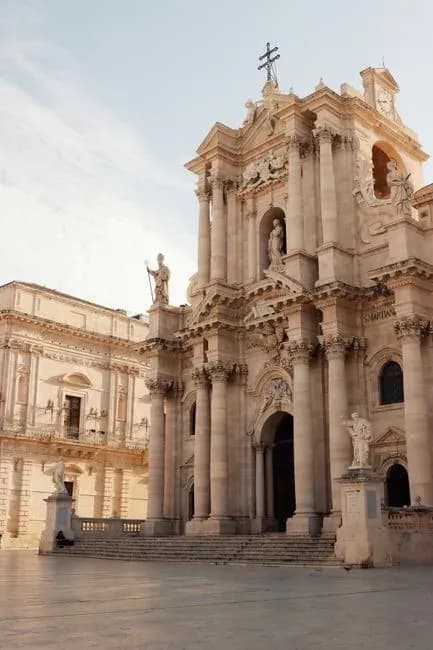
In the early afternoon, make your way to the island's main square. The Baroque façade of the Duomo di Siracusa actually encloses the columns of the ancient Doric temple of Athena, dating from the 5th century BC, which remain embedded in the cathedral's flank walls. On the same square, step inside the Chiesa di Santa Lucia alla Badia, an elegant 17th-century building with ornate architectural details. Leaving the central hub behind, head straight south along the streets leading to the southernmost tip of Ortigia. Here the houses come to an end, opening up to Castello Maniace. This imposing 13th-century Swabian fortress guards the entrance to the harbour. Its pale stone walls rest on the rocks, looking out over the open sea.
Evening
The sun dips on the western side of Ortigia. A coastal stroll past the Fonte Aretusa is especially rewarding at sunset. This large, natural freshwater spring sits right beside the sea, famed for the tall wild papyrus reeds that grow naturally within it. For dinner, head back into the sheltered alleys. Trattoria La Foglia is a long-standing, historic spot renowned for its home-style cooking and an interior packed with eclectic objects and paintings. After dinner, the square empties out again: the evening lighting showcases the carvings of the Duomo, hiding the scaffolding and overhead cables.
Day 2 — The mainland and ancient ruins
Morning
The second day is dedicated to the mainland neighbourhoods. It is best to arrive at the gates of the Parco Archeologico della Neapolis early in the morning to beat the heat. The excavation area is vast, requires at least two full hours to visit, and offers very little shade. Dirt tracks link the Anfiteatro Romano with the sweeping tiers of the Teatro Greco. The route then leads down into the Latomie del Paradiso, ancient limestone quarries once used to extract building blocks. Among these sheer rock walls stands the Orecchio di Dionisio. This deep limestone cavern is shaped like a human earlobe. Its interior acoustics create prolonged echoes and sound distortions, which gave rise to the old legends about the local tyrant spying on prisoners.
Afternoon
After the dusty trails under the sun, move on to the nearby district of Tyche. The Museo Archeologico Regionale Paolo Orsi completes the city's historical narrative inside a purpose-built museum arranged into display sectors. The showcases present collections tracing human presence from prehistoric Sicilian finds all the way to Hellenistic and Roman excavations. Once you have finished browsing the galleries, make your way back towards the centre. The walking distances between these districts and the island often lead travellers to look for a midway base. Spots like the Caportigia Boutique Hotel sit right on the threshold of the island, letting you reach both the archaeological parks and the pedestrian areas on foot without wasting time.
Evening
Spend your final evening back within the bounds of Ortigia. On Via Roma, stop for dinner at A Putia delle Cose Buone, a wonderfully informal, traditional trattoria serving wholesome home-cooked local flavours. If you are in the mood for seafood instead, head to the small piazza that hosts Ranieri – Cucina, Chiacchiere e Vino. The outdoor tables spill out onto the stone pavement, and the menu revolves primarily around the day's fresh catch. In the evening, the pedestrianised streets ensure quiet surroundings. Stroll back towards your room at the Aretusa Vacanze B&B, cutting through inner courtyards closed to traffic.
Practical tips for getting around and avoiding fines
- The island of Ortigia is almost entirely covered by a restricted traffic zone (ZTL). From April to October and throughout all weekends, the cameras on the bridges are active: non-residents face steep fines if they drive past the access points without a permit.
- To avoid restricted areas, head straight for the covered Talete car park, which costs around €15 for a day rate, or Molo Sant'Antonio. For free parking, look for white-lined bays along Corso Umberto or in the Borgata district, allowing for a 10 to 15-minute walk to Ortigia.
- If you book accommodation within Ortigia's ZTL, you must provide your vehicle registration number to the property in advance. Registering it only protects you from fines while loading and unloading luggage; parking in yellow-lined bays remains strictly forbidden to visitors.
- The excavations at Parco Archeologico della Neapolis are nearly a thirty-minute walk from the island of Ortigia. If you prefer not to walk in the heat along the pavements of the modern city, hop on the small urban shuttle buses running between the main sights.
Where to stay to cut down on travel time
A refined property with historic charm and rooms looking directly out over the water along the seafront.
View on Booking →Positioned just steps from the bridges leading to the island, ideal for avoiding any hassle with the ZTL.
View on Booking →Rooms set right in the dense heart of the island, a short stroll from Baroque palazzi and pedestrian streets.
View on Booking →