

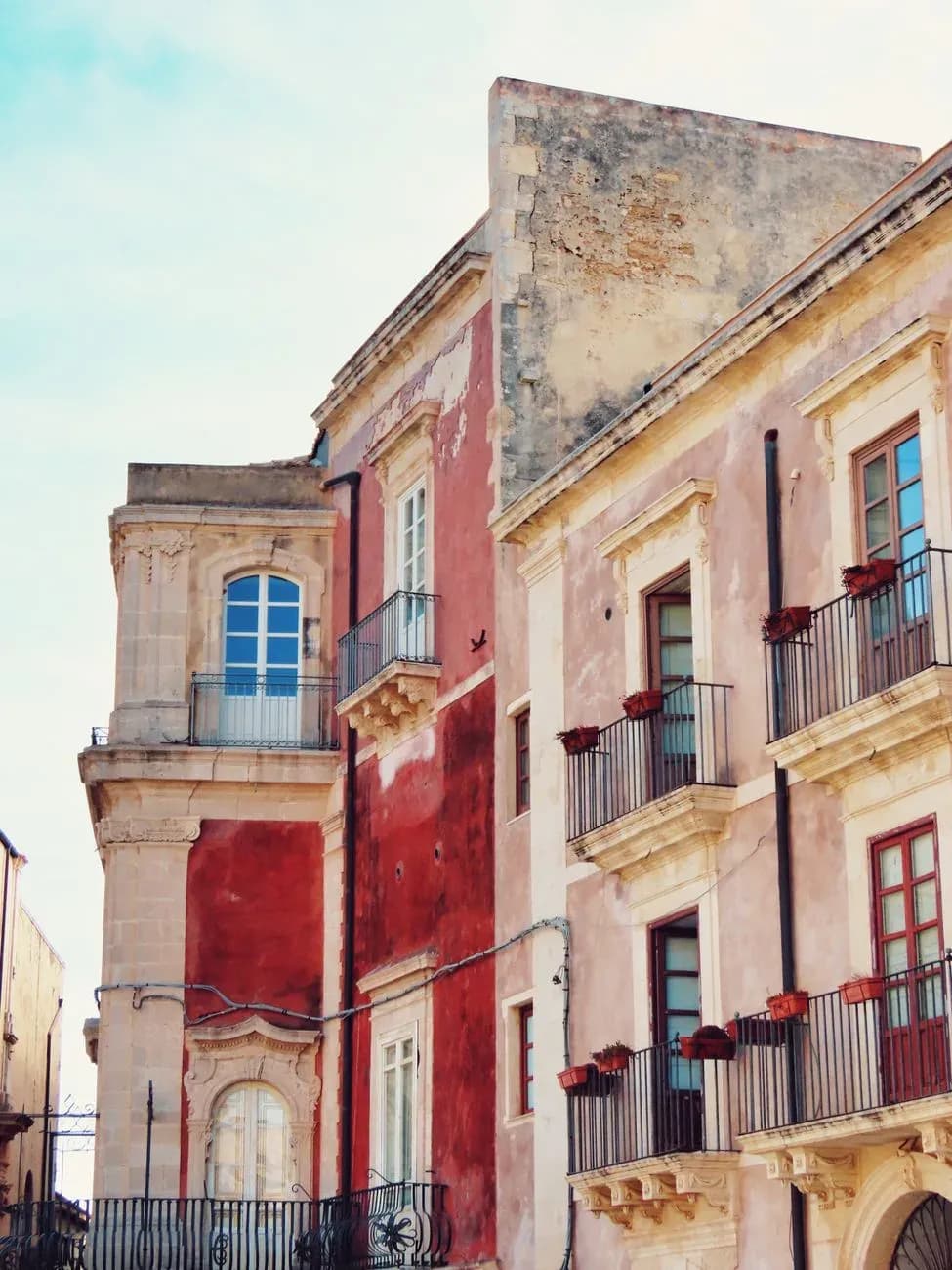
Siracusa is clearly divided into two distinct physical and historical parts. On one side lies the mainland, with wide avenues and sun-drenched archaeological sites; on the other sits the isola di Ortigia, a pocket of land jutting into the sea that concentrates the evening buzz and the bulk of the Baroque architectural heritage. Many visitors merely stroll through the centre, but to truly understand the city, it pays to explore its lesser-known quarters and the museums that preserve the genuine remnants of its Greek past.
The best time to plan a weekend in Siracusa is late spring, particularly between May and June, or early autumn. During these months, temperatures let you explore on foot without suffering the blistering heat of the Sicilian summer, crowds are thinner, and if you arrive in early summer, you have the chance to attend classical performances staged in the ancient theatres.
For accommodation, Ortigia is usually the natural pick. If you want a convenient base along the eastern promenade, Hotel Gutkowski strikes a fine balance between proximity to sights and quiet surroundings. The entire historic quarter must be explored on foot: the alleys are narrow and often governed by electronic access points restricting traffic to residents only.
How to plan your weekend day by day
Day 1 — From the mainland to the edge of Ortigia
Morning
Your day begins on the mainland to tackle the city's most expansive, least sheltered area. Parco Archeologico della Neapolis requires at least two hours to visit, but it is easy to spend the entire morning here. It is best to arrive right when it opens: the site is fully exposed to the sun and offers very little shade. Inside stands the Teatro Greco di Siracusa, carved entirely from the living limestone of the Temenite hill—a feat of ancient engineering best admired before temperatures climb. A short walk away opens the Orecchio di Dionisio, a man-made cave set within the Latomia del Paradiso. Its acoustics are striking, amplifying every sound—a feature that over the centuries inspired numerous legends about the tyrant's alleged prisons.
Afternoon
From Neapolis, make your way towards the modern centre, about a 25-to-30-minute walk, or hop on a local bus or taxi if you prefer to save time. Here you will find the Museo Archeologico Regionale Paolo Orsi, one of the most significant museum complexes in Europe. It houses a vast collection of artefacts spanning prehistory through to the entire Magna Grecia era, lending valuable context to the morning's ruins. Once you finish your visit, cross the bridge linking the mainland to the island. Just past the entrance stands the Tempio di Apollo, the oldest Doric stone temple in Sicilia and the entire Greek west, today framed by modern townhouses.
Evening
The setting sun transforms the hues of the local white limestone. Reaching Piazza del Duomo brings you to the theatrical heart of the ancient quarter, ringed by noble Baroque palaces. Here stands the Duomo di Siracusa (Cattedrale della Natività di Maria Santissima): its Baroque facade is beautifully illuminated at night, but its most striking feature is seen along the flank, where the structure was built directly incorporating the columns of the ancient Doric temple of Athena. For dinner, just steps from the cathedral along Via Cavour, head to La Tavernetta da Piero, a traditional trattoria focusing on regional seafood and Mediterranean flavours.
Day 2 — The heart and the tip of the island
Morning
Your second day is spent entirely on the island. From central Piazza Archimede, admire the monumental Fontana di Diana (o di Artemide), whose sculptures depict the nymph Arethusa transforming into a freshwater spring. Heading over to Via dei Benedictis, you will plunge into the daily bustle of the local market. Along this street is Caseificio Borderi, a shop renowned for its freshly made artisan panini, piled high with local cheeses and produce. It makes a practical, hearty stop for a quick lunch before heading back into the labyrinth of alleys.
Afternoon
Head down towards the sea to reach the actual Fonte Aretusa, an unusual freshwater spring bubbling up just metres from the salty sea of the harbour. Wild papyrus plants thrive inside it—a rare sight in Europe. Continuing your walk to the very tip of the island, you reach Castello Maniace. This Swabian fortress marks the physical boundary of Ortigia and commands the maritime channel. It is well worth timing this visit with sunset, soaking up the panoramic views of the open sea from the ramparts before slowly strolling back towards the upper district.
Evening
For dinner, there are two solid options depending on your mood. If you fancy a menu built entirely around that day's market haul, featuring fresh fish, prime meats, and meticulous desserts, pull up a chair at Bistrot al Bagatto on Via Dione. If you prefer a more rustic, home-style setting rooted in Sicilian peasant recipes, A Putia delle Cose Buone is a beloved, family-run enoteca and trattoria. Bear in mind that the latter does not take reservations, so it is best to arrive early to avoid long queues outside.
Practical tips for your trip
- All of Ortigia falls within a camera-monitored Zona a Traffico Limitato (ZTL): take great care not to drive in during restricted hours, which often include late afternoons at weekends and on public holidays.
- If you are driving, disregard older advice about the covered Talete car park, which is now reserved exclusively for residents. The easiest option before crossing the bridge onto the island is Parcheggio Molo Sant'Antonio on the mainland.
- When moving between the historic centre and the archaeological park, plan your journey carefully: the Neapolis park is roughly a 25-to-30-minute walk from the island, which you can easily cover in a few minutes by local bus or taxi.
- Tackle the Neapolis area early in the morning with a good supply of water and comfortable walking shoes, as there is virtually no shade. Late afternoon, meanwhile, is the best time to wander the coastal ramparts.
Where to stay
A refined hotel looking right out over the sea, ideal if you want a convenient base in the historic centre.
View on Booking →A luxury residence set right in the heart of the ancient quarter, for a comfortable stay among white stone alleys.
View on Booking →An elegant hotel with historic charm, set on the island within easy reach of the main sights.
View on Booking →