

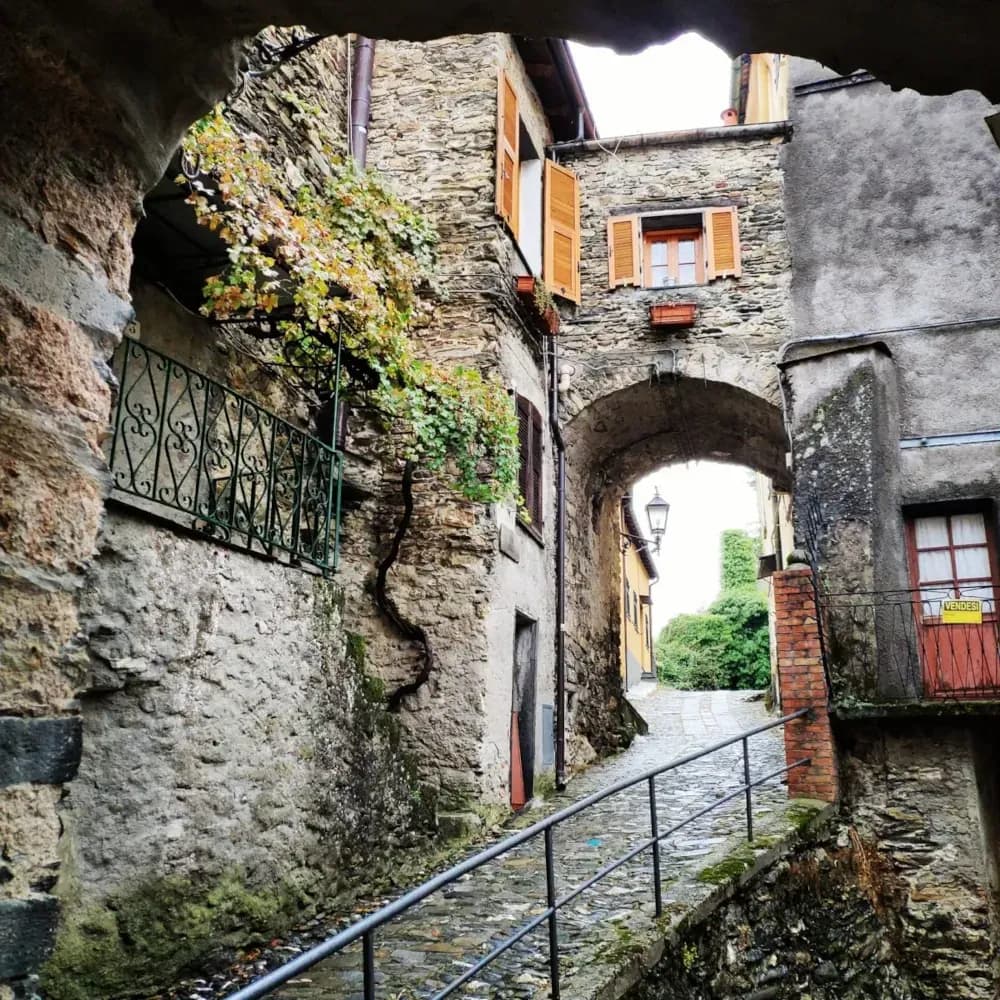
Spending the ponte di Ognissanti in Triora means encountering this inland Ligurian village at its busiest. Between the end of October and the first of November, the stone streets fill up for the celebrations of Samhain, the ancient Celtic new year, and the re-enactment of the trials of the witches, or bàzure. Propitiatory bonfires are lit, esoteric markets are set up, and ancient rituals and historical processions like La Ridda come to life, taking advantage of the austere atmosphere of the Valle Argentina.
The cold starts to make itself felt, especially after sunset, and the cobbled alleys become damp and slippery. The shops in the centre adapt to the climate by serving frisciöi, the classic savoury vegetable fritters, sheep rostelle, and slices of the famous local bread spread with bruss, a fermented ricotta typical of the alpine pastures. It is a long weekend made of tiring ups and downs and rigid temperatures, where the geographical isolation of the village adds weight to the historical events told by the ruins and the Renaissance prisons.
Three days between Valle Argentina and the high altitudes
Day 1 — Arrival in the village and tales of famine
Morning
The SP548 provincial road requires about 50 minutes of bends from the Arma di Taggia toll booth. Once you have left the car, it is best to start your exploration from the lower part of the village. In the rione della Sambughea you will come across the Fontana Soprana, a 14th-century public monument carved directly into the living rock, with original basins and masks used for centuries for the water supply. Heading up along Corso Italia you will find the Panificio Asplanato Angiolino, a bakery active since the 1950s. It is the only remaining artisan producer to hold the certification for Pane di Triora, made with natural yeast and baked on a bed of bran.
Afternoon
A visit to the Museo Regionale Etnografico e della Stregoneria (MES) takes about an hour and a half. Entry costs 3 euros and the facility opens every day from 14:30 to 18:00, with an additional shift on public holidays from 10:30 to 12:00. The three floors document rural life but above all they preserve the original transcripts and torture records of the 1587-1589 trial. A short distance away, on via San Dalmazzo, you go down into the basements of the 16th-century Palazzo Capponi to see the Antiche Prigioni delle Streghe. Behind thick iron bars, the women accused of witchcraft during the great late 16th-century famine were locked up.
Evening
For dinner, head to via Camurata to the Osteria La Loggia della Strega. It is a trattoria that focuses on the raw ingredients of Valle Argentina: the menu offers sugeli, snails, hearty meats, and fresh pasta dressed with alpine bruzzo.
Day 2 — The central square and the sorceresses' path
Morning
The day begins in Piazza Tommaso Reggio, the main crossroads of Triora. The Collegiata dell'Assunta, built on the remains of an ancient pagan temple, houses a gold-leaf panel depicting the Baptism of Christ, a 1397 work by Taddeo di Bartolo. The adjacent Oratorio di San Giovanni Battista, dating back to 1677, preserves paintings by Lorenzo Gastaldi, a heavy Baroque wooden altar, and a statue from the workshop of Anton Maria Maragliano. Overlooking the same clearing is the Palazzo Stella e Museo Civico Diffuso, the 16th-century home of the Stella family and one of the theatres of the trial's events, which today hosts exhibitions and various events linked to the long weekend's celebrations.
Afternoon
Walking towards the top of Monte Trono you reach the Ruderi del Castello e Torrione Medievale. The 12th-13th century fortification served as a lookout for the Republic of Genoa; today it is the highest panoramic point of the settlement and hosts the monumental sculpture of the guardian cat. Heading down to the valley, well outside the ancient walls, you follow the dirt path to La Cabotina. This ruined farmhouse, overlooking the valley, was believed to be the nocturnal gathering place for the sorceresses' sabbaths and is today the symbolic hub of the late October events.
Evening
It is best to book a table a few days in advance at L'Erba Gatta vino e cucina, on via Roma. The venue serves Ligurian mountain dishes, handmade pastas, and local mushrooms foraged in the surrounding woods.
Day 3 — Country churches and water mills
Morning
Just outside the main settlement, an ancient country mule track leads to the Chiesa di San Bernardino. The 15th-century rural building is preceded by an arcaded portico and stands out for a raw cycle of frescoes inside. The paintings, attributed to Tuscan painters or followers of Canavesio, depict the Last Judgement and the anatomical details of infernal punishments.
Afternoon
Before taking the road back towards the coast, head down in altitude along the provincial road to the Borgo Medievale di Molini di Triora. This settlement along the stream owes its name and its layout to the 23 hydraulic mills that once ground cereals and chestnuts for the whole valley. In addition to the remains of the mills, you can visit the late-medieval Santuario of Nostra Signora della Montà.
Evening
Your final dinner takes place in Piazza Roma in Molini di Triora, at the Ristorante Albergo Santo Spirito. This inn, active since 1897, continues to offer original Ligurian alpine recipes, such as ciapazoi au brüzzu or chestnut and goat tagliatelle served with beans.
Practical tips for the festive days
- During the peak days of 31 October and 1 November, the historic village is closed to traffic. Parking spaces near the entrance to the village run out by early morning; an alternating one-way system is often set up on the provincial road and you have to leave your car in the car parks down in the valley, then use the affiliated shuttle buses.
- Connections via Riviera Trasporti public transport from Sanremo or Taggia are limited to a few daily runs, making a private car the only truly reliable option for reaching the valley and moving between the hamlets.
- The medieval settlement is made up of steep cobbled climbs, slippery steps, and archways. Evening temperatures at the end of October drop very quickly: you must wear windproof thermal jackets and, obligatorily, trekking shoes or footwear with non-slip soles.
Where to stay in the village
An old restored stone dwelling, located in the highest and most historic part of the medieval village.
View on Booking →A characterful bed and breakfast with rooms carved directly into the natural rock, along the historic caruggi.
View on Booking →A guest house located in the historic home of the Asplanato family, a short distance from the main square.
View on Booking →