

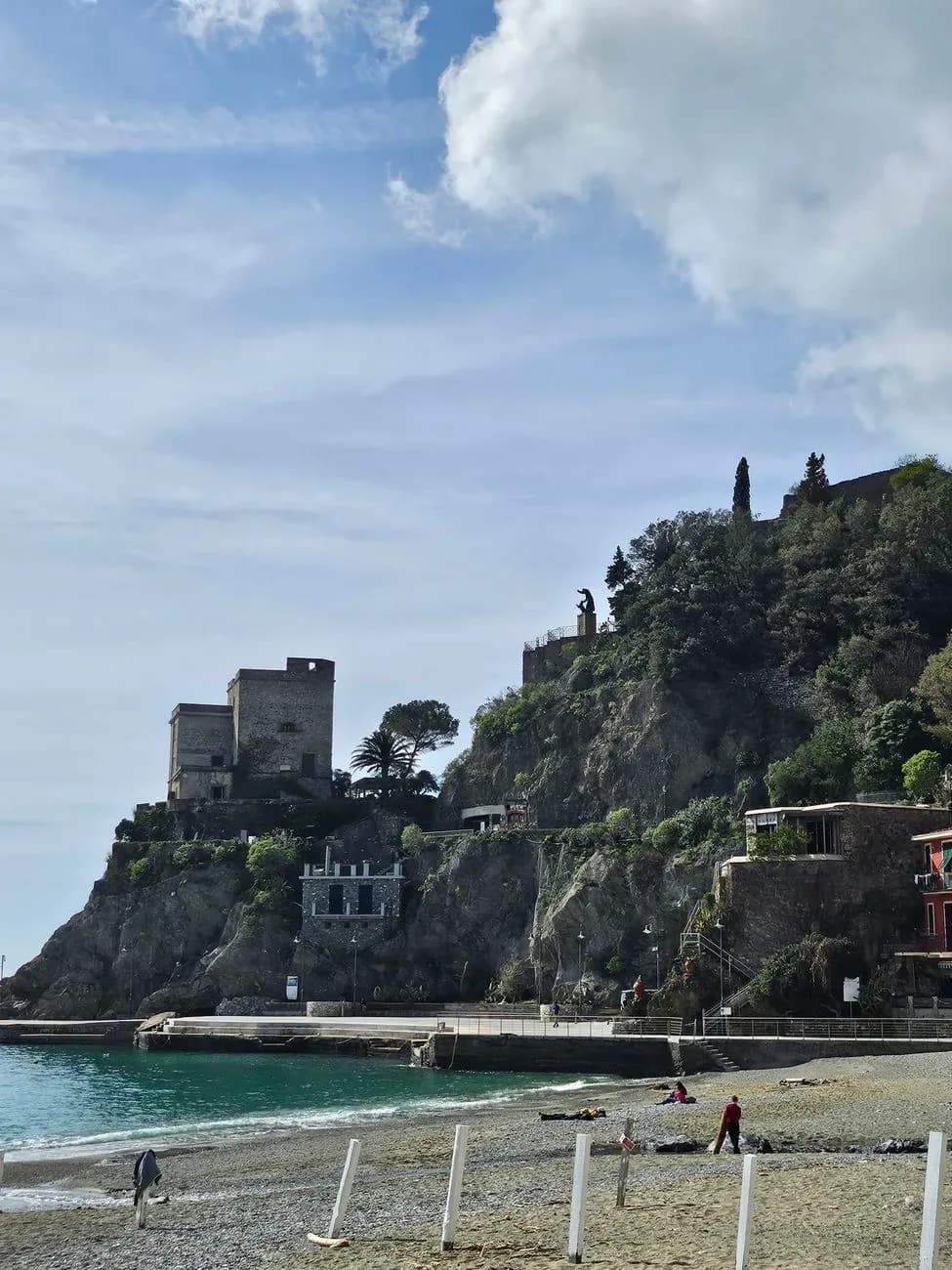
The Ligurian coast is far more than a week of a televised music festival or a casual stroll along the promenade in Sanremo. Step just a few streets away from the main shopping area and you'll find a steep maze of alleys, or drive half an hour inland to reach mountains topping 1,000 metres, where salty sea air gives way to a crisp breeze. Spring—between April and May to catch the blooms—and autumn, from September to October, are the best months to plan your trip: mild temperatures let you hike without summer heat, and you dodge the August crowds.
Within just a few kilometres, you shift from early 20th-century gilded domes commissioned by Russian nobility to the ruins of villages shattered by an earthquake and repopulated decades later by painters and sculptors. The landscape changes quickly. If you want woodland routes, high-altitude trails overlook the gulf, while those who prefer flat terrain can take advantage of smooth tarmac laid over the old coastal railway tracks. Your days will be packed with short but rewarding journeys. This vertical geography requires careful transport choices: a car is essential for heading up into the valleys, but it quickly becomes an awkward burden near the pedestrianised streets of the old town.
Four days between coast and hinterland
Day 1 — From old town cobbles to Art Nouveau halls
Morning
Start the day by heading towards La Pigna (Centro Storico), the perched historic quarter. It is best to explore this medieval labyrinth in the morning, before the sun warms the air too much. A visit takes about two hours, walking uphill through steep stairways, historic gates and narrow vaulted alleys. The climb is a workout for the legs, but the stone facades offer steady shade. Heading back down towards the shopping district, stop at the Concattedrale di San Siro. This Romanesque-Gothic building is the oldest religious structure in the area and sits just a short walk from the town market stalls. For lunch, tables at Ipazia Cibi e Libri provide an intimate refuge in the historic centre, surrounded by bookshelves. Here you can sample land and seafood dishes from local cuisine, such as rabbit, stroscia cake, and brandacujun—a traditional salt cod and potato mash.
Afternoon
After lunch, make your way onto flatter, livelier streets. Via Matteotti is the pedestrian thoroughfare lined with shops. As you browse the window displays, you'll pass the entrance to the Teatro Ariston, the legendary home of Italian music. Detouring towards the Foce neighbourhood onto Corso Nuvoloni brings you to the Chiesa Russa Ortodossa (Cristo Salvatore). Built at the turn of the last century for Russian aristocrats overwintering here, its gilded onion domes stand out from afar; visiting the interior takes roughly thirty minutes. In the late afternoon, wander along Corso degli Inglesi to reach the Casinò di Sanremo. Dating from 1905, its monumental Art Nouveau facade looks at its best just as the lights flicker on across the gaming rooms.
Evening
After dark, the action gathers around Porto Vecchio e Piazza Bresca. This is the nightlife hub, packed with moored yachts and outdoor tables. For dinner, Ristorante Da Nicò - Trattoria del Porto has occupied a corner of the square since 1935, specialising in fresh Ligurian seafood. On weekends, outdoor tables fill up fast, so book a few days ahead to guarantee a spot.
Day 2 — Artists in the ruins and cycling miles
Morning
The second day takes you out of the centre. Take the car, bearing in mind you'll need to leave it behind soon: your first stop is Bussana Vecchia (Borgo degli Artisti). The village perimeter is pedestrian-only. Park in the bays further down the hill and cover the final stretch on foot up a cobbled slope. In 1887, a violent earthquake brought down roofs and forced residents to flee. Years later, an international community restored the ruins without roofing them over entirely, setting up studios and workshops amidst the tumbled stone. Exploring the whole settlement takes up most of the morning. Back in Sanremo for lunch, Trattoria A Cuvea offers a rustic setting for quick yet hearty dishes, from slices of warm farinata to Ligurian torte verdi and fresh pasta with pesto.
Afternoon
The afternoon calls for less effort and a gentler pace. Down on the promenade you'll find the entrance to the Pista Ciclopedonale della Riviera dei Fiori. This 24-kilometre route was created by removing the tracks of the coastal railway. Hire a bicycle and pedal smoothly towards Ospedaletti or Arma, keeping right beside the sea on a flat, car-free path.
Evening
After returning the bikes, the hours before dinner lead back up towards the heights of La Pigna. Just beneath the top terrace lie the Giardini Regina Elena. This terraced public park offers plenty of benches to rest. From there, a short uphill walk brings you to the Santuario della Madonna della Costa. Standing on the forecourt at sunset rewards you with an open view across most of the gulf. For a laid-back end to the day, Pizzeria Spaccanapoli in the centre serves wood-fired leavened pizzas with an extensive list of classic and local toppings.
Day 3 — Bends and stone through the inland valleys
Morning
Day three leaves the sea behind to explore the inland villages. Reaching them involves a 30 to 40-minute drive along winding scenic roads. The first detour into Valle Armea leads to Ceriana. This medieval village retains an almost intact concentric layout. Vaulted stone alleys are lined with small oratories, and trails head straight into the woods from the edge of town. Continuing up towards Val Nervia Alta, the road steepens until you near 900 metres of altitude at Bajardo. As one of the highest villages around, the air cools down fast. The open-roof ruins of a ruined church cling to the village crag, looking directly towards the Maritime Alps.
Afternoon
Descending through Val Nervia, you'll arrive at Dolceacqua. The village unfolds beneath the towers of the Castello dei Doria. The humpback stone bridge spanning the river is the very one Claude Monet painted during his stay in Liguria. Late afternoon is the ideal time to stroll along the riverbanks and through shaded alleyways. A short distance away, the houses of Apricale cling to the flank of a wooded hill. The village is a tight tangle of steep caruggi, crowned at the top by the Castello della Lucertola.
Evening
Returning to the coast brings the day full circle. Baccarà Bistrot, tucked into the central lanes and recognised by Gambero Rosso, puts a contemporary spin on regional recipes. The menu showcases Ligurian ingredients, serving sophisticated dishes and applying modern techniques to classics like cappon magro.
Day 4 — Gaining height towards the Alps
Morning
The final day steps up the physical challenge. Drive inland into the mountains to reach the hillside hamlet of San Romolo e Prato di San Romolo. The plateau is surrounded by dense forest and serves as a strategic base for tackling trails in the mountain forest parks. The goal is the summit of Monte Bignone (1.299 m). Prepare properly: sturdy hiking boots are essential for grip, along with a windproof jacket in your pack, as the drop in temperature compared to the coast is obvious even halfway up.
Afternoon
Covering the 500 to 600 metres of positive elevation takes four to five hours return. It's a steady climb beneath the trees, but reaching the summit of Monte Bignone (1.299 m) reveals traces of an ancient pre-Roman fortified settlement. The horizon up here is completely unobstructed: your gaze plunges down to the sea and sweeps across the ridges of the Ligurian Alps. Once you finish the circular hike, head back down the valley.
Evening
Back at base with tired legs from the climb, the evening calls for pure rest. If you're staying at Hotel Nazionale, make use of the wellness area and rooftop hot tub right in the town centre. Alternatively, historic rooms at Grand Hotel & Des Anglais or the heritage spaces of Royal Hotel San Remo guarantee a relaxing finish, letting classic luxury soothe your muscles.
Four practical rules for getting around
- If you're moving between town centre shops and the cycle path, you are better off walking or hiring a bicycle. A car only becomes necessary for the 30-40 minute winding drive to villages like Dolceacqua, Bajardo or Ceriana, and to reach mountain trailheads.
- Motor vehicles are not allowed inside Bussana Vecchia. Park in the bays along the hairpin bends lower down and walk the final steep stretch on foot over the stone surface.
- Even if the coast feels mild, hiking Monte Bignone requires sturdy mountain boots and windproof layers to handle the marked temperature drop at 1,300 metres.
- On-street parking around the historic lanes of La Pigna is scarce and tricky due to tight spaces. Head straight for the large underground pay-and-display car parks near Piazza Colombo or along the seafront, then continue on foot.
Where to stay without venturing too far
A historic five-star property set right on the seafront, featuring extensive private grounds and a heated pool.
View on Booking →A central four-star hotel offering a rooftop terrace equipped with a panoramic hot tub.
View on Booking →A period property along Corso Nuvoloni retaining classic styling, sea views and an on-site spa.
View on Booking →