

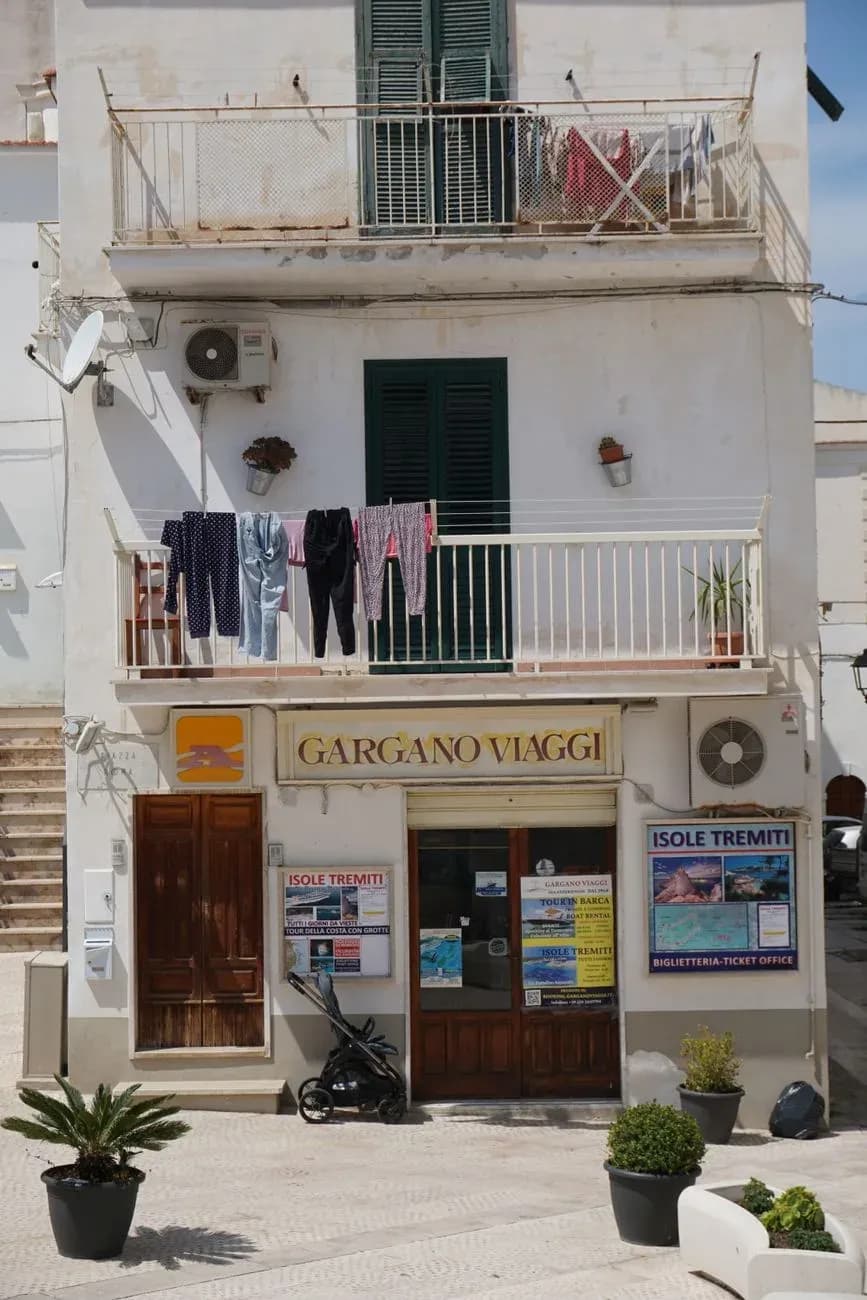
A budget weekend in Vico del Gargano is best built around the alleyways of its ancient quarters and its mountain woods, without needing to splash out on high-end restaurants. Between October, a wonderful time for autumn foliage, and the beginning of spring in March, bed and breakfast rates drop significantly compared to the summer high season, offering savings of up to 28%.
In this Pugliese village tucked between citrus valleys and the mountains, keeping to a budget centres mainly around the dining table. The culinary star is the paposcia, an elongated, flattened bread-focaccia baked over an open flame: originally created to use up leftover morning dough, today it provides a satisfying lunch or dinner for just a few euros.
The village is also renowned for its devotion to its patron saint, San Valentino, protector of the citrus groves, which fills the streets with heart and orange decorations in mid-February. In any case, its narrow stone passages and historic sights remain completely free to wander in every season of the year.
Historic quarters and ancient woods: the itinerary
Day 1 — Churches, palazzi and the olive oil heritage
Morning
Your walk begins in Rione Civita, the original core of the ancient acropolis. Here stands the Castello Normanno-Svevo, a defensive fortress expanded by Federico II in 1240. Just beside it, you will spot the ribbed dome of the Chiesa Matrice di Santa Maria Assunta, which preserves its original 1675 portal and houses the patron saint's altar inside. Heading on foot towards Rione Terra, you must pass through Vicolo del Bacio: a narrow alley roughly thirty metres long and barely fifty centimetres wide. To pause your morning on a tiny budget, stop by Panificio La Via del Pane by Bocale on Via della Resistenza 21 to pick up some takeaway Pugliese focaccia.
Afternoon
In the afternoon, turn your attention to Rione Casale. At Museo Trappeto Maratea, it is well worth taking a guided tour to gain a deeper insight into the rural archaeology of olive oil: housed in a 14th-century underground mill, it still contains massive wooden presses. Afterwards, make your way to the Chiesa di Santa Maria Pura, built in the 14th century near a stream and an old public washhouse, instantly recognisable by its altars carved straight out of the bare rock. Along the walk, stroll past Salita Della Bella to admire the exterior of Palazzo Della Bella, an early 20th-century mansion featuring battlements and a tower inspired by Neo-Gothic design.
Evening
For a relaxed dinner, head to Piazza Castello and grab a table at Paposcia Bistrot. The menu revolves around wood-fired local paposcia stuffed with regional cured meats and cheeses, making it an affordable way to savour a proper local classic.
Day 2 — The nature reserve and the descent to the sea
Morning
Before leaving the village centre, pick up picnic supplies at Antico Forno Di Protomastro A. on Corso Carmine, where you can buy fresh baked goods and local bread well under the ten-euro mark. A drive of about fifteen minutes brings you to the edge of Foresta Umbra e Laghetto d'Umbra, a protected area within the Parco Nazionale del Gargano. Entry to the ancient beech forests is completely free, and walking trails—such as the circular loop around the pond where fish and turtles swim—can easily be completed in an hour or two. Along the path, several wooden picnic areas offer lovely spots to take a break.
Afternoon
From the cool forest heights, it takes just a ten-minute drive down the winding road (around six to eight kilometres) to reach the coast. The Spiaggia di San Menaio offers a long stretch of sand sheltered by the pine grove of pineta Marzini. Alternatively, Baia Calenella provides a wide bay set between rocks and trees, entirely open to the public, where you can spend the afternoon without paying for private beach lidos. On your return to the village, pass the facade of the Chiesa del Carmine, set inside a former Carmelite convent that incorporates the old bell tower.
Evening
The destination for your final evening is Via Casale 168. Cantina Il Trappeto / L'Orto del Conte occupies an ancient olive mill and boasts a scenic terrace overlooking the landscape. Prices for a paposcia range from five to nine euros, and the kitchen also dishes up hearty portions of pancotto garganico (bread soup) and troccoli pasta with rich sauce.
Top tips for managing your budget
- To get around comfortably, a car is essential: while the village's three historic quarters can only be explored on foot, having your own vehicle is the quickest and most economical way to reach the mountain trails and the beaches.
- Excluding accommodation, a daily budget of €25 to €35 per person is plenty to cover meals based on focaccia, samples of local cheeses, and entry to the historic centre's small museums.
- Make the most of the picnic areas by Laghetto d'Umbra for lunch; it cuts out restaurant cover charges entirely while letting you enjoy fresh bakery bites straight in the heart of the reserve's woods.
Where to stay without spending a fortune
An affordable, central base for staying in the village, offering rooms with sweeping views towards the sea.
View on Booking →A property moments from the oldest quarters, ideal if you want to step out and wander straight into the alleyways.
View on Booking →A great hotel if you prefer to stay by the coast, located in a quiet part of this seaside hamlet.
View on Booking →