

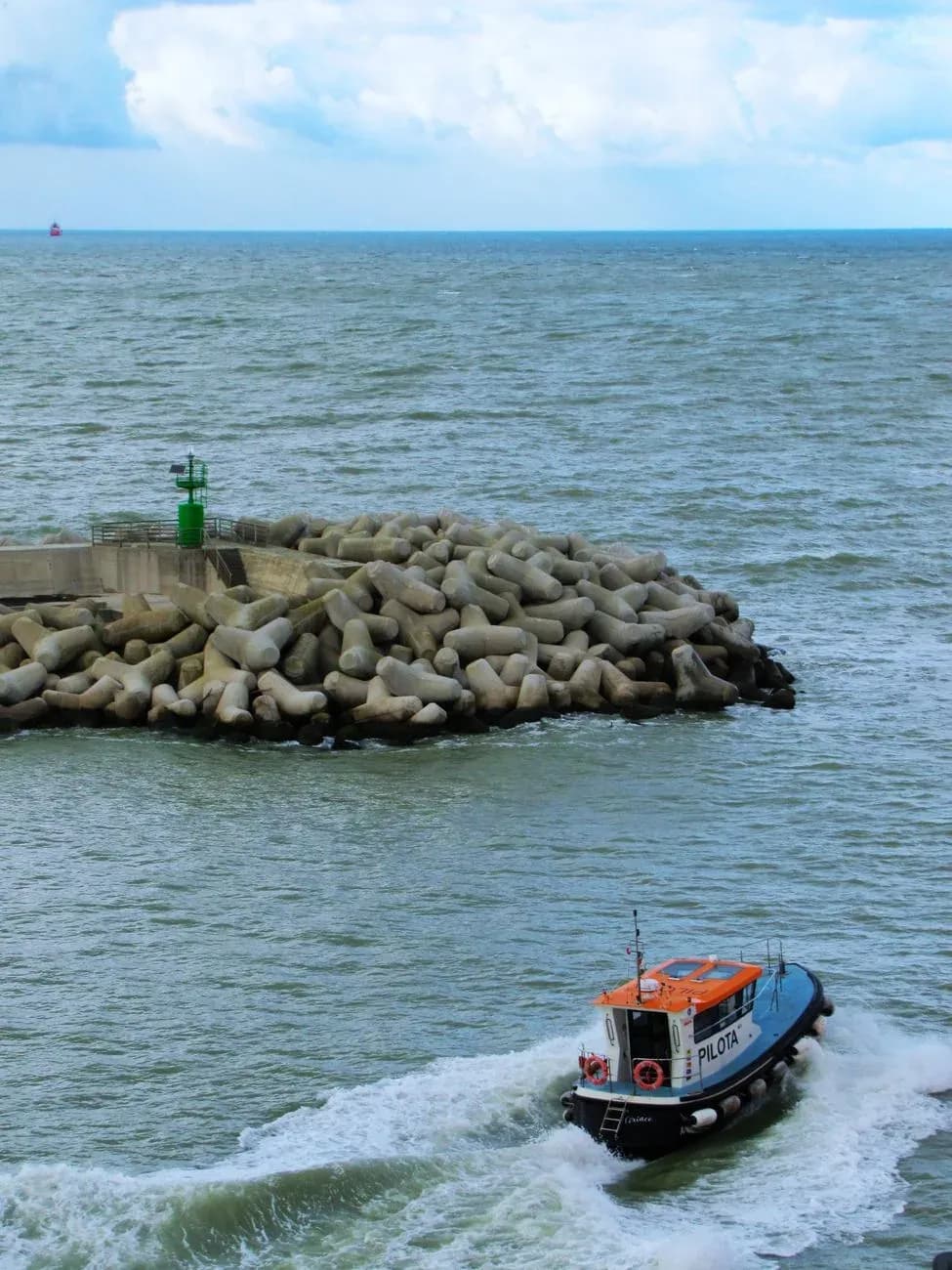
Ancona sits on a distinctive elbow-shaped promontory. This unusual geography gives it a rare privilege in Italy: from Colle Guasco you can watch both the sunrise and the sunset directly over the open horizon of the Adriatic Sea. The urban fabric splits neatly between the port, the hilly streets of the centre, and the nearby rocky coastline. The best times to plan a trip combining city strolls and hikes in the Parco Regionale del Conero are April to June or September to October, when the roads and beaches are spared the heavy summer traffic.
The city centre is best explored on foot, though you should be ready for plenty of climbs and flights of steps as you move between the different levels of the city. If you fancy staying near the water, SeePort Hotel sits just minutes from the main port landmarks. Reaching the coastal bays and mountain woodlands, however, requires transport: by car, camper van, or on the suburban Conerobus network, the journey from the city to Portonovo typically takes 15 to 20 minutes.
How to plan four days in the Doric city
Day 1 — From the hill to the central piazzas
Morning
Spend the first part of your day exploring the upper slopes of Colle Guasco. Set among medieval buildings is the Anfiteatro Romano, an Augustan-era structure partly woven into the later urban fabric. Heading down towards the centre brings you to Palazzo Ferretti, a Renaissance palazzo that houses the Museo Archeologico Nazionale delle Marche. Its rooms showcase Picene and Roman artefacts; guided tours of the complex must be booked in advance.
Afternoon
Continuing downhill, you will come across the Chiesa di Santa Maria della Piazza, built between the 11th and 12th centuries. The exterior façade is a masterclass in local Romanesque architecture, carved with symbolic reliefs and a dense blind arcade. A short walk away along Corso Mazzini stands the Fontana del Calamo, also known as the Tredici Cannelle thanks to the 13 spouts jutting from carved stone masks. Local folklore claims that drinking from these spouts guarantees you will return to the city.
Evening
Right near Corso Mazzini, Trattoria Alle Tredici Cannelle is a historic dinner spot with a menu dedicated to traditional Anconetan dishes, from stoccafisso to local moscioli mussels. After dinner, it is only a few paces to Piazza del Plebiscito, known to locals as Piazza del Papa. This elongated, multi-tiered square is watched over by a stone statue of Clement XII and the striking façade of the nearby Chiesa di San Domenico.
Day 2 — The ancient port and the sea cliffs
Morning
The harbour area preserves the Arco di Traiano, erected in 115 AD to a design by the architect Apollodorus of Damascus and today one of the best-preserved Roman monuments in Italy. In the same basin stands the Mole Vanvitelliana, a pentagonal former quarantine station designed by Luigi Vanvitelli in the 18th century. Today its vast interior serves as a cultural hub home to the Museo Tattile Statale Omero, where visitors can physically touch faithful casts of famous works of art.
Afternoon
From the sea, climb towards Colle dei Cappuccini to reach Parco del Cardeto, Ancona's largest public park, perched right on the cliff edge. Following its paths leads you past an old lighthouse and the weather-worn headstones of the city's historic Jewish cemetery. Leaving the greenery behind, you will arrive in the Il Passetto district. The Monumento ai Caduti e Pineta del Passetto is a circular white stone monument gazing out to sea. From here, a grand staircase sweeps down to the beach, where you will spot the Grotte del Passetto: shelters carved into the rock by fishermen in the early 20th century to store their boats, all sealed with brightly painted wooden doors.
Evening
Before night falls, head back up Colle Guasco to see the Cattedrale di San Ciriaco, the city's Romanesque-Byzantine cathedral. Entry is free, and the parvis opens up sweeping views across the entire gulf, making it the perfect vantage point for sunset. For dinner, head to Via Fabio Filzi near the Passetto, where Ristorante Giardino is a beloved local institution for sampling classic stoccafisso all'anconetana.
Day 3 — The bay and the mountain
Morning
Leaving the city behind, a 20-minute bus or drive deposits you at the foot of the promontory. You have two distinct ways to reach the sea. Spiaggia di Mezzavalle is a wild, free pebble cove reached only by tackling a steep trail down the hillside. A gentler alternative is the Baia di Portonovo e Chiesetta di Santa Maria, a white pebble arc where an 11th-century Romanesque church stands with its foundations virtually lapped by the waves.
Afternoon
The middle of the day is made for higher-altitude walks. Sentiero 301 - Traversata del Conero is a scenic trail measuring around 8.3 km, taking roughly four hours in total. The route sets off from the hamlet of Poggio and crosses several panoramic viewpoints over the coast, winding past Pian Grande and the Piani di Raggetti.
Evening
Stay down by the shore for the evening. Ristorante Emilia, a longstanding fixture right on the water at Baia di Portonovo, focuses on traditional seafood and is renowned for its spaghetti tossed with wild moscioli caught just offshore.
Day 4 — Sirolo and final stops
Morning
Heading further south beyond the bay brings you to Sirolo. The Belvedere e Borgo di Sirolo forms the heart of a medieval village poised high above the sea. The main piazza is built like an expansive terrace looking out over the blue, with spectacular views of the shoreline below and the dramatic cliff profile of the mountain.
Afternoon
Taking your time on the journey back towards Ancona, you have plenty of hours left for a relaxed stroll through the outer neighbourhoods or the historic centre. The short distances between the coast and the city make it easy to enjoy the final daylight without straying too far from the main routes out.
Evening
Enjoy a farewell dinner in the Quartiere Pinocchio district with a stop at Osteria La Bottega di Pinocchio, celebrated for its fresh pasta and hearty home-style cooking. If you have your heart set on the full stoccafisso tasting menu, make sure to book well in advance. Prefer to wrap up your weekend in the central squares? Make for Piazza del Plebiscito and Antica Tipica Trattoria La Moretta, open since 1897 and famous for its traditional fish brodetto.
Practical tips for getting around
- If you are arriving by camper van, there are two dedicated sites: one at Aspio with free water and waste facilities near the Conero shopping centre, and the Posatora site on Via del Fornetto, which has direct bus links into the centre so you can skip the city traffic.
- The city's street layout features narrow lanes and several restricted-traffic zones (ZTL). Rather than hunting for a space along the alleys of Colle Guasco, park in the large multi-storey car parks down by the water, such as Parcheggio Traiano or Cialdini.
- Before heading out on any of the 18 marked trails in the nature park, pick up a hiking map from the visitor centre in Sirolo. Proper hiking shoes are essential, as the paths descending from the ridges to the beaches are steep and scattered with loose scree.
Where to stay for every travel style
A sturdy Napoleonic fortress converted into a hotel, set directly on the white shingle beach of the bay.
View on Booking →A storied hotel perched high on the promontory rocks, offering panoramic views straight out over the Adriatic.
View on Booking →A campsite offering pitches for tents and camper vans, nestled close to the mountain's wooded slopes.
View on Booking →