

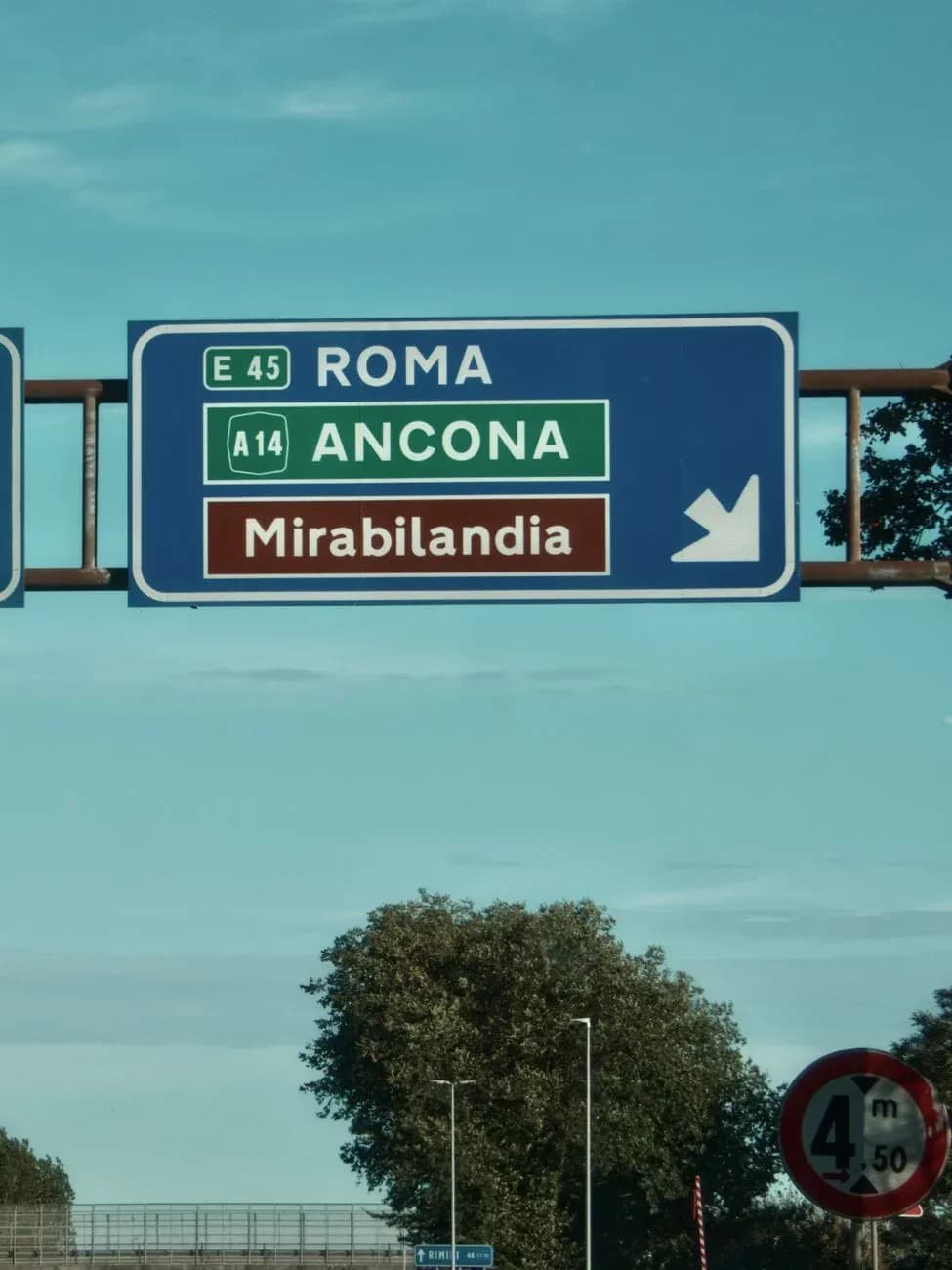
There is a constant breeze sweeping across the quays of Ancona, a wind that blends the heavy tang of fishing nets with that of the open sea. It is not a glossy postcard town, but a rugged regional capital that opens up unexpectedly onto neat squares and cliffs plunging straight into the Adriatic.
Between spring and early autumn, when the air is crisp and the beaches are uncrowded, the balance is ideal for pairing the history of the port districts with the stillness of the promontory woods. You will walk a lot, and often uphill, moving from historic wharves up to natural terraces gazing eastwards.
Be prepared for narrow, steeply sloping streets if you decide to explore the historic centre on foot: comfortable shoes are essential, and it is best to split your route between the hill and the harbour quarter so you don't end the day out of breath.
Three days between quays and cliffs
Day 1 — From waterfront fortresses to harbour alleys
Morning
Your first taste of the city begins at the Mole Vanvitelliana (Lazzaretto), a massive pentagonal 18th-century fortress built on an artificial island right in the harbour area. Designed by Luigi Vanvitelli, it now hosts exhibitions and, above all, the Museo Tattile Statale Omero: here, works of art and sculptures are not viewed behind glass, but explored by hand, in a sensory route that turns conventional museum rules on their head.
Afternoon
Leaving the Mole behind, head towards the historic quarter to pause at the Chiesa di Santa Maria della Piazza, an 11th-century Romanesque church. Beneath the glass flooring you can see the mosaics of a 4th-century early Christian church (closed on Mondays). Continuing along the ancient wharves, you come across two monumental pieces of history: the Arco di Traiano e Arco Clementino. The Roman marble arch dates back to 115 AD, standing alongside the gate commissioned by Pope Clement.
Evening
Dinner is served at Trattoria La Moretta in Piazza del Plebiscito (Piazza del Papa), a historic venue operating since 1897. It is the place to try the famous stoccafisso all'anconetana or a traditional brodetto. After dinner, linger in the square, which acts as the city's multi-tiered open-air drawing room: the statue of Clemente XII looks down from above over the cafes and the bustle of Ancona evenings.
Day 2 — Seaside terraces and rock descents
Morning
Head up towards the east coast to the Parco del Cardeto e Colle dei Cappuccini, a panoramic green lung sheer above the Adriatic. Along the paths you will find the Campo degli Ebrei and the outline of the 19th-century Vecchio Faro. From the hill, head down to the bottom of Viale della Vittoria, right up to the massive Monumento ai Caduti del Passetto, a white marble rotunda that serves as the main terrace overlooking the open sea.
Afternoon
From the Monumento, a long flight of steps or the panoramic lift (fare applies, in season) takes you down to the water's edge. Here lie the Grotte del Passetto e Seggiola del Papa. The caves are ancient boat shelters hollowed directly into the cliff by fishermen, sealed with painted wooden doors. Out in the water stands the iconic rock formation of the Seggiola del Papa. If you rely on public transport, buses and trolleybuses run conveniently from Piazza Cavour for these journeys.
Evening
For the evening, make your way towards Via Ascoli Piceno, stopping at Trattoria Carotti. Open since 1951, it is a family-run trattoria where Marche cuisine and stoccafisso are prepared according to old home recipes.
Day 3 — Adriatic-view trekking and brackish lakes
Morning
Leave the urban centre behind to delve into the greenery of the promontory. The Sentiero Traversata del Conero (Sentiero 301) takes around 4 hours (8.3 km), walking amongst holm oaks and Mediterranean scrub, with striking viewpoints at Pian Grande. Detours lead to the Belvedere Nord e Pian dei Raggetti, where the woods open up to reveal dizzying views over the cliffs and the deep blue water.
Afternoon
Finally, descend to sea level to walk the Baia e Anello di Portonovo. This is a much easier route, taking just over an hour on flat paths among brackish lakes, dense coastal vegetation and the broad beach of pure white pebbles.
Evening
Before leaving Ancona, return to the city for a final dinner near the station, pulling up a chair at Ristorante Gino in Piazza Rosselli. A historic haunt well known to locals, famed for its stoccafisso, which has won awards at the local themed festival.
Practical tips before you go
- The historic centre slopes steeply between Colle del Guasco and the port: wear proper walking shoes to tackle the climbs and narrow alleys.
- To avoid the uphill walk between the harbour and the Passetto, take the buses or trolleybuses from Piazza Cavour; a seasonal panoramic lift (fare applies) runs down to the coastal caves.
- City-centre car parks are often paid and full; for easier parking, look for free bays towards the Passetto area, beyond the Monumento ai Caduti.
- Before setting off along the trails on the Conero promontory, check access conditions on the park authority website: landslides or local orders periodically close certain coastal paths.
- To ensure you get a table and don't miss out on the house speciality at Osteria La Bottega di Pinocchio (renowned for its stoccafisso), you need to book well in advance.
Where to spend the night
A 4-star hotel right on the seafront, with windows looking onto the quays and boats of the marina.
View on Booking →Sleep in an 18th-century building, right by the port and the downtown theatres.
View on Booking →Set in the quiet of the promontory, overlooking the bay's beaches and cut off from the crowds.
View on Booking →