

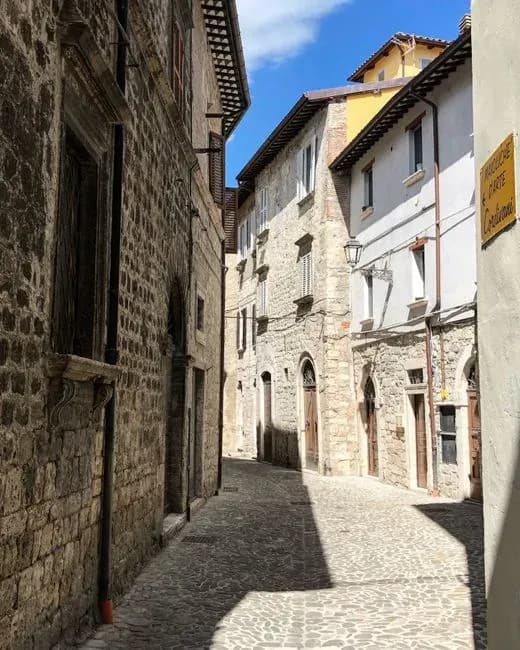
The centre of Ascoli Piceno is best explored almost entirely on foot. Its main streets and squares form a pedestrian area paved with pale travertine slabs that reflect the sunlight. You will not need a car, and it should be left outside the ZTL: the park-and-ride car parks at Torricella or Ex Seminario are the handiest spots to leave your vehicle before setting off among the medieval alleys and rue. If you choose to stay in the historic centre, places such as Palazzo dei Mercanti - Dimora & Spa or B&B Il Duomo let you get around without giving transport a second thought.
Spring and autumn offer the ideal mild climate for spending the whole day outdoors. Summer changes the town's pace, drawing larger crowds especially around the first Saturday in August for the Quintana, the renowned medieval historical re-enactment. If you plan to visit then, book your accommodation well in advance due to high demand. The town's location also allows for varied day trips: a 25-to-30-minute drive east along the RA11 dual carriageway brings you to the Adriatic coast at San Benedetto del Tronto, while heading west leads straight to the walking trails of Parco Nazionale dei Monti Sibillini.
How to Plan Two Days in Town
Day 1 — Travertine Piazzas and Renaissance Painting
Morning
Your day begins in Piazza Arringo, the town's oldest square. Along one side stands the Cattedrale di Sant'Emidio e Piazza Arringo, the local cathedral dedicated to the patron saint. Inside, you will find the crypt and a polyptych painted by Carlo Crivelli. Straight after, head into the adjacent Palazzo dell'Arengo to visit the Pinacoteca Civica di Ascoli Piceno. The collection brings together works of art from the 14th to the 20th century, including pieces by Tiziano, Pellizza da Volpedo and further paintings by Crivelli. The visit takes around one to two hours, so keep an eye on the time before heading out for lunch. For a quick bite without sitting down, nearby Migliori Olive Ascolane at number 2 on the square serves piping-hot paper cones of olive all'ascolana and fried cremini to enjoy as you walk.
Afternoon
In the afternoon, make your way towards Piazza del Popolo, the town's true civic parlour paved in travertine. The afternoon hours and sunset cast the finest light across the facades of the Renaissance palazzi. Flanking one side is the Palazzo dei Capitani del Popolo, an imposing historic building topped by a medieval tower and featuring an inner courtyard. Just a few steps away stands the Chiesa di San Francesco, a 14th-century church that incorporates the Loggia dei Mercanti. Keep winter opening hours in mind if you plan to enter: on weekdays it opens from 6:45 to 12:00 and 15:00 to 19:00, while on public holidays and Sundays it opens from 7:00 to 13:00 and 15:00 to 19:15. Before dinner, stop at Caffè Meletti, a historic art nouveau cafe with tables on the piazza, famed for serving Anisetta Meletti with a 'mosca'—a single coffee bean in the glass.
Evening
Dinner is at Ristorante Vittoria, a historic trattoria located at Via dei Bonaccorsi 7, just a short walk from Piazza del Popolo. The menu focuses on traditional dishes from the Piceno area, serving classic local pasta courses and roasted lamb specialities.
Day 2 — The River, the Fortresses and the Medieval Quarter
Morning
On the morning of your second day, walk up to Colle dell'Annunziata to view the ancient defensive fortifications. From the elevated Fortezza Pia, you will enjoy sweeping panoramic views across the rooftops of the historic centre and the surrounding hills. For keen walkers who prefer woodland paths to town stone, the Sentiero Colle San Marco - Porta Cartara (Sentiero 401) sets off from the Colle San Marco plateau. This is a mountain hiking route that winds back down to the town; reach the trailhead from the centre by catching the number 11 urban bus. Head back down to the centre for lunch with a stop at Vinattiere Osteria con Cucina, which offers a thoughtful selection of regional wines alongside hearty, traditional dishes from Marche and Abruzzo.
Afternoon
After lunch, walk through Borgo Solestà to cross the Ponte Romano di Solestà, an ancient road bridge still in use that offers a great viewpoint over the waters of the river Tronto; you can also visit the thermal tunnel inside it. Following the riverbank towards Porta Maggiore brings you to Forte Malatesta, an imposing Renaissance fortress built right against the river Castellano. From here you can see the Ponte di Cecco, and the interior now houses the Museo dell'Alto Medioevo. Just a short walk away, on the banks of the Castellano, stand the Musei della Cartiera Papale. Housed in a restored former watermill, the interactive exhibition focuses on water power, paper-making and the workings of historic machinery.
Evening
As dusk falls, stroll along the Rua delle Stelle in the medieval quarter overlooking the Tronto. This cobbled lane runs atop the old town walls and is lit by street lamps, making it a wonderful route for an evening wander. For dinner, head back into the historic centre to Osteria Nonna Nina at Piazza della Viola 11. The kitchen works with meat from local farms and handmade fresh pasta. Given the small number of covers, booking ahead is essential. Be sure to order the traditional fritto misto all'ascolana to sample the complete version of this classic local dish.
Practical Tips for Your Trip
- A car is of no use in the town centre, which is almost entirely pedestrianised and paved in travertine. Leave it outside the restricted traffic zones in park-and-ride car parks, such as Ex Seminario or Torricella, then explore the rue and squares on foot.
- If you fancy a walk through the woods, you can reach the Colle San Marco plateau on weekday number 11 buses, then hike route 401 all the way down to Porta Cartara.
- When dining in traditional osterie, order the complete fritto misto all'ascolana rather than just the stuffed olives. The full platter also includes lamb cutlets, battered vegetables and sweet fried cremini.
- If you plan to attend the Quintana medieval re-enactment on the first Saturday in August, expect large crowds and make sure you book your accommodation several weeks ahead.
Where to Stay
A restored medieval convent right in the historic centre, featuring an on-site spa.
View on Booking →A renovated historic palazzo looking directly onto Piazza Arringo, ideal for exploring the centre on foot.
View on Booking →A hotel and restaurant located just steps from the main piazzas, well placed for getting around.
View on Booking →