
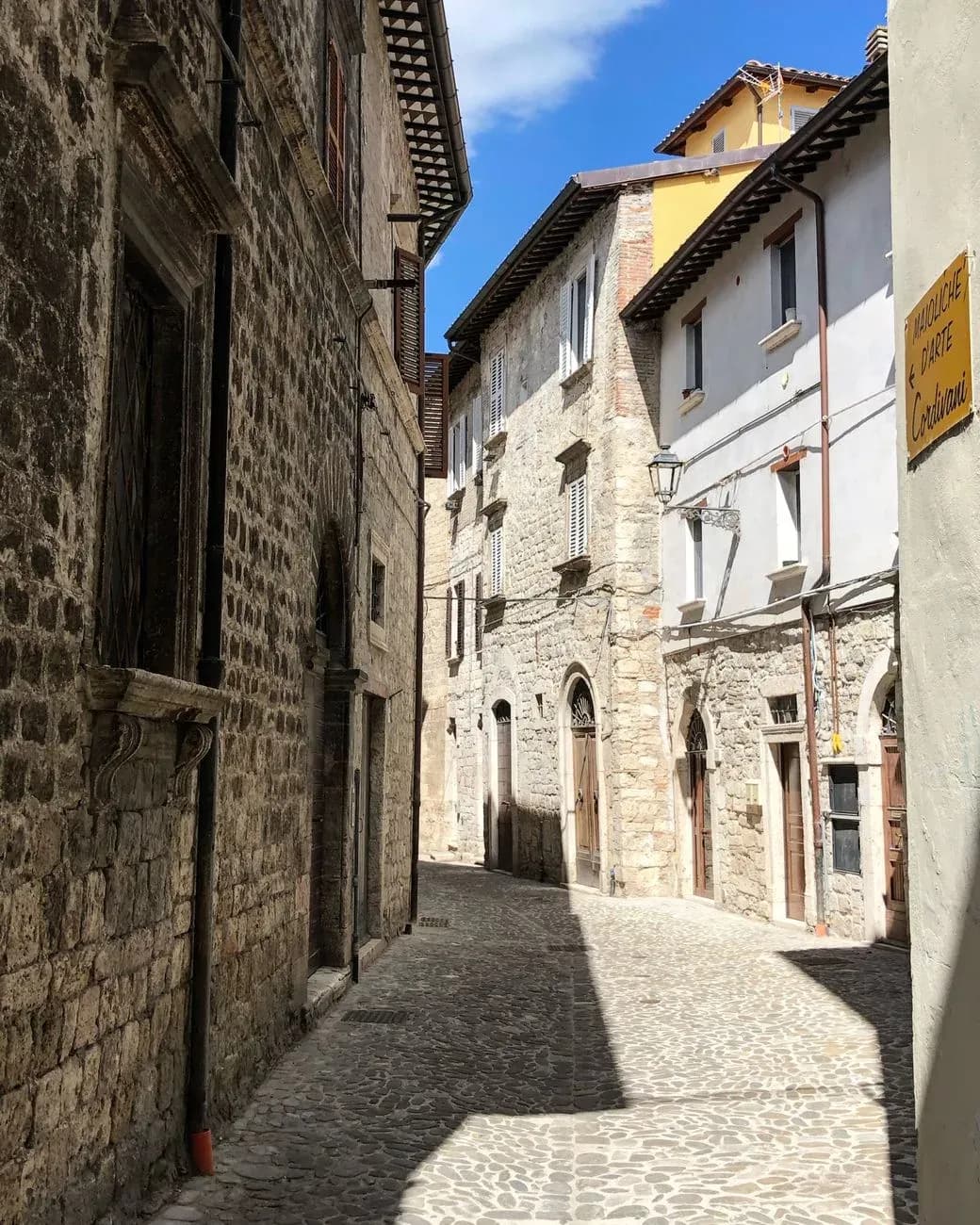
Strolling through Ascoli Piceno means walking on pale travertine slabs that catch the light and define the architecture of historic palazzi and squares, creating seamless visual continuity between streets and monuments. The central core is easily covered on foot, yet just a few kilometres beyond the urban fabric lies a mountainous landscape where you can switch effortlessly from Renaissance loggias to woodland trails.
Arriving from the A14 motorway, getting into town is straightforward via the RA11 Ascoli-Mare junction, which brings you to the city gates in just a few minutes. If you choose to stay near the main sights, properties like the Di Sabatino Resort provide a handy base for getting around almost entirely on foot while leaving your car parked up.
The logistics for the weekend are remarkably simple: spend your first twenty-four hours taking in the grand squares and cobbled alleyways, then dedicate the next day to discovering river valleys, neighbouring fortresses, and the peaks rising above the valley, all the way up to the Apennine ski slopes.
How to plan your days in and around the city
Day 1 — Piazzas, travertine, and Anisetta
Morning
The heart of your walk centres on Piazza del Popolo, the city's elegant parlour paved in pale travertine and framed by historic palazzi and Renaissance loggias. On the same side stands Caffè Meletti, a historic early-twentieth-century Art Nouveau cafe renowned for its Anisetta Meletti tasting, served with a 'mosca' (a roasted coffee bean) alongside assorted sweet and savoury bites. Right next door rises the Chiesa di San Francesco, an exquisite Gothic Franciscan church flanked by the Loggia dei Mercanti; to catch the doors open, it is best to plan your visit for the morning in line with the complex's opening hours.
Afternoon
A short walk away opens out onto Piazza Arringo, the city's oldest public square, dominated by the Cattedrale di Sant'Emidio. Inside, you will find fine sacred artworks and access to the Romanesque crypt dedicated to the patron saint. On the square itself is Migliori Olive Ascolane, a historic workshop and artisan fry shop perfect for snacking on fried stuffed green olives served piping hot in paper cones (cartoccio). Heading back towards Piazza del Popolo, another great option is 180 Gradi Street Food, an informal spot acclaimed for its paper cones of traditional, truffled, or vegetarian olives, alongside fried cremini. Expect a short queue at both stalls on weekends, but service is brisk so you can grab your food and wander. Continue along the river Tronto towards the Rua delle Stelle, a cobbled path laid atop the ancient crenellated city walls, known locally as 'Rretë li mierghië'.
Evening
Following the path towards the medieval quarter brings you to the Ponte Romano di Solestà, an Augustan-era bridge that is among the best-preserved Roman thermal bridges in the world, spanning the gorge of the river Tronto. For dinner, head back into the centre for an outdoor table at Ristorante Lorenz Cafè, looking right out over Piazza del Popolo and serving classic traditional fritto misto paired with certified DOP stuffed olives.
Day 2 — River fortresses and mountain trails
Morning
Turn your attention towards the Porta Maggiore area and the river Castellano, home to the Forte Malatesta e Museo dell'Alto Medioevo. Designed by Antonio da Sangallo il Giovane, the fortress takes between one and two hours to explore properly. Inside, you will discover extraordinary Lombard artefacts alongside spaces for temporary exhibitions. Afterwards, leave the city behind and head up into the Apennine foothills. The drive takes 15 to 20 minutes, covering around 9 km along an easy provincial road up to the plateau of Colle San Marco.
Afternoon
From Colle San Marco, a woodland trail at an altitude of 700 metres leads to a 13th-century hermitage. After an easy 15-minute walk, set directly into the sheer travertine cliff, the Eremo di San Marco comes into view. Once back at the starting point or continuing along the SP 76, you will come across Rifugio Mario Paci at 903 metres, a popular hub for hikers and mountain bikers serving hearty mountain fare bridging Marche and Abruzzo traditions.
Evening
Winding up from Porta Cartara towards San Giacomo, you reach the Comprensorio Sciistico Monte Piselli on the Montagna dei Fiori. Located around twenty kilometres from the historic centre, between 1,400 and 1,700 metres up, this mountain resort is famous for winter skiing with views out over the Mar Adriatico and for summer hiking, offering sweeping vistas to round off your weekend far from the tarmac. For a peaceful night's rest, B&B Villa Fortezza offers panoramic hillside views close to the city centre.
Practical tips for your stay
- The entire historic centre is pedestrianised and paved with smooth travertine slabs: you can see it all in a day, but comfortable shoes with good non-slip soles are essential.
- Driving to Colle San Marco and the surrounding slopes takes 15-20 minutes along an easy 9 km provincial road, making it an ideal excursion for your second day.
- If travelling by camper van or car via the A14, the RA11 link road takes you straight into town; to reach the ski area, continue from Porta Cartara towards San Giacomo.
- Trail 401 up to the hermitage crosses exposed travertine rocks through the woods: wear proper walking boots rather than everyday city trainers.
- At weekends, central fry shops often see brief queues around lunchtime; service is very quick, however, and the paper cones are designed to eat on the move.
Where to stay: historic palazzi and hillside retreats
An upscale historic residence set right in the pedestrianised old quarter, ideal for getting around on foot.
View on Booking →A period residence situated moments from Piazza del Popolo, perfect for a stay among Renaissance palazzi.
View on Booking →A contemporary hotel with private parking, conveniently located within easy reach of the main road connections.
View on Booking →