
Planning a trip to Ascoli Piceno means discovering an urban layout that has kept its historic character intact, with pale travertine dominating the squares and palazzi. Spring and early autumn bring mild weather ideal for exploring the town on foot and walking the trails in the Monti della Laga, while July and the first Saturday of August see the medieval Quintana pageant fill the streets.
For those who prefer the colder months, the nearby Stazione Sciistica Monte Piselli - San Giacomo lets you ski or snowshoe while looking out towards the Mare Adriatico. Getting around requires a bit of planning: the historic centre is compact and protected by camera-controlled ZTL gates. You will need to park outside the city walls or leave your car at Parcheggio Torricella, which takes you straight up to the main squares via a lift.
How to plan your weekend day by day
Day 1 — The travertine drawing room
Morning
Your first taste of the town is usually Piazza del Popolo, paved entirely in travertine. A gentle stroll around the square takes about an hour. On its perimeter stands the Palazzo dei Capitani del Popolo, a 14th-century civic building with a distinctive tower and a Renaissance courtyard; touring its interior rooms takes around 45 minutes. The central area offers several places to stay just steps away, such as the Albergo Sant'Emidio or the Palazzo Dei Mercanti - Dimora & Spa.
Afternoon
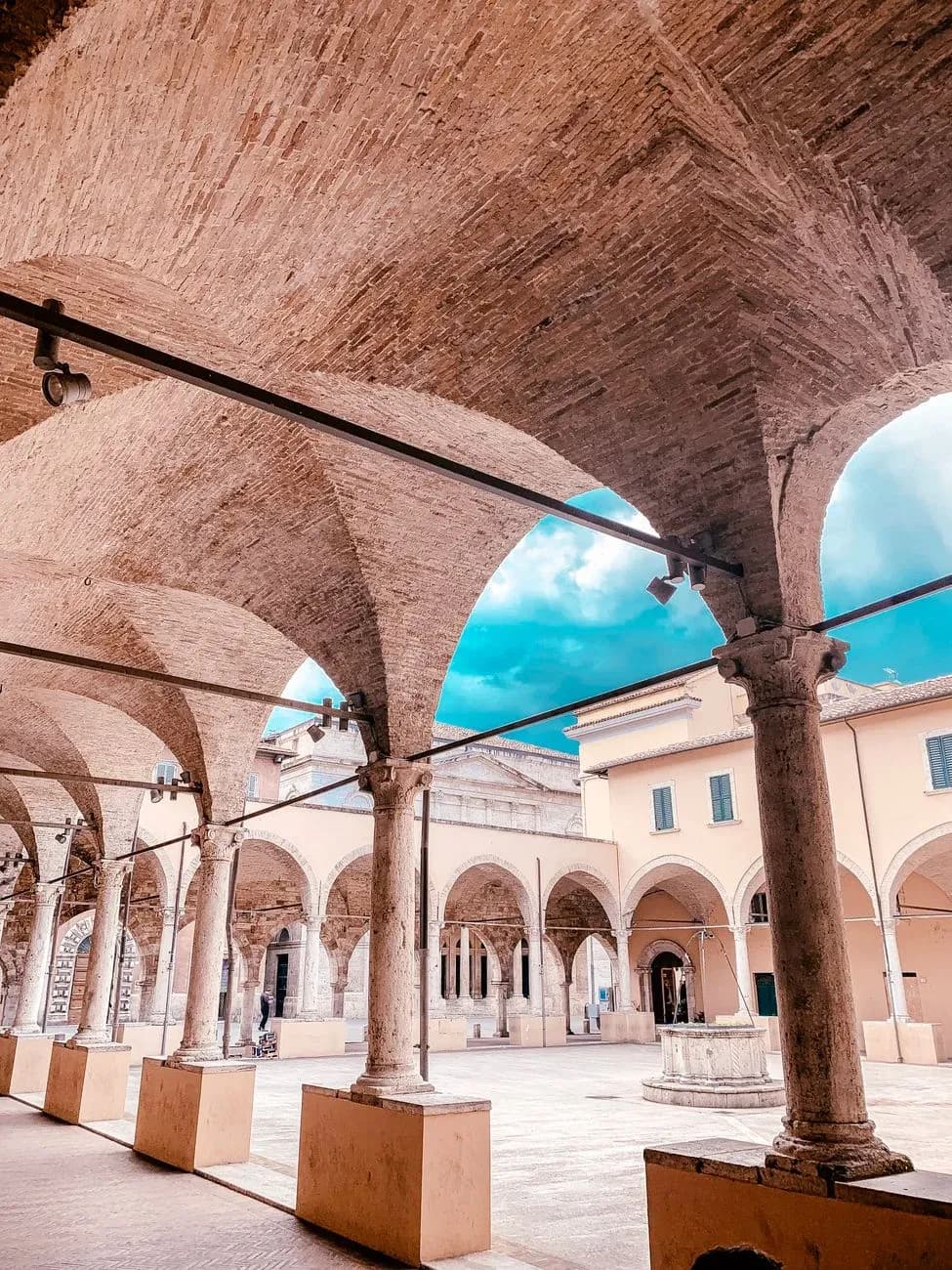
Also overlooking the main square is the Chiesa di San Francesco, an imposing 14th-century church built of travertine. You will need between 30 and 45 minutes to explore the naves. Right next door, step into the Chiostro Maggiore di San Francesco to admire its 16th-century Renaissance architecture; allow about half an hour to wander beneath its arcades.
Evening
Spend the evening at the outdoor tables of Caffè Meletti, a historic Art Nouveau café right on Piazza del Popolo. Here it is customary to order an aperitivo with olive ascolane, followed by the classic anisetta con la mosca—the local aniseed liqueur served with a roasted coffee bean dropped inside. The café terrace is also lovely for dinner.
Day 2 — Mosaics and Baroque masterpieces
Morning
Continue to Piazza Arringo, home to the Cattedrale di Sant'Emidio. The visit takes around 45 minutes, with the highlight being the crypt dedicated to the patron saint, its walls lined with mosaics. A short walk away inside Palazzo dell'Arengo, you will find the Pinacoteca Civica (Palazzo dell'Arengo). Allow about an hour and a half to wander through its Baroque rooms and admire paintings by Carlo Crivelli and Pellizza da Volpedo. For a mid-morning break, pop into Migliori Olive for genuine olive all'ascolana del Piceno DOP, freshly fried and served hot in the traditional paper cone.
Afternoon
Still in Piazza Arringo, the Renaissance Palazzo Panichi houses the Museo Archeologico Statale di Ascoli Piceno. An hour here is enough to take in artefacts from the Picene and Roman civilisations. Afterwards, head up towards Colle dell'Annunziata to reach the Fortezza Pia. This stronghold is the highest point in town and offers sweeping views over rooftops, medieval towers and the surrounding valleys; budget around 45 minutes including the climb and your visit.
Evening
For dinner, Vinattiere Osteria con Cucina on Via Cesare Battisti serves traditional, time-honoured dishes from Ascoli and Abruzzo. Recommended by the Slow Food guide, this osteria specialises in hand-rolled pasta and the classic local fritto misto.
Day 3 — Fortified strongholds and woodland hermitages
Morning
You will need a car today to reach the surrounding mountain areas, around twenty kilometres away. Your first stop is the Eremo di San Marco, near Colle San Marco and Piagge. This 13th-century hermitage is literally anchored to a travertine cliff face; to reach it, take a gentle woodland trail that takes 15 to 20 minutes on foot. From there, drive on to Castel Trosino, a fortified medieval village perched on a rocky crag overlooking the Castellano torrent. The site is home to an important Longobard necropolis, and exploring it takes about an hour and a half.
Afternoon
Head back towards the town centre and the Porta Maggiore area to see Forte Malatesta. This Renaissance fortress on the banks of the Castellano torrent was designed by Antonio da Sangallo il Giovane; allow about an hour to explore the ramparts and interior spaces.
Evening
In the historic centre, on Via dei Soderini, Ristorante Il Ruspante welcomes diners in a traditional trattoria setting. The menu focuses on deep-rooted Piceno recipes, featuring homemade pasta followed by an authentic, unmissable fritto misto all'ascolana.
Day 4 — Riverside walks and coastal detours
Morning
Start your final day walking along the Tronto river via Rua delle Stelle. This cobbled medieval pathway runs alongside the ancient town walls and takes a good half-hour to stroll. It connects directly with the Ponte Romano di Solestà, an impressive, remarkably well-preserved Roman bridge dating from the Augustan era; allow twenty minutes or so here. In the Borgo Solestà neighbourhood, along the street of the same name, call into La Bottega dell'Oliva Ascolana, an artisan deli specialising in handmade stuffed olives and fried cremini.
Afternoon
In the afternoon, hop in the car for one of two trips, depending on your mood and the weather. A 25-minute drive brings you to Offida, a hilltop village famed for bobbin lace and the 14th-century Chiesa di Santa Maria della Rocca, perched dramatically above the badlands (allow 2 to 3 hours). Alternatively, head about half an hour down the RA11 road to the Lungomare della Riviera delle Palme in San Benedetto del Tronto. This sandy strip on the Mare Adriatico features a cycle and pedestrian promenade, themed gardens and over 8,000 palm trees—ideal for a relaxing half-day out.
Evening
Have dinner along the coast before heading home, or return to town for one last plate of local specialities before the weekend draws to a close.
Top tips for your trip
- Driving into the historic centre is restricted by a camera-controlled ZTL. To avoid fines, park outside the city walls—for instance at Parcheggio Torricella, which has a handy lift taking you straight up to Piazza Arringo.
- Walking is all you need to get between the palazzi in town. You will need a car, however, to reach sights further out: Colle San Marco or the mountains (around 35 minutes), the village of Castel Trosino (10 minutes) and the coast at San Benedetto del Tronto (30 minutes via the Ascoli-Mare link road).
- The interior of the Eremo di San Marco and other nearby rock churches are not always open. Visits depend on local volunteer groups and are largely limited to weekends and bank holidays in the warmer months; make sure to check exact opening times a few days in advance.
- When dining out, local tradition calls for the full fritto misto: alongside the classic stuffed olives, the dish should include cremini (cubes of set custard, breadcrumbed and fried) and lamb cutlets. To round off your meal, order an anisetta con la mosca—aniseed liqueur served with a single roasted coffee bean resting in the glass.
Where to stay for easy access
Boutique hotel with a wellness centre set in a historic palazzo, just moments from the elegant sweep of Piazza del Popolo.
View on Booking →Resort housed in a restored noble palazzo along Corso Giuseppe Mazzini, offering spacious suites right in the town centre.
View on Booking →Hotel tucked into the heart of the historic centre, only a few metres from the façades of Piazza del Popolo and Piazza Arringo.
View on Booking →