

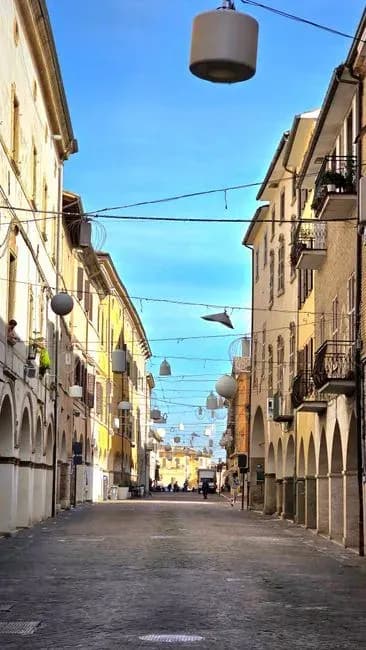
The inland provinces of Marche offer a landscape of secluded valleys, reservoirs and Apennine peaks. This itinerary focuses on the hinterland and the Monti Sibillini, an area where you will need your own car to get around. The local roads boast wide, sweeping views across the rolling hills, but they are full of sharp bends; factor in journey times of around 40-60 minutes to drive between neighbouring valleys.
Timing your trip makes all the difference. Late spring and early autumn – particularly May, June, September and October – bring mild weather that is ideal for walking without the midday heat, and you'll find the lakeshores and historic centres far less crowded. Winter, from late December through to February, completely transforms the landscape: head up into the mountain resorts if you want to ski or go snowshoeing at high altitudes.
Each day groups stops by geographical proximity to keep driving times down. While you won't cover the entire region in four days, you will get an authentic feel for its rugged peaks and remarkably intact medieval strongholds.
How to plan your four days
Day 1 — Karst caves and the upland lake of Cingoli
Morning
Your first day begins in the municipality of Genga with a visit to the Grotte di Frasassi. These karst caves stay at a constant 14 degrees throughout the year, so bring a warm layer even in midsummer. The standard guided tour lasts 75 minutes; make sure you book a timed-entry ticket online in advance to bypass the ticket office queues, and arrive at the main car park at least 30 minutes before your slot to catch the shuttle bus included in your ticket.
Afternoon
From Genga, head south towards Cingoli (Il Balcone delle Marche). Perched on a hilltop over 600 metres above sea level, its historic centre retains medieval fortified gates and panoramic viewpoints that stretch all the way to the Adriatic coast. After a stroll through the village, drive down to the Lago di Cingoli (Castreccioni). This reservoir is surrounded by woods and water's-edge paths, with picnic spots and pedal-boat or canoe hire to round off your afternoon.
Evening
Head back up within the stone walls of Cingoli for dinner. A local favourite is La Taverna di Rò in Via della Portella 13, serving honest, homemade dishes rooted in traditional Marche cooking.
Day 2 — Renaissance walls and sandstone architecture
Morning
Spend the morning heading into the province of Ancona to explore the Centro storico di Corinaldo. The village is famous for its 15th-century walls – among the best preserved in central Italy – and the stepped street known as the Piaggia, home to the Pozzo della Polenta. Afterwards, head south towards the Centro storico di San Ginesio, a village that has kept its original sandstone character intact, from its fortified gates to the 14th-century hospital once used by pilgrims.
Afternoon
Just a short drive away lies the Centro storico di Sarnano, one of the Borghi più Belli d'Italia. The village clings to the hillside with a web of concentric medieval alleyways. The Via delle Cascate Perdute starts right from town: an easy circular walk taking in three natural waterfalls. Towards late afternoon, continue towards Tolentino and Urbisaglia to visit the Riserva Naturale e Abbazia di Chiaravalle di Fiastra, a 12th-century Cistercian complex with an intact cloister and lovely nature trails.
Evening
Head back to Sarnano for dinner at Osteria le Clarisse in Via G. Mazzini 240. The menu highlights local mountain produce and fresh handmade pasta.
Day 3 — The red canyon and the shores of Fiastra
Morning
Devote day three to hiking around the Lago di Fiastra. Start with the Sentiero delle Lame Rosse, a return walk of around 6.5 kilometres that takes between two and a half and three hours. The trail leads into a dramatic canyon of red gravel and sculpted pinnacles. Set off early in the morning to beat the heat; there is no drinking water along the way, so carry at least 1.5 litres per person and wear proper hiking shoes with good grip, which are crucial for the loose gravel in the final scree slope.
Afternoon
Back at the dam of Lago di Fiastra, grab a quick bite at Il Solengo Street Food, an informal spot on the lakeside serving sandwiches, cresce and hot dishes. Spend the rest of the afternoon relaxing on the shores of this turquoise reservoir flanked by peaks, hiring a kayak or pedal boat, or wandering the flat paths running along the shoreline.
Evening
Dine in Località San Lorenzo al Lago, still in Fiastra, at Ristorante Albergo Sasso Bianco. The dining room overlooks the water, and the kitchen serves handmade pasta, locally sourced meats and traditional desserts.
Day 4 — High plateaus and an evening fortress
Morning
Head up to the Altopiano di Macereto near Visso, at an altitude of roughly 1000 metres. Standing alone among the high pastures is the Santuario di Macereto, an extraordinary Renaissance sanctuary inspired by Bramante. Depending on the season, carry on to the nearby mountain resorts: either Stazione Montana Frontignano 360 on Monte Bove, ideal for hiking and outdoor sports in summer and skiing in winter, or Comprensorio Sciistico Bolognola Ski in Pintura di Bolognola, offering downhill pistes, ridge snowshoe trails and a mountain rifugio.
Afternoon
Once back down in the valley, stop for lunch again at Ristorante Albergo Sasso Bianco in Fiastra or grab a quick bite in one of the nearby villages before driving north into the province of Pesaro e Urbino. Your destination is the Rocca Demaniale di Gradara, a formidable 14th-century fortress forever linked to Dante's tale of Paolo and Francesca, commanding sweeping views over the surrounding valley.
Evening
Gradara's castle and medieval village are at their most magical at dusk, when the fortifications light up and the afternoon crowds disperse – a memorable way to conclude your journey through the northern hills of Marche.
Practical tips for your trip
- On sunny weekends and in high summer, parking along the shores of Lago di Cingoli and by the dam at Fiastra fills up very quickly. To secure a spot without hassle, arrive by 9:30 or wait until late afternoon around 16:30.
- If you tackle the trail to the Lame Rosse, remember there is no drinking water along the entire route: pack at least 1.5 litres of water per person. Sturdy hiking shoes with good grip are essential for negotiating the loose scree section near the end.
- Visiting the Grotte di Frasassi requires some advance planning: purchase a timed-entry ticket online to skip the main ticket queues. Be sure to arrive at the main parking area at least 30 minutes early to catch the shuttle bus up to the cave entrance.
- For your budget, reckon on an average daily spend of €45 to €65 per person, excluding accommodation. This easily covers entrance fees and a couple of traditional meals in local osterie and trattorie, where a sit-down meal typically runs between €25 and €35.
Where to stay
A convenient, practical base for exploring the Balcone delle Marche and heading straight down to the lake of Castreccioni.
View on Booking →Set at the foot of the Monti Sibillini, perfect for pairing mountain hikes with relaxation and spa wellness.
View on Booking →Surrounded by rolling Marche hills, this peaceful retreat features an outdoor pool open during the summer months.
View on Booking →