

Ancona is often dismissed as a mere commercial transport hub, a large port from which to catch a ferry. In reality, its geography makes it an exception along the entire Adriatic coast. The promontory on which it rests forms a true elbow, which in Greek translated as "ankon". This distinctive curve offers a rare natural phenomenon: the chance to watch both the sun rise and the sun set directly over the water, without ever leaving the city.
Getting around the historic centre means tackling its varying elevations. The urban layout climbs steep hills, such as Guasco, Astagno, and Cardeto, making sharp climbs and flights of steps inevitable. The best months to plan a weekend in Ancona run from May to June, or in early autumn, between September and October. During these weeks, the weather is ideal for wandering between monuments and heading down to the coast to enjoy the sea without getting stuck in the summer traffic of the main road.
How to plan your days in the city
Day 1 — From the pier to Roman ruins
Morning
The Porto district is the most natural place to get your bearings. Here, water and architecture merge at the Mole Vanvitelliana, also known as the Lazzaretto. It is an artificial, pentagon-shaped island built in the eighteenth century to a design by Vanvitelli. Inside lies the Museo Tattile Statale Omero, a sensory journey where sculptures and copies of masterworks are explored entirely using your hands.
Just a few dozen metres away stands the Chiesa di Santa Maria della Piazza, an eleventh-century Romanesque building. Inside, a transparent glass floor reveals the mosaics of a fourth-century early Christian basilica. You will need to time your visit carefully: the church is always closed on Mondays and runs split opening hours during the colder months, extending to continuous opening only in the peak tourist season.
Afternoon
In the early afternoon, the streets grow steeper. As you climb between Colle Guasco and Colle dei Cappuccini, the remains of the Anfiteatro Romano emerge. This impressive remnant of the Augustan era sits closely hemmed in by everyday historic apartment buildings, creating a striking visual contrast.
The summit of Colle Guasco is crowned by the Cattedrale di San Ciriaco, the city's Romanesque-Byzantine cathedral. The entrance portal is flanked by two stone lions, and the square in front offers a panoramic view over all the quays. As dusk approaches, the cathedral's vantage point allows you to watch the sun sink into the sea. If you prefer to stay down below, the Porto Antico offers an equally rewarding sunset view as you stroll along the northern pier towards the Arco di Traiano, a triumphal arch dating from 115 AD.
Evening
The focal point of evening life in the city is Piazza del Plebiscito, right in the historic centre. Locals call it Piazza del Papa due to the statue of Clement XII overlooking the central staircase. The square is arranged across multiple levels and is packed with lively bars.
For dinner, head to Via Monte Venanzio for Osteria del Baffo. Outdoor tables on the panoramic terrace allow you to pair hearty, authentic Marche cuisine with a glass of Rosso Conero.
Day 2 — Cliffs, caves and the riviera
Morning
Day two focuses on the open sea, setting off from the Passetto neighbourhood. The visual focal point here is the Monumento ai Caduti, a circular monument crafted from Istrian stone. From here, cutting through the Pineta del Passetto, take the staircase that carves down through the cliff all the way to the water's edge. Sunrise is by far the finest moment to walk down these steps.
Lined along the foot of the cliff are the Grotte del Passetto. Local fishermen hand-carved them into the rock to shelter their boats; their large, brightly coloured wooden doors make them instantly recognisable. For lunch in the area, close to Spiaggia della Vedova, step into Trattoria Osteria della Vedova. This spot with deep maritime roots serves traditional local dishes, from stoccafisso all'anconetana to classic vincisgrassi.
Afternoon
The second part of the day requires transport, either by car or local bus, to leave the urban sprawl behind and venture into the Riviera del Conero. The Baia di Portonovo and neighbouring Spiaggia di Mezzavalle easily deserve half a day of your time.
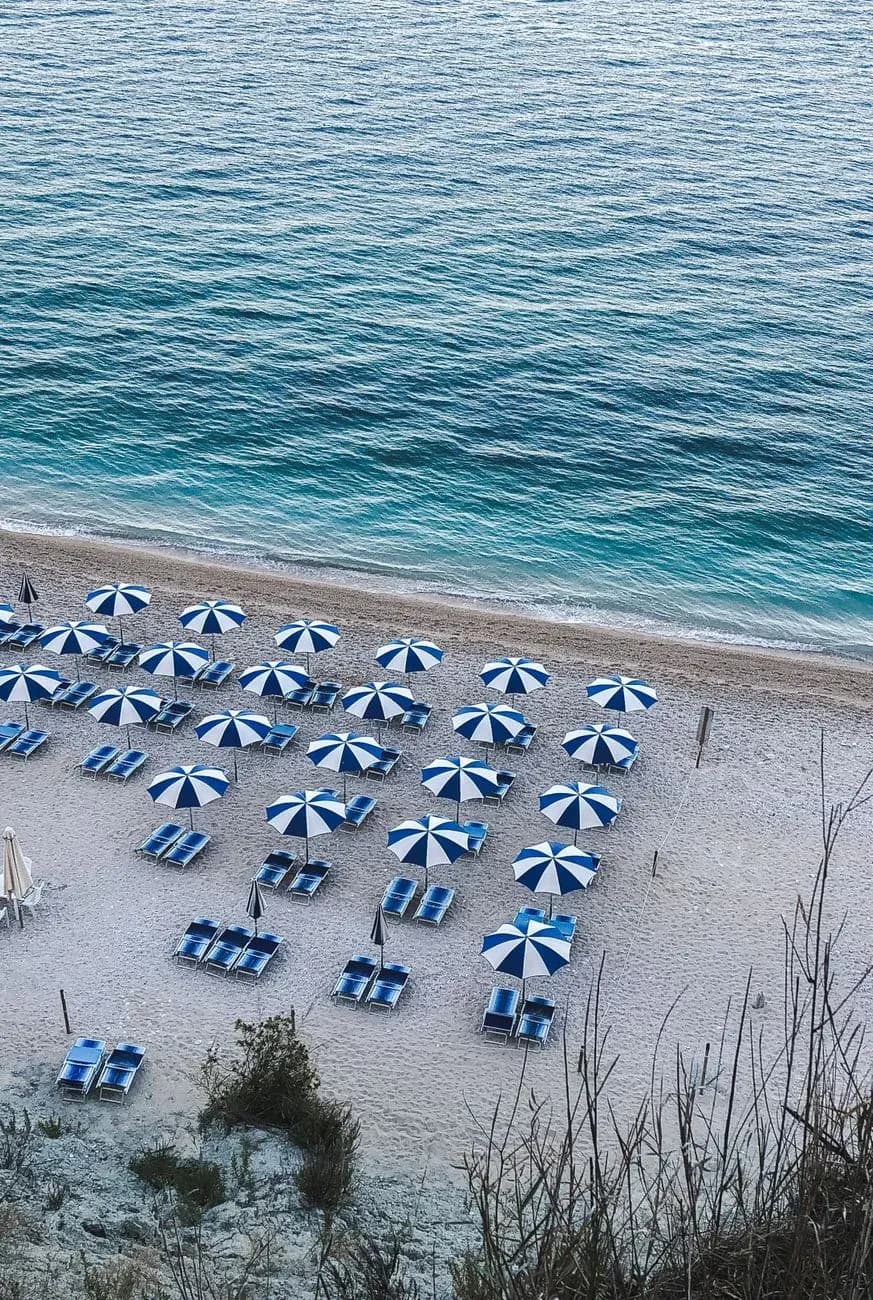
This stretch of coast at the foot of Monte Conero feels rugged and delightfully undeveloped, characterised by white pebbles and crystal-clear waters. Rather than crowded lidos, you will find long stretches of free beach, perfect for unwinding after all the hills tackled in town.
Evening
Remaining on the riviera, arrange dinner directly in the Baia di Portonovo. La Capannina di Portonovo sets its tables right overlooking the sea; the menu shines with fresh wild mussels (moscioli) and platters of fried mixed seafood.
If your return journey takes you towards the northern shoreline at Palombina instead, Playa Solero offers a relaxed spot on the sand, run by a local family and focusing on classic Adriatic gratinati and seafood tagliatelle.
Practical tips before you go
- The city's topography demands footwear suited to steep gradients and long flights of steps between neighbourhoods. If you choose to stay at Grand Hotel Passetto you will already be near the sea, but for exploring Portonovo and the riviera's beaches, a car or local bus routes remain the most practical solution.
- Those travelling in a motorhome should note that overnight camper parking is banned throughout the port area. Official options include the municipal site on Via Scataglini for waste disposal and water refills, or the scenic lay-bys along the road to Portonovo.
- Taking advantage of the promontory's shape, it pays to walk down to Passetto early in the morning for sunrise, and head up to the cathedral or stroll out towards Porto Antico to watch the sunset directly over the sea.
- The church of Santa Maria della Piazza is always closed on Mondays and shifts its timetable according to the season: in winter it closes in the middle of the day, whereas in summer it remains open longer. It is wise to check the day before so you do not find the gates locked.
Where to spend the night
A four-star hotel set within an eighteenth-century palazzo a short stroll from the port, ideal for ferry arrivals.
View on Booking →An elegant hotel steeped in history, perched in the clifftop district with views stretching along the coast.
View on Booking →A genuine Napoleonic-era military fortress converted into hotel accommodation right by the beaches of Conero.
View on Booking →