
Giving yourself several days in Bologna lets you watch the cityscape shift hour by hour, from the morning fruit-and-vegetable stalls to the evening student gatherings. Leaving the car outside the walls and exploring on foot immediately changes your perspective: traffic noise gives way to the bustle of neighbourhood markets, and the distances covered under endless porticoes turn into leisurely opportunities to admire palace details without keeping an eye on the clock.
By staying right in the centre—perhaps in rooms looking out over the main square, like those at Art Hotel Orologio—you can step out of the door straight into the maze of medieval alleys. The route then heads outwards, taking in the hills and green open spaces to slow the pace right down and step away from the main thoroughfares.
How to plan your four days in the city
Day 1 — The main square and the historic market
Morning
The Centro Storico is at its finest in the early morning. Piazza Maggiore e Fontana del Nettuno forms the monumental focal point surrounded by medieval palaces, dominated by Giambologna's bronze fountain. From here, step directly into Basilica di San Petronio: notable for its vast, unfinished façade, it takes around 45 minutes to take in the interior and its great solar meridian line. On the same side of the square stands Palazzo d'Accursio e Torre dell'Orologio. Alongside the Collezioni Comunali d'Arte housed in the town hall, climbing the tower offers a wonderfully romantic view over the square, though booking ahead is advisable.
Afternoon
Moving over to the Galvani area, you will come across Archiginnasio e Teatro Anatomico. The university's historic seat welcomes visitors with walls covered entirely in thousands of heraldic coats of arms. Inside, the anatomical theatre, carved from spruce wood, bears witness to the city's academic pedigree. Continue your stroll down Via D'Azeglio to Casa Lucio Dalla. The home of the Bolognese singer-songwriter preserves his musical instruments, mementoes, and the artwork he collected during his lifetime; booking ahead is mandatory.
Evening
In the late afternoon, the alleys of the Quadrilatero e Mercato di Mezzo take on a new life. This tangle of medieval streets in the Centro Storico has always been dedicated to gastronomy, packed with historic delicatessens and traditional shops that buzz with energy. For dinner, join in an old local tradition: pick up cured meats and cheeses from the neighbourhood shops, then pull up a chair at Osteria del Sole on Vicolo Ranocchi. Founded in 1465, this is the city's oldest osteria and operates by a simple rule: they serve only wine and beer, leaving you free to bring your own food.
Day 2 — Hidden waterways and contemporary art
Morning
Bologna's waterways can only be glimpsed from a handful of spots. The Finestrella di Via Piella in the Centro Storico offers a delightfully unusual view over Canale delle Moline, revealing medieval foundations built straight over running water. From here, head towards Quartiere Porto to visit MAMbo - Museo d'Arte Moderna di Bologna. The airy halls of the former municipal bakery now house the contemporary hub and the important permanent collection of Museo Morandi; allow around an hour and a half for your visit.
Afternoon
Heading back towards Via Ugo Bassi, break up your afternoon with a stop at Mercato delle Erbe. This historic covered market is ideal for a stroll among produce stalls or a casual bite at the indoor dining counters. Further along, towards Via Irnerio, anyone looking for an hour or two of pure relaxation can stop at Terme San Petronio: located in the heart of the city and fed by genuine thermal waters, it provides wellness circuits right amidst the urban bustle.
Evening
For dinner, make your way over to the Porta Saragozza district. Tucked away on Via Santa Caterina is All'Osteria Bottega, an establishment awarded a Slow Food Snail and widely seen as a benchmark for Bolognese cooking. The menu focuses on classic tortellini, cotoletta, and exceptional cured meats. Space is limited, making booking essential. Alternatively, stay in the Centro Storico on Via San Felice, where Trattoria Da Me offers a warm, welcoming setting alongside celebrated tortellini and tagliatelle al ragù.
Day 3 — The great portico and hillside views
Morning
A good level of fitness helps this morning if you choose to walk up to the Santuario della Madonna di San Luca e Portico atop Colle della Guardia. The route follows the world's longest UNESCO-listed portico, spanning 3.8 kilometres uphill and finishing with expansive views across the Bolognese hills. The outing takes about half a day; if you prefer not to walk, the Express road train leaves directly from the main square.
Afternoon
Heading back down towards the ring-road boulevards and Porta Castiglione, Giardini Margherita provides the ideal setting to unwind. This is the city's largest and most tranquil public park. Stroll down tree-lined paths, pause by the lake, or stop by the regenerated greenhouses at Le Serre dei Giardini, where open spaces allow you to leave city noise behind and settle into an unhurried rhythm.
Evening
To keep with the day's relaxed tone, head up into the Colli Bolognesi for dinner. Set along Via Siepelunga, Il Boccone del Prete sits surrounded by the greens of Golf Club Siepelunga. The hillside location guarantees open views over the illuminated city below—a wonderful, easy-going way to end the day far from the crowds of the centre.
Day 4 — Medieval quiet and thermal wellness
Morning
Start the day in Piazza Santo Stefano, a triangular, cobbled expanse with a mood quite distinct from the rest of the centre. This is the setting for the Complesso di Santo Stefano (Le Sette Chiese), an intricate medieval labyrinth of Romanesque basilicas and cloisters. It is the perfect place to experience complete stillness, strolling quietly through the colonnades before tour groups arrive.
Afternoon
Leave the centre behind and make your way towards the Casalecchio district at the foot of San Luca, home to Terme Felsinee. This historic city spa draws on bicarbonate-sulphate-calcium and sulphur-rich waters. Spending the afternoon here is a great way to round off your weekend, soothing away the walking of the past few days with hours of uninterrupted calm and wellness.
Evening
For your final meal, choose between two historic spots depending on which neighbourhood takes your fancy. In the Cirenaica district, on Via Mario Musolesi, Trattoria Da Vito preserves the authentic spirit of an old haunt beloved by Bolognese singer-songwriters, serving notably generous portions. If you are nearer the university district, Osteria dell'Orsa on Via G. Petroni is a lively, informal osteria known for its homemade lasagne and tagliatelle. Note that dell'Orsa does not take bookings, so plan to arrive well in advance to secure a table.
Practical tips for your trip
- The entire historic centre is pedestrianised or restricted by the ZTL zone, monitored daily by Sirio cameras. Leave your car in one of the park-and-ride car parks outside the centre, such as Staveco or Tanari, and get around exclusively on foot.
- To skip the 3.8-kilometre uphill walk to Santuario di San Luca, take the San Luca Express tourist train, which departs directly from Piazza Maggiore and includes an audio guide.
- Popular traditional restaurants like Osteria Bottega and the renowned Trattoria di Via Serra in Bolognina have very few covers. Always book weeks in advance to secure a table, especially over weekends and holidays.
- Osteria dell'Orsa operates a strict no-reservations policy. To avoid evening queues that often exceed sixty minutes, arrive outside before 19:45 or drop by in the middle of the afternoon.
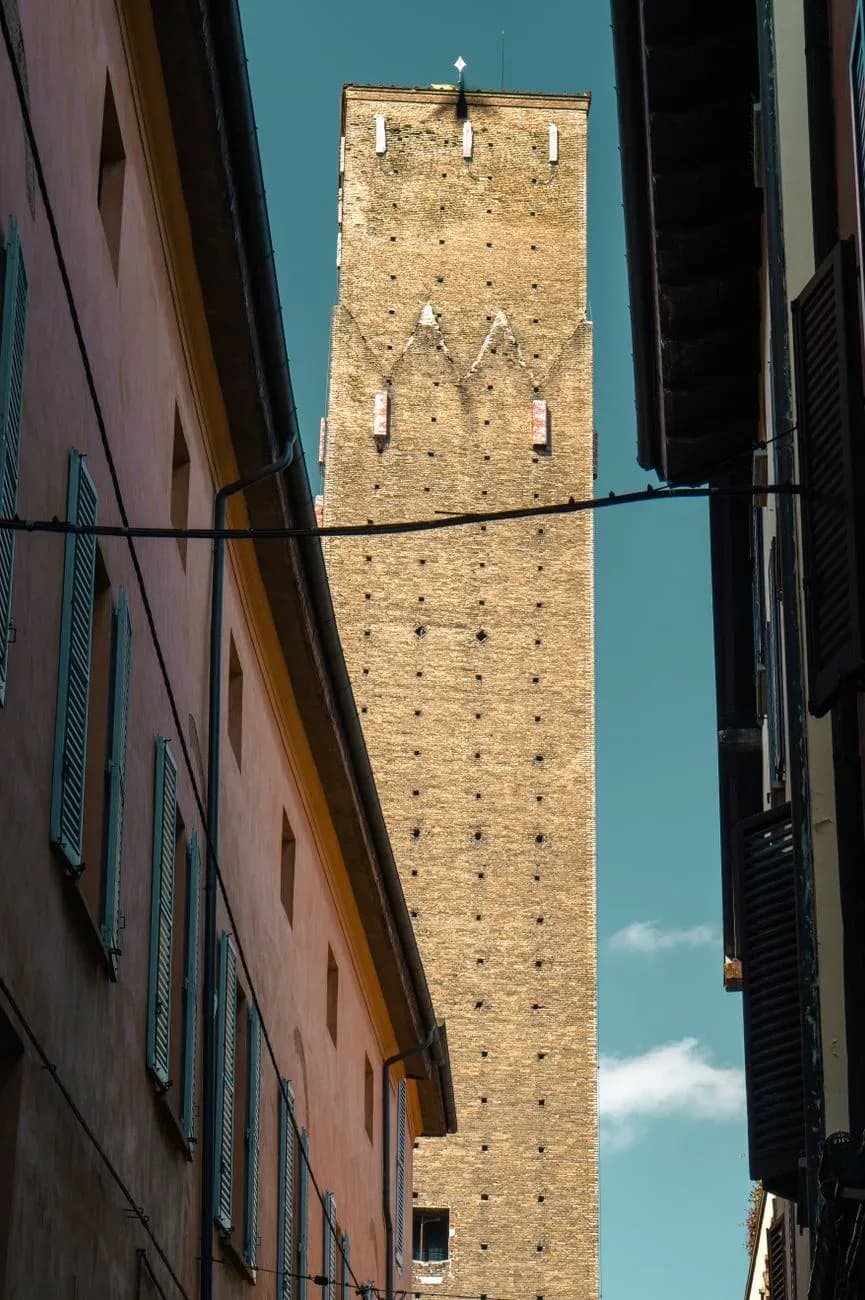
- Ongoing structural work around Garisenda means access to Torre degli Asinelli is currently restricted. Check current opening statuses in advance and book Torre dell'Orologio as an alternative panoramic viewpoint.
Where to stay: recommended accommodation
Charming boutique hotel tucked down a quiet pedestrian street, right beside Basilica di San Petronio.
View on Booking →Luxury hillside resort set in lush grounds, featuring an expansive on-site thermal spa.
View on Booking →Set very close to the railway station, complete with an on-site spa and wellness centre.
View on Booking →