

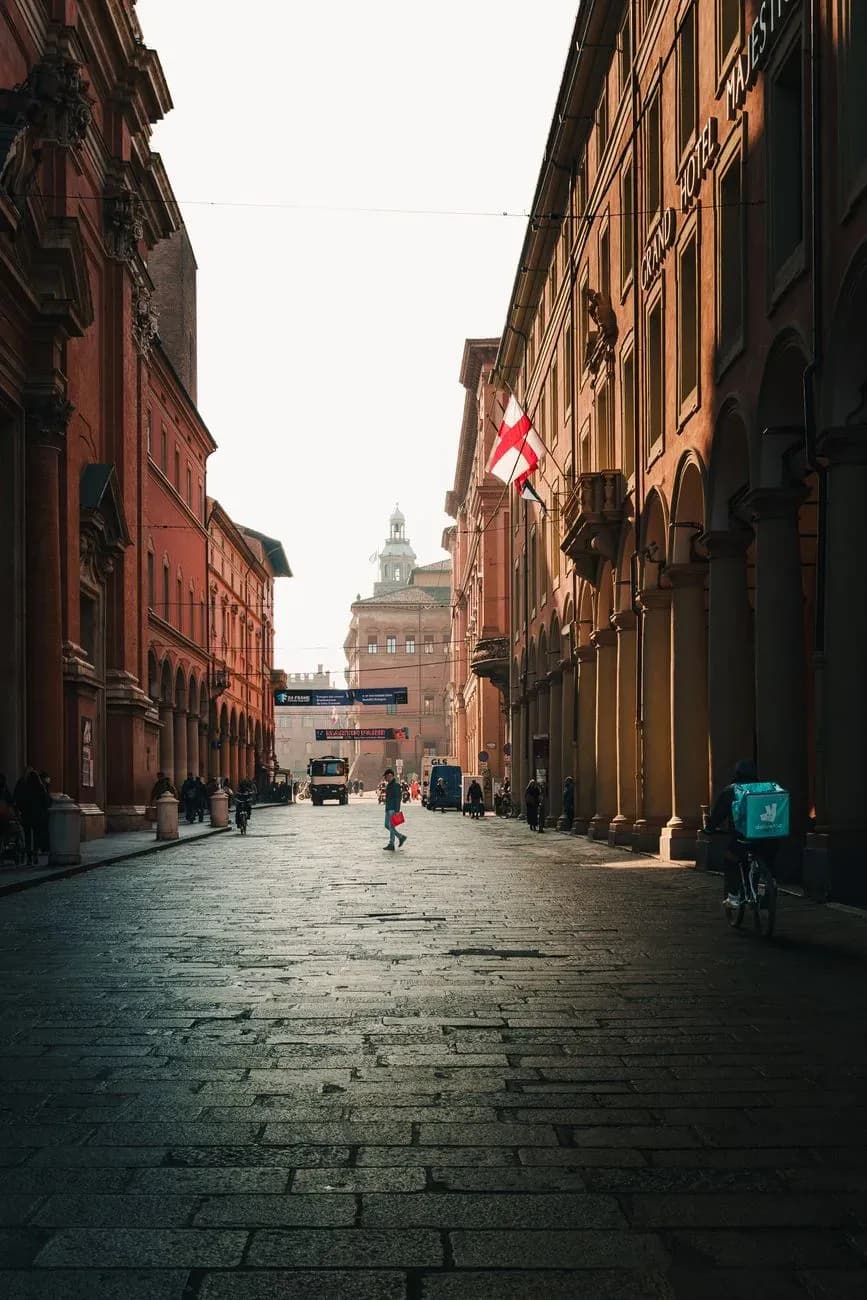
Bologna is best explored on foot beneath its UNESCO-listed porticoes, which offer sheltered walkways in almost any weather. The best times to plan a weekend in Bologna are spring, between April and June, or autumn, during September and October, when temperatures allow for comfortable strolls into the hills without the sweltering midsummer heat.
The historic centre is remarkably compact. You can walk between the main piazzas in just a few minutes, with the city's celebrated culinary scene setting the pace of each day, from fresh pasta workshops to bustling covered markets. Planning your timings well is essential to visit key historic buildings smoothly and to secure a table at the most popular osterie without facing long queues on the pavement.
How to plan your weekend
Day 1 — From the Centro Storico to the Quadrilatero
Morning
Start your day in the Centro Storico along Via Galliera with a stop at Forno Brisa, an artisan bakery celebrated for its sourdough bread, pizza alla pala, and specialty coffee. Just a short walk away lies the Finestrella di Via Piella, an unexpected little window overlooking the Canale delle Moline, affectionately known as 'Little Venice': it is best to visit early in the morning to avoid the queue, allowing about 10–15 minutes. From there, head to Piazza Maggiore, the city's monumental heart, framed by Palazzo d'Accursio and the Fontana del Nettuno. Exploring the piazza takes nearly an hour, before spending another 45 minutes inside the neighbouring Basilica di San Petronio. This vast Gothic church features an unfinished two-tone facade and houses Cassini's great meridian line; general admission is free, while specific sections require a ticket.
Afternoon
For lunch, the most convenient spot on Via Ugo Bassi is the Mercato delle Erbe, a historic covered market where central fruit and vegetable stalls are flanked by informal food counters, perfect for fried treats, local bites, or a glass of wine right in the aisle. Dedicate the early afternoon to the Palazzo dell'Archiginnasio e Teatro Anatomico in the Centro Storico. Visiting this historic university seat, famous for its thousands of heraldic coats of arms and ornate wooden anatomical theatre, takes about 45 minutes; booking in advance is strongly recommended at weekends. Late afternoon is the ideal time to wander through the Mercato del Quadrilatero, a maze of medieval lanes including Via Pescherie Vecchie and Via Clavature, lined with heritage delis, cured meat stalls, and fresh pasta counters.
Evening
Head to the Zona Universitaria for dinner, right on Via Zamboni at Osteria dell'Orsa. This historic, lively spot is a local favourite for its affordable tagliatelle al ragù and lasagne. As the venue does not take reservations under any circumstances, make sure to arrive well ahead of regular evening dining times to grab a table and avoid long waits.
Day 2 — The Seven Churches and the Colli Bolognesi
Morning
Begin the next morning in the Santo Stefano quarter, heading to Piazza Santo Stefano e Complesso delle Sette Chiese. This striking, triangular cobbled square opens onto an intricate labyrinth of interconnected basilicas and Romanesque cloisters. Admission is by donation, and touring the complex takes around an hour. For lunch, return to the Zona Universitaria on Via Belle Arti to eat at Trattoria Anna Maria. It is renowned for its traditional rolling-pin-rolled fresh pasta, especially the handmade tortellini in brodo crafted in the open workshop nearby. Booking well ahead is strongly advised to secure a table here.
Afternoon
Spend the entire afternoon exploring the Colli Bolognesi. Your first stop is the Santuario della Madonna di San Luca, perched atop the Colle della Guardia. The uphill walk takes you along the 3.8-kilometre route beneath the longest monumental portico in the world, taking around an hour and a half. As you head back towards the city, sunset is the perfect moment to stop at the Belvedere di San Michele in Bosco. Set just above Giardini Margherita, this monastic complex offers expansive views across Bologna's sea of terracotta roofs; plan for around 45 minutes to visit the area.
Evening
For your final meal of the weekend, head towards Via della Secchia, well off the beaten track, home to Trattoria dell'Autotreno. Popular with locals, this traditional tavern serves hearty, authentic classics like fried crescentine, gramigna, tortellini, and classic cotoletta alla bolognese, rounding off your trip on a thoroughly genuine note.
Top tips for your trip
- The historic centre is governed by a ZTL enforced by Sirio cameras, active daily from 07:00 to 20:00. If arriving by car, park in park-and-ride facilities such as Tanari, or in car parks along the ring road, such as Piazza VIII Agosto or near the station, to avoid fines.
- Much of the city can be explored beneath more than 38 kilometres of porticoes. To reach scenic viewpoints in the hills without walking uphill, take TPER public bus route 20 to Villa Spada and connect with shuttle 58, or take the San Luca Express tourist train.
- Historic eateries fill up quickly at weekends. For osterie and trattorie that do not accept bookings, aim to queue before 12:30 for lunch and before 19:45 for dinner to keep waiting times on the pavement to a minimum.
- If you plan to visit multiple civic museums over the weekend, the Bologna Welcome Card is great value; available as an Easy pass for €25 or a Plus pass for €40, it includes entry to major cultural sights and discounts on activities.
Where to stay
Elegant accommodation looking straight out onto Piazza Maggiore and the Torre dell'Orologio.
View on Booking →Boutique hotel housed in a 19th-century palazzo just 200 metres from the Due Torri.
View on Booking →Modern hotel conveniently located by the railway station, ideal for walking into the centre.
View on Booking →