

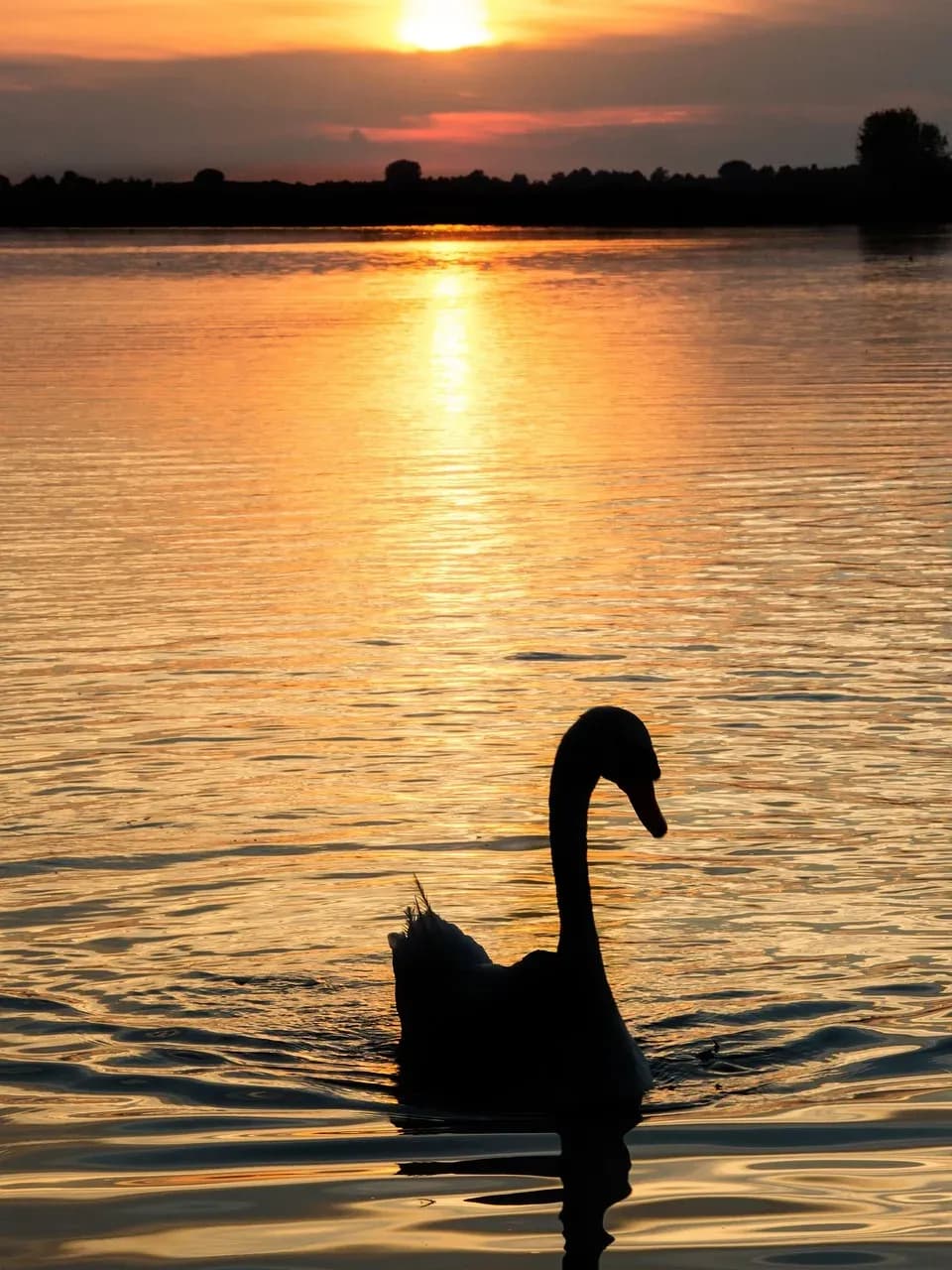
Water defines the boundaries and soul of Mantova, framing the historic centre on three sides and setting the rhythm of every journey. The best times to take in these nuances are spring, between April and June, or the autumn months of September and October, when you dodge the sultry heat and summer mosquitoes of the plains. Those who visit in July and August usually do so for a very specific sight: the summer blooming of the lotus flowers, which engulfs the reed beds and reshapes the city's lagoon landscape.
The urban fabric is easy to explore on foot or by bicycle, picking up the Mincio cycle path that starts right from the centre. To venture further afield, a car offers greater flexibility: it takes just a few minutes to reach the sanctuaries by the water, or around forty minutes to drive south to the purpose-built Renaissance citadels or north to the fortified villages. If you are staying within the city, the shadow of the Complesso Museale di Palazzo Ducale e Castello di San Giorgio is the natural starting point for grasping the sheer scale of the local rulers' power.
Distances between the squares are short. Walking from the Hotel dei Gonzaga to the porticoes takes you just a few metres across the cobbles. The architecture of the palaces converses with the inland waterways, whilst historic osterie serve rich meat and pumpkin dishes meant to be savoured slowly. There is no need to rush to see it all: it pays to curate your stops and time your visits carefully, especially for the frescoed rooms with restricted entry slots.
Three days among water cities and villages
Day 1 — The square and the seat of power
Morning
Start the day early in Piazza Sordello e Duomo di Mantova. This monumental open space serves as an antechamber to the Cattedrale di San Pietro, where, behind the Baroque facade, you will find interiors designed by Giulio Romano. A stop of thirty to forty minutes is plenty to get your bearings. From here, step straight into the Complesso Museale di Palazzo Ducale e Castello di San Giorgio. Plan this carefully: the visit takes about two to three hours and is best scheduled early in the morning to beat the longest queues. Booking is mandatory to access the celebrated Camera degli Sposi, painted by Mantegna. Room after room of the Gonzaga palace unfolds, revealing the full extent of their dominion.
Afternoon
After a bowl of agnoli in brodo at Antica Osteria Fragoletta, an eighteenth-century spot near the square once frequented by Goldoni and Casanova, make your way towards Piazza delle Erbe. Here, the Rotonda di San Lorenzo stands out for its Romanesque circular plan commissioned by Matilde di Canossa in the eleventh century; you can take in the interior in twenty to thirty minutes. Just a few steps away rises the Torre dell'Orologio e Palazzo della Ragione. The panoramic climb takes around forty minutes and gives you a close-up look at Bartolomeo Manfredi's sophisticated astronomical clock. A short stroll then leads to the Basilica di Sant'Andrea in Piazza Mantegna. Leon Battista Alberti's Renaissance design houses Mantegna's tomb and the Sacred Vessels containing the relic of the Precious Blood; allow about forty-five minutes here.
Evening
For dinner, head to Via Trieste and Osteria dell'Oca, a traditional trattoria serving classic tortelli di zucca and stracotto with polenta, rounded off with homemade sbrisolona.
Day 2 — Rooms of the giants and urban canals
Morning
Set off on your second day along Viale Te to visit Palazzo Te. Giulio Romano's suburban villa is home to the monumental Sala dei Giganti and the Sala di Amore e Psiche. Touring the interior takes an hour and a half to two hours. At weekends, booking ahead is strongly advised to avoid long waits, given the strict visitor limits in the most famous rooms.
Afternoon
Before picking up your route again, stop at Osteria Delle Quattro Tette in the historic centre. This unvarnished spot does not take bookings and serves risotto alla pilota with brisk efficiency. After lunch, a twenty-minute walk brings you to the Pescherie di Giulio Romano e Rio di Mantova in Via Pescheria. This sixteenth-century arcaded structure above the water was designed specifically for trading fish along the canal. From here, make your way towards Via Accademia to find the Teatro Scientifico Bibiena. This elegant bell-shaped eighteenth-century theatre, inaugurated by a young Wolfgang Amadeus Mozart in 1770, can be visited in about half an hour.
Evening
In the Porto Catena district, the rustic wooden tables at Antica Osteria ai Ranari have welcomed diners since 1866. The menu focuses on hearty local fare, with stracotto di cavallo or a warming bowl of sorbir d'agnoli being the ideal ways to round off the evening.
Day 3 — River navigation and ideal cities
Morning
A fifteen-minute drive from the centre brings you to Grazie di Curtatone. The first building you see is the Santuario della Beata Vergine delle Grazie, a Lombard-Gothic structure perched right on the edge of the reeds. Allow forty-five minutes inside to view the votive figures and the real taxidermy crocodile hanging from the vault. The boat trip for Navigazione e Riserva Naturale Valli del Mincio departs from the nearby jetty. This boat tour lasts one to two hours through the wetlands and reed beds, making it ideal for birdwatching. Booking ahead for the boat is recommended.
Afternoon
Drive south for forty minutes to reach Sabbioneta. This fortified UNESCO World Heritage town is easy to navigate on foot. The Teatro all'Antica di Sabbioneta, designed by Vincenzo Scamozzi as the first purpose-built indoor theatre in Europe, takes thirty to forty minutes to see and is included in the combined ticket. Right afterwards, head into Palazzo Giardino e Galleria degli Antichi. Vespasiano Gonzaga's residence, adorned with frescoes by Bernardino Campi, connects to the ninety-seven-metre-long Corridor Grande; allow about an hour in total. Alternatively, heading north towards Monzambano, you could spend the afternoon in Castellaro Lagusello, a medieval village with a heart-shaped lake and walking trails through the nature reserve.
Evening
Returning to town, the historic Trattoria Due Cavallini in Via Salnitro serves its famous trolley of bolliti and mixed roasts accompanied by traditional mostarda, in an uncompromisingly classic osteria setting.
Practical tips for your trip
- Visits to Palazzo Ducale require careful planning: to include the Camera degli Sposi in Castello di San Giorgio, you must buy your ticket online well in advance, as numbers per time slot are strictly capped.
- If you plan to visit the main exhibitions in town and travel down to Sabbioneta, pick up the Mantova e Sabbioneta Pass or integrated combined tickets, which significantly reduce the cost compared to individual admissions.
- Private traffic in the historic centre is restricted by an active camera-enforced ZTL. The best strategy is to leave your car at the Campo Canoa park-and-ride, where you can catch the free shuttle bus or walk across the lake into town.
- If you want to eat at the city's historic trattorie, arrive before opening time: many popular spots fill up instantly and do not accept phone reservations.
Where to spend the night
Looks directly onto Piazza Sordello, offering a remarkably convenient base just a few steps from Palazzo Ducale.
View on Booking →A four-star hotel with a wellness centre and panoramic terrace, located a short walk from Piazza Mantegna.
View on Booking →A guesthouse set inside an eighteenth-century building, ideal if you are looking for charming boutique rooms in the centre.
View on Booking →