

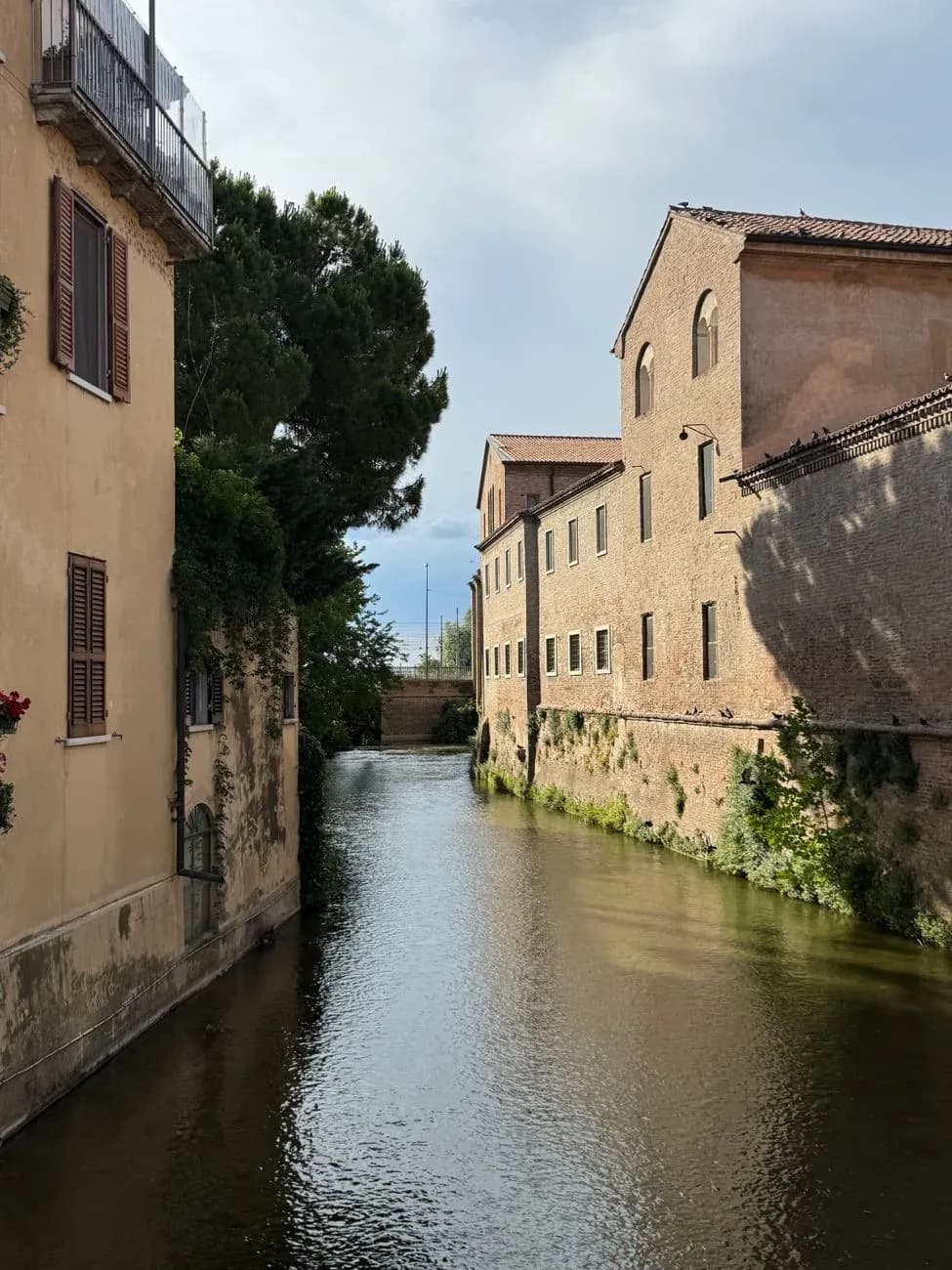
Mantova lies flat across the water, embraced on three sides by the lakes formed by the Mincio, which set it apart from the surrounding plains. The best time for a weekend in Mantova is during spring, in April and May, or in early autumn between September and October. The mild weather makes continuous walking a pleasure, and the summer humidity—often intense here—gives way to drier days. In winter, by contrast, the dampness makes it feel considerably colder, and mist shrouds the bridges, creating a muffled, atmospheric landscape entirely different from the warmer months.
The entire urban area is completely flat, making it exceptionally easy to explore on foot. The longest walk on this itinerary takes about twenty to twenty-five minutes at an easy pace, linking the northern hub of Piazza Sordello with the gates of Viale Te to the south. If you prefer to save time, the APAM local bus network covers the route in roughly ten minutes. When it comes to accommodation, those wishing to stay in the historic centre can opt for the Hotel Broletto Mantova, just steps from the square of the same name, or the Hotel Italia Mantova in Piazza Felice Cavallotti. If you are arriving by car, practical options await just beyond the pedestrian zones, such as the B&B HOTEL Mantova Cristallo in neighbouring Borgo Virgilio.
A two-day itinerary in Mantova
Day 1 — From Palazzo Ducale to the Astronomical Clock
Morning
Your first day begins in Piazza Sordello, right outside the grand facades of the Palazzo Ducale. The royal residence of the Gonzaga family comprises more than five hundred historic rooms linked by staircases and corridors; you should allow between two and two and a half hours for the visit. From Tuesday to Sunday, the gates open at 8:15, and arriving right at opening time is the best way to enjoy the vast halls without the crowds. Just a few dozen metres away stands the Castello di San Giorgio e Camera degli Sposi. Access to Andrea Mantegna's famous frescoes inside the 14th-century fortress is strictly timed and capped at groups of thirty. You must book your specific time slot several days in advance; the full visit takes between one and two hours. For lunch, stay within the perimeter of Palazzo Ducale and take a seat at Antica Osteria Fragoletta. Named after an 18th-century actress, this historic spot specialises in fresh pasta and cured meats served with spicy-sweet mostarda mantovana.
Afternoon
In the early afternoon, head deeper into the historic centre towards Piazza delle Erbe e Palazzo della Ragione. Historic buildings and arcaded walkways line this medieval civic core, which takes about an hour to explore on a gentle stroll. Descending below the paving stones of the main square brings you into the Rotonda di San Lorenzo. This circular Matildic church is the city's oldest religious building; entry is by voluntary donation, and a full look around takes roughly thirty minutes. Heading back towards the square, the 15th-century Torre dell'Orologio rises overhead, now housing the Museo del Tempo. Climbing to the top to see the astronomical mechanism and the panoramic views over the three lakes takes about forty-five minutes; it is closed on Mondays. Just nearby, overlooking Piazza Mantegna, is the Basilica di Sant'Andrea, designed by Leon Battista Alberti; allow forty-five minutes to view the Sacred Vessels of the Most Precious Blood kept down in the crypt.
Evening
You will not need to leave the historic centre for dinner. Antica Trattoria Cento Rampini sets its outdoor tables directly on the cobbles of Piazza delle Erbe. Eating traditional local dishes al fresco lets you spend the whole evening chatting right next to the historic monuments you have just explored.
Day 2 — Palazzo Te, river loggias and the lakes
Morning
Day two shifts the focus southwards. Along the pleasant walk down Via Acerbi you will find the Casa del Mantegna. Behind its exterior walls lies a geometrically planned Renaissance residence, notable for an unusual cylindrical courtyard. You can walk through the whole house in thirty to forty-five minutes. Continuing south leads you to Viale Te, directly in front of the gardens of Palazzo Te. This celebrated pleasure villa, built for Federico II Gonzaga, unfolds across a grand suite of monumental rooms. Plan to spend between an hour and a half and two hours to take it all in, ending at Giulio Romano's breathtaking Sala dei Giganti. Particularly on Saturdays and Sundays, it is best to buy your tickets online before you leave to bypass the queues at the outside ticket desk.
Afternoon
For lunch, head back towards the city centre to Osteria delle Quattro Tette for robust, authentic flavours. The dining room serves hearty peasant cooking, with specialities like luccio in salsa (pike in caper and anchovy sauce) and riso alla pilota. They take no bookings, so the only way to get a seat at the communal tables is to walk through the door the moment they open. In the early afternoon, make your way to Via Accademia and the Teatro Scientifico Bibiena. Inaugurated by Wolfgang Amadeus Mozart, this jewel box of an auditorium has a distinctive bell-shaped layout decorated in rococo style. A visit lasts thirty to forty minutes, but do check online beforehand to make sure conferences are not restricting access to the stalls. From 15:30, wander towards the water to the Pescherie di Giulio Romano e Lungo Rio. This historic site opens free to the public on Saturday and Sunday afternoons; take thirty to forty-five minutes to stroll along the ancient loggias suspended over the waters of the Rio.
Evening
Wind down the day along the Lungolago di Mezzo e Ponte di San Giorgio, the riverside promenade skirting the Mincio. This pedestrian pathway offers uninterrupted views across the city's monumental skyline at sunset. After your stroll, make your way to Via Trieste. Antica Osteria ai Ranari centres its cooking on historic ducal cuisine, serving first courses such as classic tortelli di zucca dressed simply with butter and sage.
Top tips for planning your trip
- If you arrive by car, do not drive straight into the historic centre, which is almost entirely a camera-enforced Zona a Traffico Limitato (ZTL). To avoid fines, leave your car in outer car parks like Parcheggio Anconetta or near the Ponte di San Giorgio, then walk into town.
- To cut the cost of individual tickets, pick up a Mantova Sabbioneta Card, valid for 72 hours. It is well worth the money if you plan to visit Palazzo Ducale, Palazzo Te and smaller civic sights like Teatro Bibiena over the weekend; it also includes urban bus travel. Keep in mind that entry to the Camera degli Sposi always requires a separate surcharge.
- In terms of everyday spending, excluding your hotel room, it is sensible to budget around €60-80 per person per day. A typical meal in a local osteria costs about €25-35, to which you should add the cost of your chosen museum passes (between €20 and €48 in total).
Where to stay in Mantova
A convenient base tucked right in the historic centre, just a few paces from Piazza Broletto and Piazza Sordello.
View on Booking →A hotel right next to Mantova railway station, ideal if you are travelling entirely without a car.
View on Booking →Located in the neighbouring municipality, making life easy if you need to park well clear of the ZTL restrictions.
View on Booking →