

Often, visitors disembarking in Olbia head straight for the better-known coasts, treating it merely as a gateway to northern Sardegna. Yet staying in town lets you encounter Punic walls, Roman-era shipwrecks and medieval granite architecture, all just a few kilometres from superb snorkelling beaches.
To make the most of your trip, hire a car at the airport or port: the historic centre is easily explored on foot, but reaching the nuragic sites scattered across the countryside and the nearby coves requires a 15- to 25-minute drive. May–June and September–October are the ideal months: the sea is warm enough for swimming, you can hike without enduring the summer swelter, and the roads are free from August's peak traffic.
When planning your days, it pays to balance urban historic sightseeing with archaeological outings nearby, bearing in mind that an average dining budget sits at around €45–€65 per person per day. If you are looking for a base right in the centre, places like La Locanda del Conte Mameli let you step out on foot in the evening while keeping the car ready for daytime excursions.
How to plan your 4 days in and around town
Day 1 — Urban archaeology and ancient wrecks
Morning
Spend the first part of the morning in the pedestrianised Centro Storico. The Basilica di San Simplicio takes about 45 minutes to explore: this 11th–12th-century granite church is the town's foremost Romanesque monument. From here, a short open-air stroll towards Via Acquedotto and Via Torino brings you to the remains of the Mura Puniche, the ancient defensive walls. For lunch, stay nearby and opt for Ristorante Da Paolo on Via Garibaldi, renowned for its fresh local seafood and classic Sardinian land dishes.
Afternoon
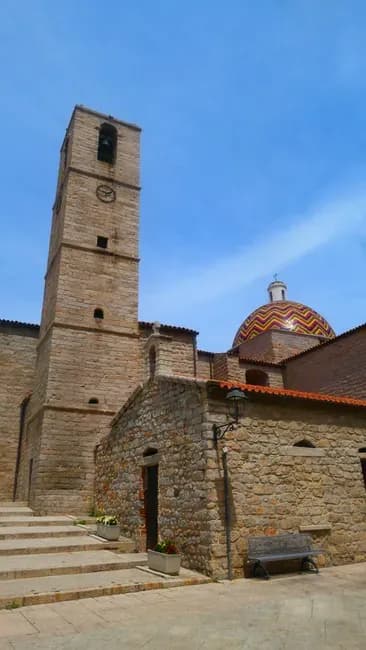
In the afternoon, head down to the Lungomare and the Isolotto Peddone to visit the Museo Archeologico di Olbia. Admission is free, and the exhibits take one to two hours to view: on display are rare Roman shipwrecks, alongside ancient rudders and masts salvaged from the sea. A short distance away, perfect for a pause while wandering the central streets, stands the Chiesa di San Paolo Apostolo with its striking baroque dome tiled in colourful majolica.
Evening
Before dinner, Corso Umberto I offers plenty of spots for an aperitivo amongst bars and artisan boutiques. To round off the day with inventive twists on Sardinian cuisine, just a short walk away in the centre is Ristorante Mere, featuring a sleek contemporary approach.
Day 2 — Nuragic fortresses and megalithic architecture
Morning
Today is dedicated to the inland area and requires a car. In Cabu Abbas sits the Complesso Nuragico Riu Mulinu (Cabu Abbas), a fortified complex with a massive defensive wall that commands views across the entire Golfo di Olbia. Next, drive to Sa Testa, where free access to the Pozzo Sacro Sa Testa lets you inspect the staircase, courtyard and vestibule of this underground nuragic temple built for water worship. Close to Viale Aldo Moro, stop for lunch at Ristorante Da Bartolo, an established spot serving both surf and turf.
Afternoon
In the early afternoon, drive towards Sa Rughittula to inspect the Acquedotto Romano e Cisterna (1st–2nd century AD), which features a well-preserved barrel-vaulted cistern. Later, head south to the shared archaeological site of the Tomba dei Giganti Su Mont'e s'Abe (a 28-metre-long burial monument) and the Castello di Pedres (a 13th–14th-century fortress). Both offer free entry and convenient parking; tackle the stepped climb up to the castle in the late afternoon to take in the hilltop views.
Evening
For dinner, head back towards Viale Aldo Moro: Ristorante By Night serves seafood and is particularly well regarded for its antipasti. Tables are limited, so book well ahead.
Day 3 — White sands, shallow waters and coastal villages
Morning
Your third day is all about the coast and the area's turquoise waters. Arrive at Spiaggia di Porto Istana before 9:30 to secure a parking space: the shore is split into four coves separated by rocky outcrops, with ultra-fine sand that is ideal for snorkelling. Alternatively, if you prefer the Pittulongu area, Spiaggia di Pittulongu (La Playa) offers pale sand and shallow waters, with the island of Tavolara in the background; visit early in the morning to beat the crowds.
Afternoon
For lunch, Ristorante Terra Nostra along Lungomare / Via Regina Elena stays open all day and serves both seafood and pizza. In the early afternoon, continue to nearby Spiaggia di Bados, framed by Mediterranean macchia and superb for swimming.
Evening
Before the sun dips entirely, make your way north. The Borgo e Porto di Porto Rotondo is at its best at sunset, as you wander through the architecture of Piazza San Marco and down the marina promenade. Head back to town for dinner: Trattoria Il Mattacchione (on Via Copenaghen) serves modern takes on local land and sea dishes.
Day 4 — Tavolara island and the southern shoreline
Morning
This morning, join an Escursione all'Area Marina Protetta di Tavolara, setting out by boat from the Golfo di Olbia to snorkel beneath the island's sheer limestone cliffs. Whether you choose a half-day or full-day tour, booking ahead is essential, especially in high season. You can pack a picnic lunch to eat on board, or grab a bite at one of the cafés near the jetty once you dock.
Afternoon
Back on dry land, the afternoon slows to a gentler pace. Driving south of Olbia, you will reach Spiaggia Le Saline: a long, straight stretch of coastline with distinctive reddish sand. Alongside water sports, its sheer expanse makes it wonderful for a walk along the water's edge before getting ready to head home.
Evening
On your final evening, stay close to the main thoroughfares and the centre. Pick up a slice of fresh fish or a comforting pasta dish at one of the trattorie you tried earlier in the historic centre or on Viale Aldo Moro, keeping things simple ahead of your departure the following day.
Practical tips and timings
- In summer, popular coves like Spiaggia di Porto Istana and Spiaggia di Bados fill up from mid-morning onwards. Arriving before 9:30 is essential to secure parking without the hassle.
- Boat trips to Tavolara and restaurants in the town centre tend to book out during spring and summer; reserve your spots a few days in advance.
- To make the most of your time in the southern hinterland, note that Tomba dei Giganti Su Mont'e s'Abe and Castello di Pedres share a car park and are free to enter: visiting both takes around two hours.
- On top of food and accommodation, allow a budget of €30–€50 per person for the weekend to cover hire-car fuel and beach parking charges.
Where to stay in Olbia
A 4-star boutique hotel right in the town centre, convenient for wandering on foot between bars and historic squares.
View on Booking →Centrally located hotel with a panoramic rooftop terrace looking straight out over the waterfront and historic rooftops.
View on Booking →A beachfront resort along the northern coast, offering direct access to the local beaches.
View on Booking →