

Planning your days in Salerno means getting ready to walk. The medieval core unfolds through a maze of alleys and stairways closed to traffic by restricted ZTL zones. If you are arriving by car, head straight for the large underground pay-and-display car parks right by the sea, such as the area near the railway station or the car park beneath the main coastal square. Driving into the old town will only waste precious time.
A crucial detail when scheduling your visits is the afternoon closure. Many historic cultural venues and churches shut their doors between 13:00 and 16:00. The best way to manage your time is to concentrate indoor visits early in the morning or late in the afternoon, keeping the middle of the day for sitting down to lunch, following open-air routes, or strolling along the quays.
How to spend 4 days in the city
Day 1 — Sacred architecture and ancient alleys
Morning
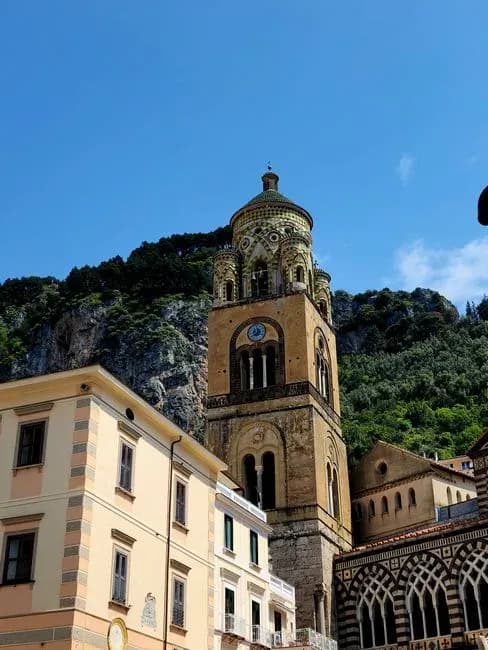
The historic quarter is your natural starting point. Set aside about an hour for the Cattedrale di San Matteo. To avoid the crowds and wander freely around the Norman quadriporticus commissioned by Roberto il Guiscardo, step inside first thing in the morning before services begin. Head down into the baroque crypt to see the relics of the saint. A few minutes' walk along Via Duomo brings you to the Chiesa di San Giorgio. Thirty or forty minutes are enough to admire the polychrome marbles, refined floors and frescoes adorning the interior. Before lunch, make time for the Complesso Archeologico di San Pietro a Corte, a Lombard palatine palace built by Arechi II over ancient Roman baths and a medieval chapel, which takes about forty-five minutes.
Afternoon
Once the cultural sites reopen, head over to Palazzo Pinto for the Pinacoteca Provinciale di Salerno. In forty-five minutes, you will journey from Renaissance masterpieces to works by foreign and contemporary artists linked to the Mezzogiorno. Later, as you wander along Via dei Mercanti, stop by Pasticceria Pantaleone 1868. This historic nineteenth-century pastry shop invented the Scazzetta del Cardinale, a traditional sponge cake filled with wild strawberries.
Evening
To catch the sea breeze, head down to Spiaggia di Santa Teresa, an urban beach with broad wooden terraces and a sun deck right by the water. For dinner, make your way to Via Antonio Genovesi for Ristorante Cicirinella. Set just behind the cathedral, this intimate indoor dining room has limited tables, so book well ahead to sample local seafood dishes made with the day's fresh catch.
Day 2 — High peaks above the city and the modern port
Morning
Reaching the upper city takes a bit of physical or logistical effort. The Sentiero del Principe is a ten-kilometre circular trail that starts from Canalone and climbs through pine woods. You will need proper walking boots for the four-hundred-metre climb. Allow three to five hours depending on your pace, and make sure you set off early in the morning. The route passes the Cornice del Principe and La Bastiglia, an ancient circular watchtower guarding the castle with views across the sea. If you prefer to skip the hike, catch Busitalia bus line 19 from the centre. It drops you right at Castello di Arechi, a medieval fortress three hundred metres above sea level with an on-site archaeological museum. Exploring the ramparts takes around an hour and a half.
Afternoon
Once back down on flat ground, allow an hour to explore the Museo Diocesano San Matteo. The galleries house paintings spanning the Middle Ages to the Renaissance, alongside a twelfth-century collection of Salerno ivories. To rest your legs, find a spot in the Villa Comunale di Salerno. This nineteenth-century public garden surrounds the Fontana del Tullio, its mature trees casting deep, welcoming shade.
Evening
The sun dips, casting a warm glow across the water. The palm-lined promenade of Lungomare Trieste skirts the shore all the way to Molo Manfredi. Here lies Piazza della Libertà e Stazione Marittima di Zaha Hadid, a striking contemporary space where the ferry terminal resembles an oyster. For dinner, head into Borgo Sant'Anna al Porto and take a seat at Pizzeria Resilienza in Via Santa Teresa. The dough is paired with zero-kilometre ingredients, regional Campanian produce and organic toppings, all served on a peaceful outdoor terrace.
Day 3 — The coast and terraced gardens
Morning
If you are planning an excursion to the Costiera Amalfitana, leave the car behind to avoid heavy traffic and the perennial lack of parking along the coastal road. Ferries and hydrofoils departing from Molo Manfredi offer a quick alternative, as does light public transport. Your destination is Vietri sul Mare, five kilometres away, easily reached in ten to fifteen minutes by bus or regional train. You will spot this seaside village from afar by the majolica dome of the church of San Giovanni Battista. The narrow streets are lined with artisan workshops specialising in traditional glazed ceramics. The village centre can be comfortably explored in half a day.
Afternoon
Back in the provincial capital, head up into the Plaium Montis district to enter the gates of Giardino della Minerva. This was Europe's first botanical garden, historically linked to the Scuola Medica Salernitana. The cultivated terraces look straight out over the sea and take around an hour to explore. Early afternoon is the ideal time to appreciate the layout and medicinal plants.
Evening
In the evening, return to the old town lanes for dinner at Osteria dei Sapori in Via Santa Maria de Domno. The menu focuses on local seafood cuisine: staples include paccheri with salt cod, stuffed anchovies and tuna genovese made with fresh fish.
Day 4 — Ancient Greek temples by train
Morning
Regional railways make it easy to head beyond the city limits without getting behind the wheel. A train from the central station takes exactly thirty minutes. From the platforms at Capaccio-Paestum, a short walk brings you to the Parco Archeologico di Paestum. Allow around three hours to wander among the three Doric temples—regarded as some of the best preserved in the world—and to see the Tomba del Tuffatore in the museum. If you are visiting on a summer weekend, advance booking is essential to guarantee entry.
Afternoon
Catch the regional train back to the city in the early afternoon. Use your remaining time to explore any squares you missed over the previous days, or stroll along the pedestrian paths near the commercial harbour quays.
Evening
Your final dinner stop is in Vicolo della Neve, just a short walk from the cathedral. Antica Trattoria Vicolo della Neve keeps things staunchly traditional: this historic eatery serves homestyle dishes, aubergine parmigiana and wood-fired pizzas straight to your table.
Four practical rules for getting around
- Sturdy walking boots with reliable grip are essential for hiking the woodland paths of the Sentiero del Principe. The unpaved section climbing from the steps of Montevergine to Monte Bonadies features steep gradients and loose, rocky ground that will test your balance.
- A private car is more of a hindrance than a help when travelling along the neighbouring coast. To reach Vietri sul Mare or the nearby ports of Cetara and Amalfi, hop on the ferries from Molo Manfredi to bypass the gridlock on the Statale Amalfitana entirely.
- Taking the train to the Greek temples is far quicker than driving. Regional services run from the central station and reach Capaccio-Paestum in exactly thirty minutes, just a short walk from the archaeological excavations.
- Keep afternoon closures firmly in mind when planning your itinerary. Many churches, museums and archaeological sites pause admissions between 13:00 and 16:00, reopening only in the late afternoon.
Where to book your stay
A large hotel on Lungomare Clemente Tafuri, within easy walking distance of the railway platforms and looking straight across the gulf.
View on Booking →An inviting hotel tucked into the central lanes, right next to the town hall and just minutes on foot from Teatro Verdi.
View on Booking →Located right opposite the central station, making it the ideal base for travellers relying on regional trains.
View on Booking →