

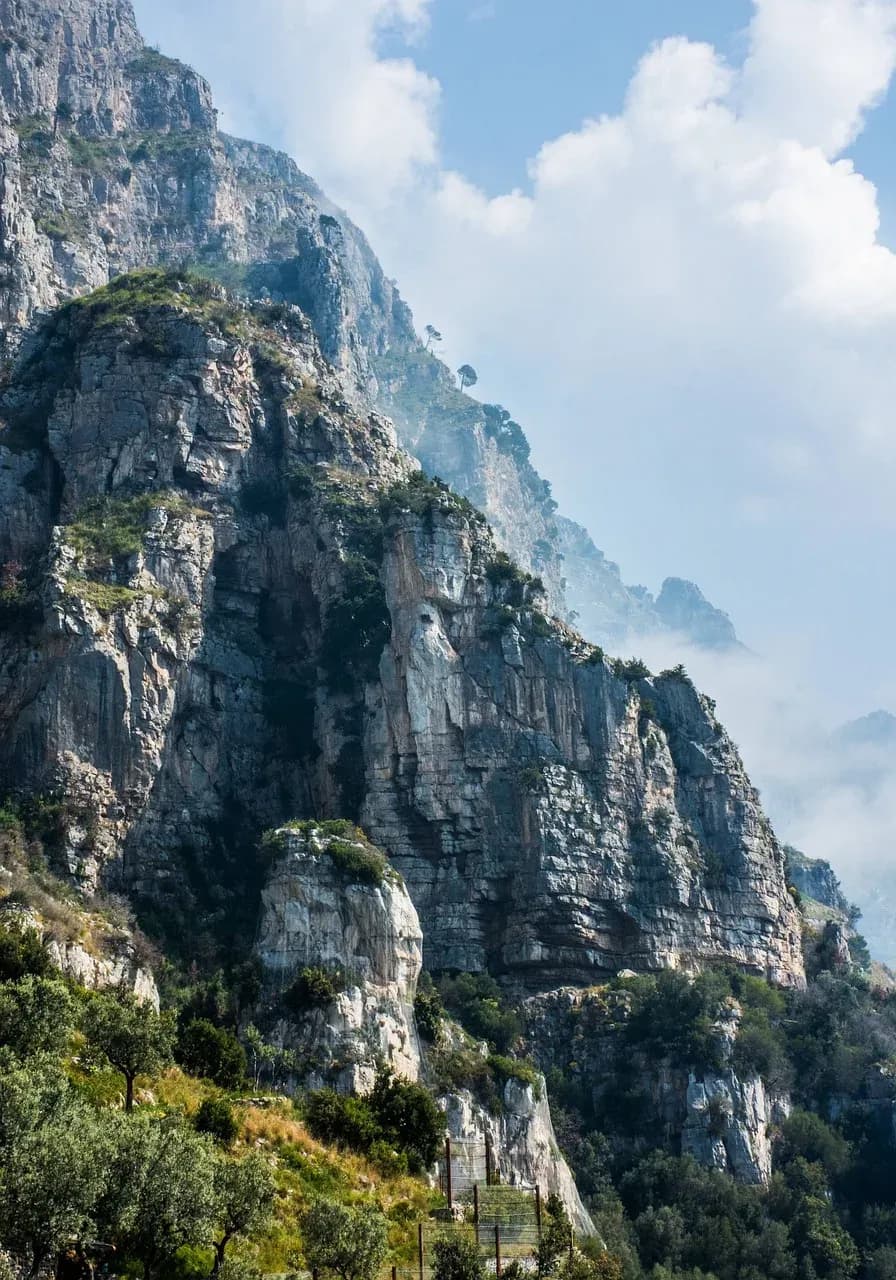
Planning a long weekend in Campania takes a bit of strategy if you want to avoid spending half your time stuck in traffic. Between the narrow alleys of the historic centre of Napoli, the Roman ruins, and sheer sea cliffs, distances might look short on paper, but actual travel times can easily balloon. The key is to alternate rail and sea travel, leaving your car at home or safely parked at your accommodation.
To combine cultural visits to archaeological sites with open-air afternoons, the best time to visit is spring, from mid-April to early June, and early autumn, throughout September and October. During these months, thermal parks and coastal ferry services operate at full speed, the weather is mild, and you dodge both the summer heat and the worst crowds in the tightest villages.
Depending on where you choose to stay, it pays to plan your sea routes in advance. From Napoli or Salerno, ferries and hydrofoils let you reach coastal villages while completely bypassing the queues. If you make your base in historic residences like Hotel Villa Cimbrone in Ravello or Hotel Villa Romana in Minori, exploring means balancing walks on foot with short bus hops or boat trips, always keeping an eye on the best times of day to find quieter spots.
Four days on the ground: the logical itinerary
Day 1 — Napoli: from the historic centre to the gulf
Morning
Your day starts in the San Lorenzo neighbourhood at Museo Cappella Sansevero e Cristo Velato, a Baroque jewel box that houses Giuseppe Sanmartino's sculptural masterpiece. The visit takes about an hour, and entry strictly requires booking online well in advance. Staying in the Spaccanapoli area, head onwards to the Complesso Monumentale di Santa Chiara. Exploring the delightful 18th-century majolica cloister, surrounded by frescoes and citrus trees, takes around 40 minutes, with no booking needed for individual visitors. For lunch, make your way to Via dei Tribunali and Pizzeria Gino Sorbillo, a historic benchmark for authentic, light-crusted Neapolitan cartwheel pizza.
Afternoon
Head down towards the Chiaia and San Ferdinando districts to cross Piazza del Plebiscito e Palazzo Reale, the monumental heart of the city framed by a neoclassical colonnade and the Bourbon royal residence. From here, make your way up to Vomero to visit Castel Sant'Elmo, a massive medieval fortress carved out of tuff stone. Its star-shaped terrace offers one of the widest panoramic views over the Golfo di Napoli. Allow about one to two hours for the visit; the ideal time coincides with sunset.
Evening
Spend the evening on the Isolotto di Megaride, strolling around Castel dell'Ovo e Borgo Marinari. Home to the city's oldest castle, this area is perfect for a gentle stroll among the boats in the marina and the waterfront restaurant tables.
Day 2 — Pompei and the elegant side of Napoli
Morning
From Napoli, catch the regional train or Circumvesuviana to reach Parco Archeologico di Pompei in around 35 minutes. The ancient Roman city, buried by the eruption of Vesuvio in 79 AD, takes half a day to explore properly, allowing 3 to 4 hours on foot. At weekends, booking your ticket in advance is recommended to speed up your entry.
Afternoon
Heading back to Napoli, aim for Piazza Trieste e Trento in Chiaia for a break at Gran Caffè Gambrinus. Founded in 1860, this historic literary café is the place to experience the ritual of Neapolitan espresso alongside sfogliatelle ricce and babà. Later, head over to Posillipo to unwind in Parco Virgiliano. Perched atop sheer sea cliffs, this scenic green haven boasts terraces looking towards Nisida, Capri, and Ischia, making it a fantastic vantage point in the late afternoon.
Evening
Keep your evening free to wander the streets of Posillipo or head back towards the central seafront promenade, using local public transport before evening services wind down.
Day 3 — Amalfi and the heights of Ravello
Morning
Reach the coast by sea, stepping ashore in the historic centre of Amalfi. Your first stop is Duomo di Amalfi e Chiostro del Paradiso, an Arab-Norman cathedral defined by a monumental flight of steps and a 13th-century Moorish cloister. The visit takes 45 minutes and is best done early in the morning before tour groups arrive. For lunch, stay close to Piazza Duomo at Ristorante Da Gemma on Via Fra Gerardo Sasso, a trattoria dating from 1872 renowned for its fresh seafood and local coastal dishes.
Afternoon
Head up to Ravello on a SITA Sud bus, a journey of 20–25 minutes. Here, explore Villa Rufolo, a historic residence in the village centre famed for its cliff-edge terraced gardens that inspired Richard Wagner; allow 60 to 90 minutes. Next, make your way to Villa Cimbrone e Terrazza dell'Infinito, famous for its botanical gardens and celebrated marble balustrade overlooking the open sea, considered one of Europe's most captivating viewpoints. This second villa takes 45–60 minutes to explore.
Evening
Take a leisurely wander through the quiet lanes of Ravello's historic centre, savouring the peaceful atmosphere that settles over the coastal hill towns once day-trippers depart.
Day 4 — Coastal villages and heading south to Paestum
Morning
Start the day in Minori along the Via Roma seafront with breakfast at Pasticceria Sal De Riso. Master pastry chef Salvatore De Riso's establishment is celebrated for its ricotta and pear cake and Amalfi sfusato lemon delight. Continuing along the coast, you will encounter the Fiordo di Furore, a narrow natural inlet bridged overhead by the coastal road, sheltering a tiny beach tucked into the rock. Shortly after, arrive in Positano to head down to Spiaggia Grande e borgo verticale di Positano, a maze of scenic stairways, resort-wear boutiques, and sea views.
Afternoon
In the afternoon, head south towards Capaccio Paestum. Your destination is Parco Archeologico di Paestum, a monumental site across the plains featuring remarkably well-preserved, majestic Doric temples from ancient Magna Grecia. You explore the area on foot among the ancient ruins.
Evening
The ideal time to wrap up your visit to the Paestum temples is late afternoon through to sunset, when the lowering sun bathes the massive Doric stones in shades of pink.
Smart tips to save time and stay organised
- To cover multiple areas in four days, it is best to combine rail travel and ferries. The Circumvesuviana line or regional train links Napoli to Pompei in 35 minutes. To reach the Costiera Amalfitana or Ischia, ferries and hydrofoils from the port of Napoli or Salerno are by far the smartest way to bypass miles of tailbacks along Strada Statale 163.
- Driving a private car between Napoli and the coast is strongly discouraged at weekends. Strict limited-traffic zones (ZTL) apply, and hourly parking in Amalfi and Positano often exceeds €5–8 per hour. If you are using a hire car, make sure in advance that your hotel has its own reserved parking space.
- Tickets for the Cristo Velato inside Cappella Sansevero must be booked online many days or weeks ahead. Time slots sell out, are strictly enforced, and there is no on-site ticket office for last-minute purchases.
- If you take the bus between coastal villages, such as the Amalfi–Ravello service operated by SITA Sud, tickets cannot be bought on board; purchase them beforehand at a tabaccheria. It is wise to queue early, as buses often travel completely full during peak hours.
Strategic bases for your stay
A charming 5-star residence nestled within historic botanical gardens overlooking the sea.
View on Booking →An elegant hotel featuring a spa and wellness centre, located just a short walk from the seafront.
View on Booking →A wellness-focused resort boasting a thermal park with thirteen pools, just a short walk from the village.
View on Booking →