

Exploring this corner of southern Italy calls for your own transport: a private or hire car is the most practical way to cover the distances between the coast and the inland areas, sparing you the wasted time that comes with relying on local public transport connections. The best months to plan this itinerary in Campania are in spring, especially from April to June, and early autumn in September and October. Mild temperatures make hiking around the lakes and climbing up to medieval fortresses far more enjoyable, while steering clear of peak-season crowds helps you avoid the heavy traffic that grinds coastal roads to a halt during the summer months.
The route crosses remarkably varied landscapes. You start in the hills of the inland Sannio area before climbing into the higher reaches of the Matese and Irpinia Apennines, then descend towards the volcanic craters of Campi Flegrei, ending among the stepped alleyways of the Costiera Amalfitana and the coastal fortresses of Cilento. The changing scenery calls for a shifting pace: from steep mountain roads to leisurely, level strolls around karst lakes.
How to plan your stops day by day
Day 1 — Sannio's tufa cliffs and thermal waters
Morning
Your trip begins in the Centro Storico di Sant'Agata de' Goti, in the province of Benevento. This medieval village is perched dramatically on a tufa terrace, suspended between two river gorges. Tucked among its narrow alleys is the Duomo di Sant'Agata de' Goti (Concattedrale di Santa Maria Assunta), originally founded in the 10th century and later extensively rebuilt in the Baroque era. Inside, you can descend into a Romanesque crypt supported by ornate columns. A short stroll away along Via Roma, the Chiesa di San Menna is well worth a stop. This 11th-century Norman church preserves the oldest Cosmatesque mosaic floor in the whole of southern Italy. For lunch in the village, head to AGAPE Ristorante, set between Piazza Ludovico Viscardi and Via Roma, which serves refined local dishes alongside gluten-free options.
Afternoon
After leaving the village, drive towards Telese Terme to reach Lago di Telese. This is a karst lake encircled by a shaded, flat footpath roughly 1 km long, ideal for an easy stroll or a relaxing afternoon break in the open air.
Evening
For dinner, head back into the centre of Sant'Agata de' Goti, to Via Roma, and pull up a chair at Antica Osteria Zi' Pauluccio. This historic eatery has been running since 1927 and is renowned for its rustic Sannio cooking, with a strong focus on hearty meat dishes paired with local Falanghina wine. Booking ahead is highly recommended for weekend visits.
Day 2 — Apennine heights: Irpinia and Matese
Morning
Start the day by heading up into Irpinia to visit the Borgo di Nusco, in the province of Avellino. The village stands at an altitude of over 900 metres, an elevation that has earned it the nickname 'Balcony of Irpinia' thanks to its sweeping views across the surrounding Apennine valleys.
Afternoon
Continue towards Parco Regionale del Matese, in the municipality of San Gregorio Matese, to explore Lago del Matese. Sitting at over 1,000 metres above sea level, it is the highest karst lake in Italy. The setting is ideal for wildlife photography, canoeing and gentle walks. Reaching it from Piedimonte Matese involves tackling roughly 20 km of winding mountain roads full of hairpin bends; if you are travelling in winter or early spring, you must carry winter driving equipment. For a high-altitude meal, stop at Agriturismo Falode, located right on Altopiano del Matese within the municipality of Castello del Matese. The menu revolves around mountain produce, traditional meats and local cheeses, but do check opening times before making the climb.
Evening
In the evening, drive towards the Campania coast to position yourself well for the next day's itinerary, leaving the Apennine heights behind to join the coastal roads.
Day 3 — From Phlegraean craters to coastal cliffs
Morning
Spend the first half of the day in Campi Flegrei, near Pozzuoli. Here lies Lago d'Averno, a body of water formed within an extinct volcanic crater and famously immortalised by Virgil in the Aeneid. You can walk all the way around the lake: the trail is flat, covers about 2–3 km and takes roughly an hour and a half. Right on the water's edge stand the remains of the Tempio di Apollo sul Lago d'Averno, Roman ruins that once formed a vast, domed thermal hall.
Afternoon
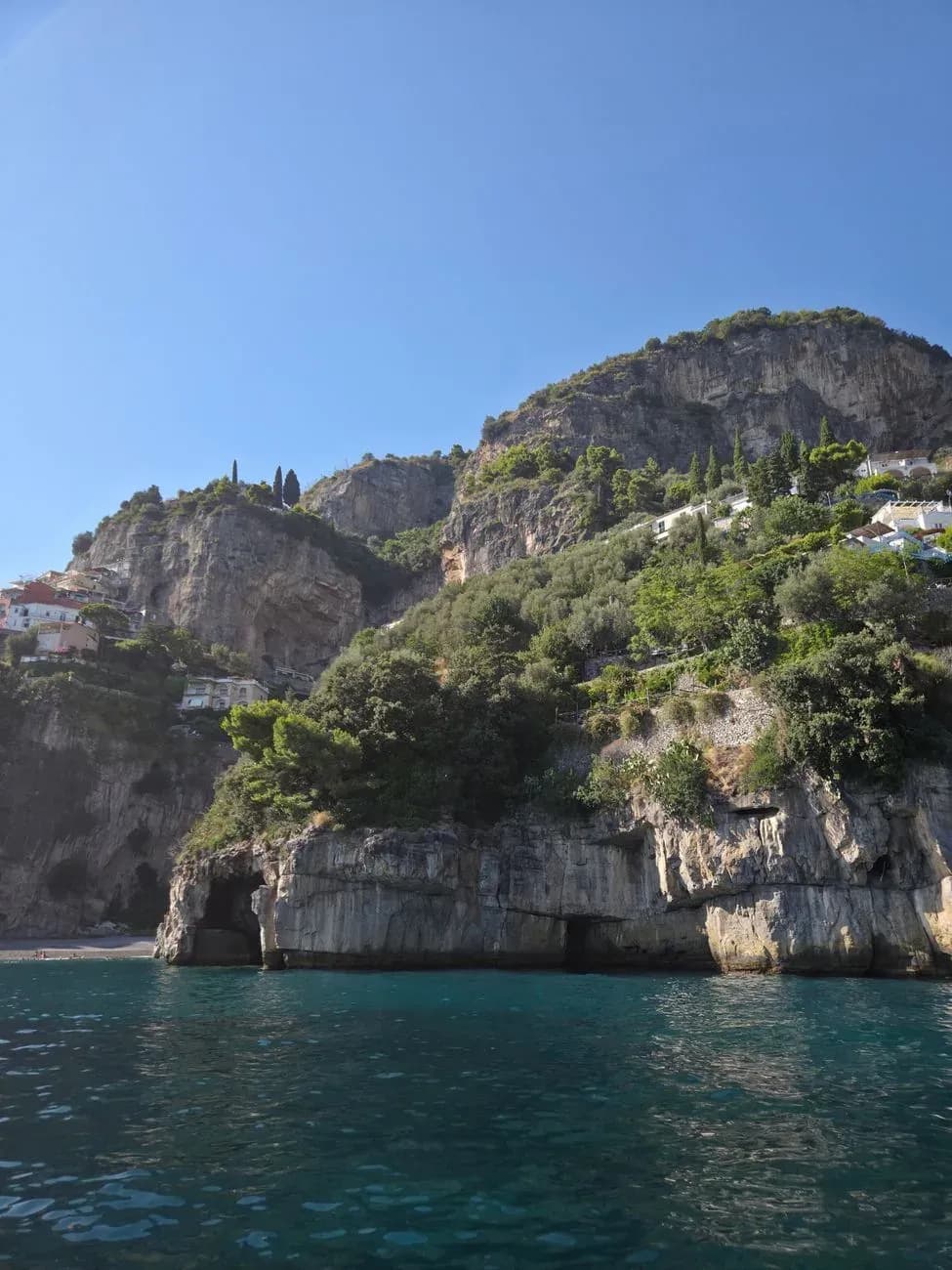
The route then heads south to the Costiera Amalfitana. Your first stop is the Borgo di Atrani, one of Italy's smallest municipalities, known for its stepped medieval alleys and a quaint coastal square squeezed into the narrow gap between sheer cliffs and the sea. A short drive away, near Vietri sul Mare, climb up to Albori. Listed among the Borghi più Belli d'Italia, this hamlet clings to the slopes of Monti Falerzio and is instantly recognisable by its whitewashed houses linked by steep stone stairways.
Evening
Follow the coastline down into Cilento, arriving in Santa Maria di Castellabate to round off the day at Marina Piccola di Santa Maria di Castellabate. This seaside quarter offers a pleasant promenade, a sandy beach and views of Torre Perrotti. For dinner, book a table at Ristorante Le Gatte, tucked right under the historic arches once used by the fishermen of Marina Piccola bay, featuring a menu centred on the fresh catch of the day.
Day 4 — The coastal fortresses of Cilento
Morning
Your final day is dedicated to the coastal towns of Cilento. Start in Agropoli to discover the Centro Storico e Castello di Agropoli. The fortified historic core is reached via a scenic stepped climb. At the top sits the Angevin-Aragonese castle, looking out across the bay below.
Afternoon
Next, make your way to Castellabate to explore the Borgo medievale di Castellabate. Perched about 300 metres above sea level, the village is renowned for its stone-paved lanes and sweeping coastal views. Vehicles are strictly barred from the upper village. Allow around two hours for a thorough visit, ideally timed for sunset. In the heart of the village stands Castello dell'Abate e Belvedere San Costabile, a fortified complex founded by the Normans in 1123 under Costabile Gentilcore; its panoramic terrace looks straight out over the Mar Tirreno and the surrounding marine protected area.
Evening
Conclude your journey with dinner at Ristorante Il Caicco, situated on Corso Margherita di Savoia in the historic centre of Castellabate. The dining room features a terrace overlooking the gulf and a menu dedicated to traditional Cilento specialities, with fresh seafood taking pride of place.
Top tips for your trip
- The historic upper area of Castellabate is pedestrianised: leave your car in the paid car park near Belvedere San Costabile and continue on foot.
- If you plan to dine at the traditional osterie in inland villages such as Sant'Agata de' Goti or San Gregorio Matese, book well in advance at weekends to avoid long waits for a table.
- The road linking Piedimonte Matese to the plateau and Lago del Matese requires careful driving: it spans around 20 km of hairpin turns where, from late autumn to early spring, snow chains or winter tyres are mandatory.
Where to stay
A countryside property with a garden, terrace and private parking, ideal for exploring the area independently.
View on Booking →A hotel on Via Panoramica del Lago, overlooking the shores of the thermal lake.
View on Booking →A rural retreat offering a swimming pool for relaxing moments between excursions.
View on Booking →